Mushroom Coffee Side Effects: Risks and Safety Tips
You want a morning coffee that fits your focus goals and agrees with your body. Mushr...
Read Article →

Choosing the best mushroom coffee in 2026 involves more than comparing brands or counting mushroom ingredients. The best blend should deliver an enjoyable cup of coffee while offering transparent ingredients, quality mushroom extracts, and good value for your money. As functional mushroom coffee continues to grow in popularity, brands are taking very different approaches. Some […]
Choosing the best mushroom coffee in 2026 involves more than comparing brands or counting mushroom ingredients. The best blend should deliver an enjoyable cup of coffee while offering transparent ingredients, quality mushroom extracts, and good value for your money.
As functional mushroom coffee continues to grow in popularity, brands are taking very different approaches. Some blends highlight potent medicinal mushrooms, others focus on coffee alternatives, and some combine traditional brewed coffee with functional mushrooms.
Many drinkers seek out organic mushroom coffee to ensure both the coffee beans and the functional fungi are farmed without synthetic pesticides.
Many people switch to these blends seeking sustained energy and mental clarity without a harsh crash. The fungi in these recipes often serve as adaptogens, aiming to support the body during daily stress.
Drinking a balanced cup can provide steady energy that lasts throughout busy mornings without a jittery drop-off.
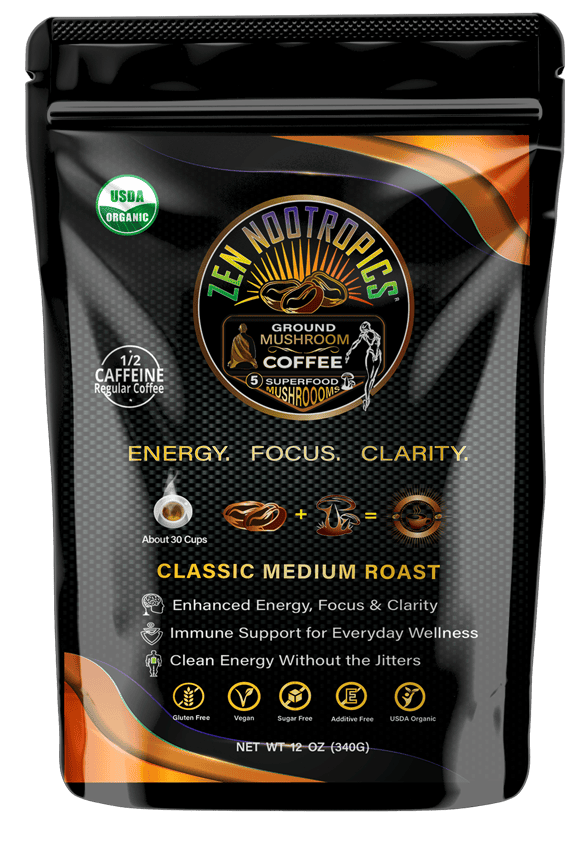
Zen Nootropics takes the traditional coffee approach, combining premium organic Colombian coffee with five functional mushrooms: Lion’s Mane, Cordyceps, Reishi, Chaga, and Turkey Tail. It’s an option worth considering for coffee drinkers who want to explore functional mushroom ingredients without giving up their familiar morning brew.
In this buyer’s guide and mushroom coffee review, we’ll compare popular mushroom coffee brands, examine ingredient quality, evaluate pricing, and explain what to look for before making a purchase. Finding the best mushroom coffee brands requires looking past marketing claims to evaluate sourcing, extraction, and flavor.
Whether you’re trying mushroom coffee for the first time or considering switching brands, you’ll find practical information to help you choose confidently.
Five widely available products cover the main styles you will find: instant mixes with added ingredients, ground coffee blends, and a coffee-free alternative. Formulas differ even within one brand, so the notes below name the specific product being compared. Lion’s Mane is one of the best-known functional mushrooms used in coffee blends. Learn more about its ingredients and available research in our Lion’s Mane Mushroom Coffee guide
Each mushroom coffee review below examines label clarity, usability, and flavor profile. Always confirm the current label before you buy, since brands update recipes.
This table sticks to documented product details. Where a brand does not publish a figure on the product page, the cell says to check the label.
| Product | Format | Coffee Base | Named Mushrooms | Published Caffeine | Starting Price |
|---|---|---|---|---|---|
| RYZE Mushroom Coffee | Instant powder | Organic coffee | Six-mushroom blend | Check label | See brand site |
| Everyday Dose Mushroom Coffee+ | Instant powder | Coffee extract | Lion’s mane, chaga | Check label | See brand site |
| Four Sigmatic Instant Mushroom Coffee with Lion’s Mane | Instant packets | Arabica | Lion’s mane, chaga | About 50 mg | See brand site |
| Zen Nootropics Mushroom Coffee | Pre-ground | USDA organic Colombian | Lion’s mane, cordyceps, reishi, chaga, turkey tail | Check label | $34.95 |
| MUD/WTR | Powder (coffee-free) | Cacao and chai spices | Blend of mushrooms | Lower than coffee | See brand site |
RYZE Mushroom Coffee is an instant powder aimed at people who want a quick cup with a creamy texture. The brand lists a six-mushroom blend: cordyceps, lion’s mane, reishi, shiitake, king trumpet, and turkey tail. It also adds MCT oil, which gives the cup a smoother, slightly richer mouthfeel.
The added oil helps balance the mushroom coffee taste, creating a mellow and creamy drink when mixed with hot water.
This style suits you if you dislike brewing gear or travel often. The trade-off is control. With instant powder, you cannot adjust grind, brew time, or roast the way you can with ground coffee. Check the current label for the caffeine amount per serving and how each mushroom is listed.
Everyday Dose Mushroom Coffee+ takes a stacked approach. Alongside lion’s mane and chaga, the brand adds extras such as collagen and L-theanine, an amino acid found in tea that people often pair with caffeine for mental clarity.
That makes this product a fit if you want several functional ingredients in one scoop. It also means more items to read on the label. If you avoid animal-based collagen, or you already take L-theanine elsewhere, factor that in before you buy.
Four Sigmatic is one of the longest-running names in this category. The modern functional mushroom coffee trend traces back to this Finnish company, founded in 2012. The brand sells several products, so compare the specific one in front of you.
The Four Sigmatic Instant Mushroom Coffee with Lion’s Mane contains about 50 mg of caffeine per cup, roughly half of a typical dark roast pod. The brand also sells ground and whole-bean options with different blends. If you are new to mushroom coffee and want a lower-caffeine instant packet, this product is a clear place to start.
Zen Nootropics Mushroom Coffee is a pre-ground blend for people who already brew at home. It pairs USDA organic, single-source Colombian coffee with five functional mushrooms: lion’s mane, cordyceps, reishi, chaga, and turkey tail. The brand describes tasting notes of dark chocolate and cinnamon.
The grind works in most coffee machines, pour overs, and French presses, plus some espresso machines. A bag lists at $34.95 on the product page. The brand does not list per-mushroom amounts or caffeine on that page, so contact the company if those figures guide your choice.
MUD/WTR is a coffee alternative. Whether you see it written as MUD/WTR or MUDWTR, the drink blends cacao, masala chai spices, and mushrooms. The brand markets it as much lower in caffeine than a cup of coffee, with the caffeine coming from tea and cacao.
Choose this if you want to step away from coffee while keeping a warm morning drink. It tastes like spiced cocoa, so it will not satisfy you if you crave a bold roast. Treat it as one of several mushroom coffee alternatives for days when you want less caffeine.
For individuals sensitive to caffeine, preparing mudwtr provides a comforting ritual with distinct spices and functional fungi.

A high-quality mushroom coffee names its mushrooms, explains how they are extracted, shows amounts, and starts with coffee worth drinking on its own. Testing records and certifications add another layer of trust. Taste and caffeine level round out the picture. So if your looking for the best mushroom coffee, do your homework first.
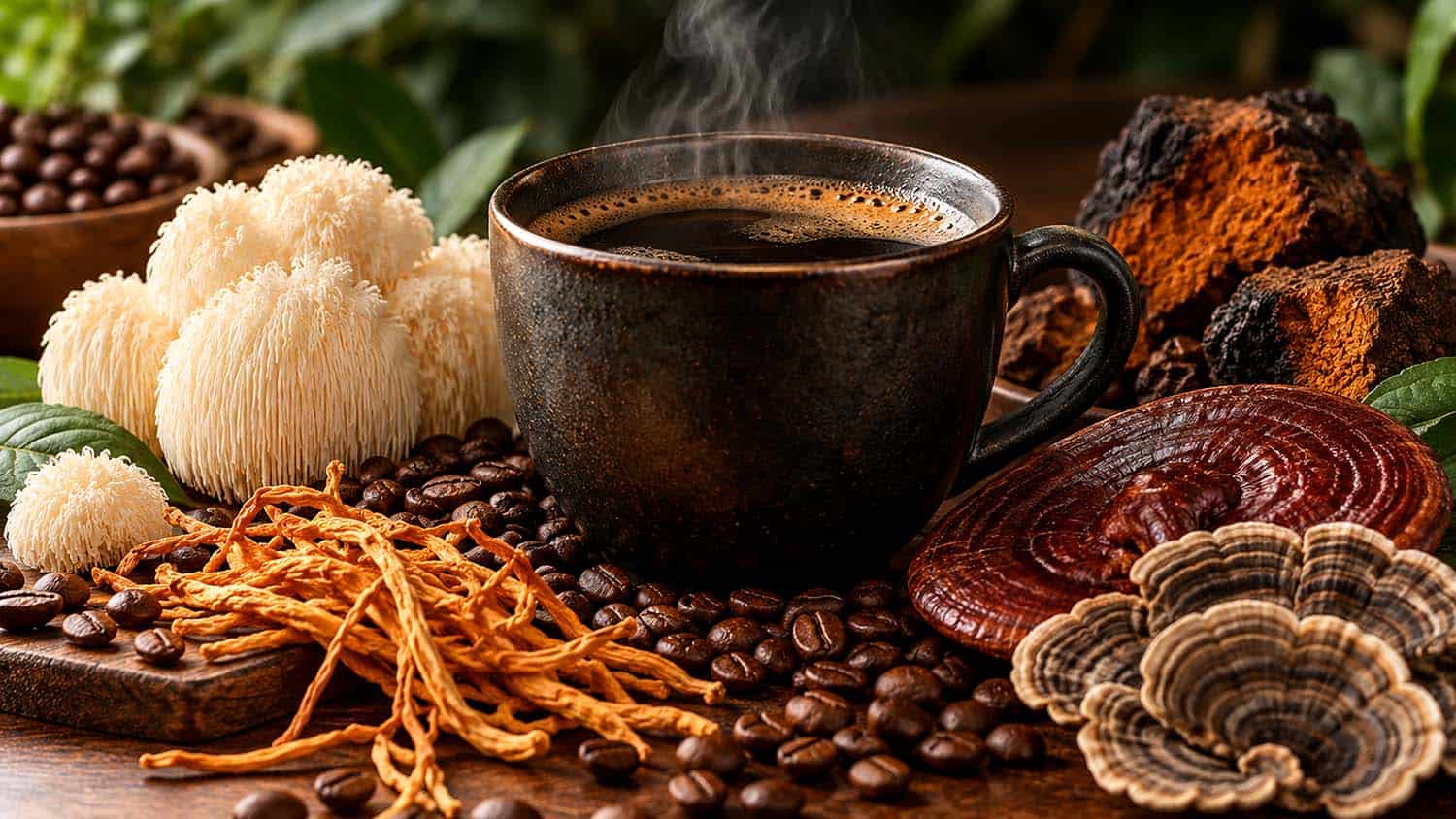
The functional mushrooms you will see most are lion’s mane, cordyceps, reishi, chaga, and turkey tail. Some blends add shiitake or king trumpet. Many health-conscious consumers choose these medicinal mushrooms to support long-term wellness.
Many of these species are prized as adaptogens, each linked to a different traditional use to match your goals. Formulations rich in adaptogenic mushrooms are designed to help the body navigate daily physical and mental stressors.
Among these varieties, lion’s mane stands out as the most common choice for nootropic blends.
Extract type is the next clue. A fruiting body extract comes from the visible mushroom cap and stem. Mycelium is the root-like network, often grown on grain. Both appear in quality products, and the brand should say which one it uses. Some labels also mention “dual extraction,” which uses hot water and alcohol to pull out different compounds.
Look for an amount next to each mushroom. A “proprietary blend” lists one total weight for all mushrooms combined, so you cannot see how much lion’s mane is in your scoop.
Knowing the precise quantity of lion’s mane ensures you are getting a meaningful serving in every brew.
Amounts help you set expectations. Human lion’s mane studies often use 750 to 3,000 mg of extract per day. A cup with a few hundred milligrams of a mixed blend delivers far less of any single species. A clear label lets you compare that gap yourself.
Third-party testing means an outside lab checked the product for things like heavy metals or microbes. Ask the brand whether testing covers the coffee, the mushroom extracts, or both, because “tested” can mean different things.
Certifications are easier to verify. USDA Organic and fair-trade seals tell you how a crop was grown and sourced. Check whether a seal covers the whole product or one ingredient. A bag of organic mushroom coffee might use organic beans with mushrooms that carry separate claims.
The coffee base sets your daily experience. Organic arabica coffee is the common choice for smooth flavor. Premium arabica coffee provides natural sweetness and chocolatey notes that complement earthy mushroom powders.
Selecting quality arabica coffee beans ensures a rich profile that balances earthy extracts. Specialty-grade beans score 80 or above under Specialty Coffee Association standards. Single-origin or single-source beans let you trace where your cup comes from.
Caffeine follows the coffee ratio. Many blends mix mushroom powder with coffee, which brings caffeine down from a standard cup. Brands do not always print the number, so ask if it matters to you.
Your brewing habits and caffeine tolerance narrow the field fast. Ground blends suit home brewers, instant mixes suit busy mornings, and coffee-free powders suit people cutting caffeine. If you want a refresher on formats and basics first, the complete mushroom coffee guide covers them in plain terms.
Ground mushroom coffee is your best match if you love the brewing ritual. It drops into your drip machine, pour over, or French press with no new steps. You keep control of strength and flavor.
Many coffee drinkers find this style provides sustained energy while preserving their morning routine. High-quality beans deliver steady energy without the sudden peak and crash of standard energy drinks.
Look for a single-source arabica coffee base and tasting notes you enjoy. Pre-ground blends such as Zen Nootropics and Four Sigmatic’s ground options fit this group.
Opting for a certified organic mushroom coffee in this format guarantees clean, traceable beans alongside high-grade fungal extracts.
Pick a product that publishes its caffeine number. A lower-caffeine coffee with a printed figure, like the Four Sigmatic lion’s mane instant at about 50 mg, lets you plan your day.
If you want to go further, a coffee alternative like MUD/WTR replaces most of the coffee with cacao and chai. You can also mix: one mushroom coffee in the morning and a coffee-free cup in the afternoon.
Choose a five- or six-mushroom blend if you want a broad mix. RYZE lists six species, and Zen Nootropics lists five.
More species on a label does not tell you the amount of each. Weigh variety against transparency. Some functional coffee products also add adaptogenic herbs like ashwagandha, which changes the formula’s focus.
The best mushroom coffee brands clearly disclose the exact amounts of their adaptogenic mushrooms so you know what you are consuming.
Instant mushroom coffee wins for speed. You add hot water, stir, and go, with no machine or filter needed.
Instant mixes also tend to include extras like MCT oil, collagen, or prebiotic fiber. Read the full ingredient list so you know what else comes with your adaptogenic coffee.
Research on individual mushrooms is promising but early, and almost none of it studies mushroom coffee itself. Harvard Health notes that well-designed human trials are lacking and that none of the research was done on the brewed drink. Treat the findings below as ingredient research, not proof that a cup will deliver results.

Lion’s mane mushroom is the most studied species for cognitive function. In a 2009 trial, 30 Japanese adults with mild cognitive impairment took 750 mg of lion’s mane daily for 16 weeks and scored better on cognitive tests than the placebo group. Scores dropped again after they stopped.
That study used a dedicated supplement in a small group. It does not show that mushroom coffee improves focus and memory or everyday mental clarity in healthy adults.
Many consumers seek out lion’s mane specifically for workday productivity and concentration. While early clinical work on cognitive function is encouraging, balanced nutrition and proper rest remain critical for mental performance.
Cordyceps is linked to endurance and steady energy. Small human trials suggest modest effects on exercise measures like oxygen uptake, mostly at doses around 1,000 mg or more per day.
Drinkers often look to cordyceps for sustained energy throughout busy mornings. Even so, results vary by age and fitness, and any immediate lift likely comes mostly from caffeine.
Reishi mushroom has small human studies on fatigue and immune markers. Chaga mushroom shows antioxidant activity, though the work is mostly in cells and animals. Harvested predominantly from wild birch trees, chaga mushroom contains high concentrations of beneficial polyphenols and betulinic acid.
Turkey tail has lab research tied to immune support and gut health through its prebiotic compounds.
These adaptogenic mushrooms have long traditional use, especially for overall vitality and immunity support. In traditional practices, medicinal mushrooms and herbal adaptogens have been consumed for generations to help balance physical vitality.
While research on adaptogens continues to expand, human data on digestive health and immune support from daily drinks is still thin.
Most studies use isolated extracts at higher doses than a typical cup contains. Many are in cells or animals. Few test mushrooms mixed with coffee, so combined effects remain unknown.
Use this as a reason to judge mushroom coffee on taste, caffeine fit, and label clarity. Expect a pleasant ritual, and let any added benefit be a bonus.
Mushroom coffee costs more than regular coffee, often about double the price for a 12 oz bag. Price per serving gives you a fairer comparison than bag price alone. Subscriptions can bring the number down.
To compare products, divide the price by the number of servings listed on the label. Instant packets often list servings clearly. Ground coffee depends on how strong you brew.
For example, Zen Nootropics suggests 2 tablespoons of grounds per 6 to 8 oz of water. Count how many tablespoons a bag holds at your strength, then divide the $34.95 list price by that number. Run the same math for each brand so you compare like with like.
Subscriptions usually trim the cost and add free shipping. Zen Nootropics offers Subscribe & Save of $10 or more with free shipping, free shipping when you buy two or more items, and the option to cancel any time.
Value also includes what you get for the price. A cheaper bag with a vague label may cost less per cup but tell you less about what is in it.
Switching is easy for most people because most blends still contain real coffee. Mushroom coffee taste stays close to your usual cup, caffeine usually drops, and a few groups should check with a doctor first.

First-time drinkers often wonder about mushroom coffee taste, expecting a savory broth. In reality, actual mushroom coffee taste remains remarkably close to traditional coffee, delivering a smooth profile with gentle nutty or earthy notes.
Milk or plant creamer hides that subtle earthiness even more. Brew mushroom coffee grounds the same way you brew regular coffee.
Water just off the boil, around 90 to 95°C (194 to 203°F), helps you avoid extra bitterness. If you drink several cups a day, try swapping one cup at a time.
Lower caffeine is the most predictable change. Many blends carry about half the caffeine of regular coffee, though amounts vary by brand. Up to 400 mg of caffeine a day is a common limit for healthy adults.
Some people notice digestive upset from mushrooms. Mushrooms also contain oxalates, which can contribute to kidney stones in people at risk. Chaga is especially high in oxalates.
Talk with your doctor before switching if you are pregnant or nursing, take medication, or have kidney or heart conditions. Safe doses and drug interactions for medicinal mushrooms are not well studied.
The same advice applies if you are sensitive to caffeine. A quick check gives you peace of mind before you change a daily habit.

Zen Nootropics Mushroom Coffee suits you if you want a pre-ground, five-mushroom blend on an organic Colombian base. As a carefully sourced organic mushroom coffee, it keeps the brewing ritual of regular coffee while adding functional mushrooms to the bag.
The blend includes lion’s mane, cordyceps, reishi, chaga, and turkey tail. The brand pairs them with USDA organic, single-source, fair-trade Colombian beans. It describes the cup as bold and smooth, with notes of dark chocolate and cinnamon, and lists the product as free of artificial ingredients and fillers.
This formula fits home brewers who want mushroom variety without changing equipment. It works in drip machines, pour overs, French presses, and some espresso machines. If you weigh mushroom coffee vs regular coffee mainly on mushroom coffee taste, the rich notes of dark chocolate and cinnamon provide a familiar, satisfying mug.
If you need exact caffeine or per-mushroom amounts, contact the company before you order. Phone support runs 8:00 AM to 7:00 PM PST at (916) 352-3336.
Now that you know what to look for on a label, see how one blend measures up. Zen Nootropics Mushroom Coffee combines lion’s mane, cordyceps, reishi, chaga, and turkey tail with organic Colombian coffee. Read the full ingredient details, compare them with your checklist, and decide whether it fits your morning. Explore Zen Nootropics Mushroom Coffee today.
Use these checks on any bag before you buy. They work for ground mushroom coffee, instant mixes, and any functional coffee in between.
Start with format: ground for home brewers, instant for speed, coffee-free for cutting caffeine. Within that format, favor labels that name each species, list amounts, and print caffeine. Keep expectations grounded, since mushroom research is still early. Pick the cup you enjoy and can afford daily, then give it two weeks before you judge how it fits your routine.
Premium Colombian coffee. Five functional mushrooms. One thoughtfully crafted blend.
Discover Zen Nootropics Mushroom Coffee, made with organic Colombian coffee and a blend of Lion’s Mane, Cordyceps, Reishi, Chaga, and Turkey Tail.
Enjoy the familiar taste and brewing experience of real coffee while exploring functional mushroom ingredients.
Explore Zen Nootropics Mushroom Coffee
A lower-caffeine instant packet with a printed caffeine number is an easy first step. If you already brew at home, a pre-ground blend lets you keep your routine. Either way, start with one cup a day.
Starting with a gentle blend containing lion’s mane can help you gauge how your body responds to functional fungi.
Mushroom coffee is a different option with less caffeine in most blends and added mushroom extracts. Research on the finished drink is limited, so mushroom coffee benefits beyond lower caffeine are unproven. Choose based on mushroom coffee taste, caffeine needs, and budget.
Caffeine content is an important consideration when choosing mushroom coffee. Many blends contain real coffee, meaning their caffeine levels depend on the formulation and serving size. For a closer look at how different products compare, read our guide: Does Mushroom Coffee Have Caffeine?.
Look for named species, amounts per mushroom, a clear caffeine figure, and a quality arabica base. Choosing a verified organic mushroom coffee also helps ensure your brew is free from synthetic fertilizers and pesticide residues. Ask what outside testing covers, then compare cost per serving.
Mushroom coffee costs more than regular coffee, and evidence for gut health or other benefits is early. Some people get stomach upset, and oxalates in mushrooms like chaga concern people prone to kidney stones. Check with your doctor if you take medication or have health conditions.