Mushroom Coffee Side Effects: Risks and Safety Tips
You want a morning coffee that fits your focus goals and agrees with your body. Mushr...
Read Article →

Discover whether mushroom coffee contains caffeine, how it compares with regular coffee, and what determines the caffeine in each cup.
Yes, to answer the question does mushroom coffee have caffeine – yes it contains caffeine when it includes regular coffee; the functional mushrooms themselves supply no caffeine. If you want a satisfying morning cup with a more manageable caffeine intake, look at the coffee base and the amount you brew.

You’ll find mushroom coffee in both ground and instant forms, with very different recipes. Some blends reduce the amount of caffeinated coffee in your serving, while others deliver caffeine levels close to your usual brew. Adding mushrooms leaves the caffeine already present in the coffee intact. It’s worth noting that the functional mushrooms in the blend do not contribute any caffeine to the mix, which leads us back to the burning question: does mushroom coffee have caffeine?
For a useful comparison, match the caffeine amount to the serving you plan to drink. A small instant serving and a large mug of brewed coffee deserve separate calculations, even when both packages promise balanced energy.

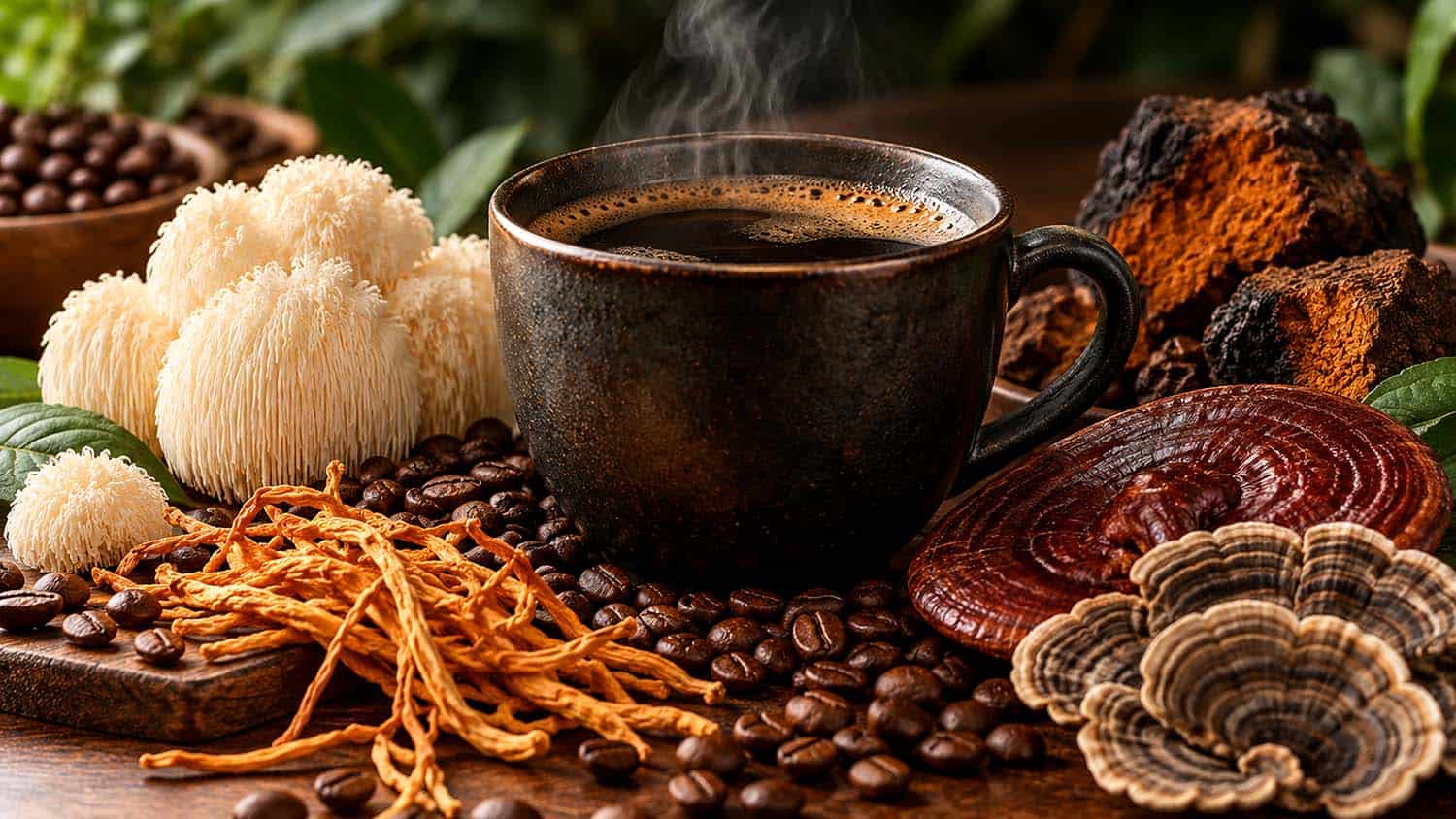
Your mushroom coffee’s caffeine content comes down to its specific recipe and serving instructions. The mushrooms themselves, such as Lion’s Mane, Chaga, Reishi, and Cordyceps, are naturally caffeine-free. Any caffeine in your cup comes from the coffee beans blended alongside them. So when you ask, “Does mushroom coffee have caffeine?”, the honest answer is that it depends on what’s inside the bag. Many blends pair organic coffee with functional mushroom extracts, which means they often contain less caffeine than a standard cup while still delivering that rich, traditional coffee flavor you love.
Regular mushroom coffee made with caffeinated beans belongs in your daily caffeine total. That’s true whether you brew grounds in your drip machine or French press, or dissolve an instant blend in hot water. Brewing method matters, too. Freshly brewed grounds tend to pull more caffeine into your mug, while instant versions often land on the lighter side per serving. Your scoop size, water ratio, and steep time can also nudge the numbers up or down. Checking the label and following the serving guidance is the simplest way to know exactly what you’re sipping.
Ultimately, “does mushroom coffee have caffeine” is a significant question for anyone considering this unique beverage. If you’re sensitive to caffeine or hoping to cut back without losing your morning ritual, knowing the answer helps you enjoy steady, natural energy without the jitters or restless nights. If you’re chasing sharper focus, Lion’s Mane is prized for supporting cognitive clarity, while Chaga brings antioxidant support to every sip. Pairing these mushrooms with a moderate dose of caffeine can create a calm, balanced boost that carries you through busy workdays, workouts, and everything in between.
You should compare equivalent servings before calling a mushroom blend lower in caffeine. The question does mushroom coffee have caffeine is typically found on a package’s stated caffeine per serving is useful only when you also check the amount of product and preparation it describes. Use these distinctions when reading labels:
| What You Compare | Ground Mushroom Coffee | Instant Mushroom Coffee | Regular Coffee |
|---|---|---|---|
| Coffee base | Ground beans | Soluble coffee | Ground beans |
| Preparation | Brew with equipment | Dissolve in water | Brew with equipment |
| Caffeine amount | Recipe and brew dependent | Product-specific | Bean and brew dependent |
| Serving check | Grounds and finished volume | Powder per serving | Grounds and finished volume |
You shouldn’t apply an instant mushroom coffee figure to a ground blend. The products use different amounts of coffee, and brewing introduces additional variation. Claims such as “half the caffeine” need a defined serving and a clear comparison.
Does mushroom coffee have caffeine? In most cases, yes. But the amount in your cup depends on the brand you choose. Medicinal mushrooms like lion’s mane, chaga, reishi, and cordyceps contain no caffeine on their own. Nearly all the caffeine in a mushroom coffee blend comes from the coffee itself or from other added ingredients. That’s why two blends that look and taste similar can give you very different energy levels.
The ratio of coffee to mushrooms is the main reason caffeine levels vary. Each brand builds its formula a little differently:
For example, a blend that is roughly half coffee and half mushrooms will generally deliver less caffeine than one where coffee makes up most of each serving.

Your caffeine intake is shaped by the coffee base, the amount you use, and how you prepare it. The mushroom ingredient changes the blend’s composition without removing caffeine from the coffee.
Start with the type of coffee in your blend. Robusta beans contain more caffeine than Arabica beans, while decaffeinated beans have had most of their caffeine removed. The coffee-to-mushroom ratio then affects how much coffee you get in a measured serving.
You should also distinguish mushroom extract from mushroom powder. An extract is processed to concentrate selected mushroom compounds; powder may consist of dried, ground material. Neither term tells you the finished drink’s caffeine level.
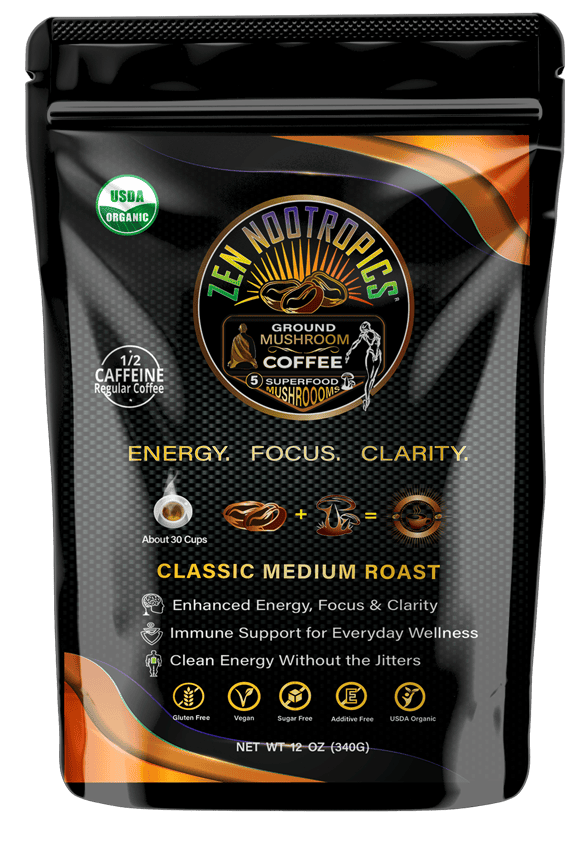
For a familiar brewed format, you’ll find mushroom coffee from Zen Nootropics made with USDA organic Colombian coffee and five functional mushrooms: Lion’s Mane, Cordyceps, Reishi, Chaga, and Turkey Tail. You get pre-ground coffee with tasting notes of dark chocolate and cinnamon. Its ground format calls for a comparison with brewed coffee using the product’s preparation instructions.
Your total caffeine rises when you use more of the same caffeinated blend and drink the full result. For an instant product, adding extra water to the same measured powder dilutes the flavor while leaving the total caffeine unchanged. Adding another scoop increases the amount of caffeinated product.
With ground coffee, you also need to account for extraction during brewing. Grind size, water temperature, and contact time affect how much caffeine reaches your cup. A small, concentrated drink and a large, milder-tasting mug require separate serving comparisons.
For a more consistent routine, measure your grounds and keep your brewing method steady. Record the finished volume you drink, especially when your brewer makes several servings. Taste alone gives you a poor measure of caffeine strength.
You get no natural caffeine from lion’s mane, cordyceps, reishi, chaga, turkey tail, or maitake. These functional mushrooms, also called medicinal mushrooms, contribute mushroom compounds to the blend. Their presence does not cancel the stimulant in your coffee. So when asking “does mushroom coffee have caffeine”? you need to know if there is actually real coffee or some kind of coffee extract besides the functional mushrooms within the blend.
You’ll find caffeine-free mushroom drinks, while decaf mushroom coffee still contains some caffeine. Choosing between them requires checking the complete ingredient list as well as the front label.
Choose decaf mushroom coffee when you want a coffee-based drink with much of its caffeine removed. Decaffeination leaves a small residual amount, so you still need a product-specific figure if your caffeine limit is strict. A decaf label alone does not establish a completely caffeine-free serving.
For a caffeine-free mushroom drink, look for a formula whose ingredients contain no caffeine. Coffee-free mushroom drinks sometimes use roasted chicory or other herbal ingredients to create a rich flavor. You still need to examine the rest of the formula before treating “coffee-free” as “caffeine-free.”
Check your mushroom drink for tea ingredients, including matcha and black tea. Cacao, guarana, and added caffeine also contribute to your intake. A formula built without coffee beans still needs this ingredient check.
You should read flavored versions separately, even when you recognize the brand. A different flavor may use a different beverage base or added ingredients. Use the caffeine statement for the exact product you’re considering.
You can experience jitters or sleep disruption from caffeinated mushroom coffee, especially if you are sensitive to caffeine. A lower-caffeine coffee reduces your dose only when its serving contains less caffeine than the drink it replaces.
If you have caffeine sensitivity, begin with a smaller measured serving and pay attention to your response. If you’re sensitive to caffeine, our guide to coffee without jitters explores practical ways to adjust your coffee routine.You may experience jitters, anxiety, or headaches even with mushroom coffee. Stop drinking it and seek medical advice if symptoms persist or feel concerning.
Keep track of your other caffeine-containing drinks and supplements throughout the day. Your mushroom coffee adds to that total, even if it feels smoother than your usual cup. A pleasant taste or calmer experience does not establish a lower caffeine dose.
You might also see L-theanine included in some blends. It leaves the caffeine in your drink intact, so treat it as a separate ingredient when checking the label. A “calm focus” claim gives you no assurance that the serving suits your sensitivity.
Keep caffeinated mushroom coffee early in your waking day if sleep is a concern. Caffeine’s effects last beyond the period when you feel its strongest lift. Move your last serving earlier if you notice trouble falling asleep or changes in sleep quality.
Your schedule deserves attention, especially if you work shifts. Plan around your intended sleep time and include other caffeine you consume during that waking period. For an evening ritual, use a drink with a verified caffeine-free formula.
Use the caffeine amount per labeled serving as your starting point for comparison. Then check whether your usual preparation matches that serving.
Look for a caffeine statement tied to a defined amount of product. For ground coffee, useful details include the weight of grounds and the brewing conditions. For instant coffee, check the amount of powder the caffeine figure describes.
Before comparing packages, check:
Treat the coffee-to-mushroom ratio as supporting information. It helps explain the recipe, but it does not supply a precise caffeine measurement. Your finished serving still needs its own caffeine figure for a close comparison.
Treat a blend containing regular coffee as a caffeinated drink when its caffeine amount is missing. Avoid assigning it a category average or borrowing a figure from another brand. An instant blend’s advertised amount gives you no dependable measurement for a different ground product.
For a product-specific answer, the useful details are caffeine per serving and the preparation used to establish it. If you need a strict limit, choose a product with clear caffeine information. Clinical guidance is appropriate when your limit relates to medication or a health condition.
Choose your mushroom coffee using its labeled serving and coffee base, then match those details to your brewing routine. Caffeine levels deserve a product-specific comparison, particularly when you switch between instant powder and brewed grounds.
For a familiar morning ritual, keep your measurements consistent and include each serving in your daily caffeine total. If avoiding caffeine is your goal, check for a verified caffeine-free formula; if reducing it is your goal, compare the stated amounts for equivalent servings. In conclusion, asking does mushroom coffee have caffeine is crucial for anyone looking to manage their daily caffeine intake effectively.
Your product’s coffee base provides the clearest starting point for these questions. For personal tolerance, consider the complete formula alongside your caffeine intake.
Yes, you get caffeine from the Colombian coffee in Zen Nootropics mushroom coffee. For a precise amount, use product-specific caffeine information matched to your serving and brewing method.
No, your decaf mushroom coffee retains a small amount of caffeine after decaffeination. If you need to avoid caffeine completely, choose a mushroom drink with a verified caffeine-free formula.
You should expect caffeine to remain active when your coffee contains lion’s mane. Evidence for lion’s mane does not establish that it prevents caffeine jitters or sleep disruption in a finished mushroom coffee blend.
You may tolerate mushroom coffee as a daily drink, provided its caffeine and mushroom ingredients suit your health needs. Follow the serving directions and seek clinical guidance first if you are pregnant or breastfeeding, take prescription medication, or have kidney or liver disease.