Mushroom Coffee Side Effects: Risks and Safety Tips
You want a morning coffee that fits your focus goals and agrees with your body. Mushr...
Read Article →

Most people understand the reasoning behind mushroom coffee benefits for very logical reason: steady morning energy, a clearer head for work, and a cup that feels kinder to the body than a third refill of regular drip. If those are your goals, it helps to know which parts of the cup are doing the work, […]
Most people understand the reasoning behind mushroom coffee benefits for very logical reason: steady morning energy, a clearer head for work, and a cup that feels kinder to the body than a third refill of regular drip. If those are your goals, it helps to know which parts of the cup are doing the work, and how much of the hype has been tested in people. For a detailed examination of the research, explore our guide to mushroom coffee benefits
The main proven benefit of mushroom coffee is caffeine-driven alertness, often at a lower dose than regular coffee; the mushrooms add possible support for focus (Lion’s Mane), energy (Cordyceps), and immune health, but most of that evidence comes from small human trials or lab studies, and none of it tests a finished cup. That still leaves plenty of room for a good daily ritual. It just means you get more out of it when you set realistic expectations.
If you want the basics of what goes into the blend, start with this primer on functional mushroom coffee. Below, you’ll learn how to tell plausible benefits from established ones, so you can judge any claim on a label with a sharper eye.
Mushroom coffee’s best-supported benefits are energy and alertness from caffeine, plus possible focus support from Lion’s Mane and possible stamina support from Cordyceps. Claims about immunity, stress, and gut health are still under study, and the table below shows where each one stands.
The energy you feel comes first from the coffee itself. Mushroom powder has no caffeine, and many blends mix it with ground coffee about 1-to-1, which can cut caffeine roughly in half. One comparison found 50 to 60 mg of caffeine in several mushroom coffees versus 100 to 150 mg in a regular pod. That lower dose is a likely reason some people report fewer jitters.
This is formulation-dependent. Some blends use more coffee, and brands often leave caffeine content off the package.
Lion’s Mane is the mushroom most linked to cognitive support. It contains compounds called hericenones and erinacines that stimulate nerve growth factor (NGF), a protein that helps brain cells grow and stay healthy.
Research on Lion’s mane indicates potential to support cognitive function and gives mushroom coffee benefits over time. Early human trials point to small gains in cognitive performance as proof of mushroom coffee benefits as well as focus and mental clarity, though the studies are short and small.
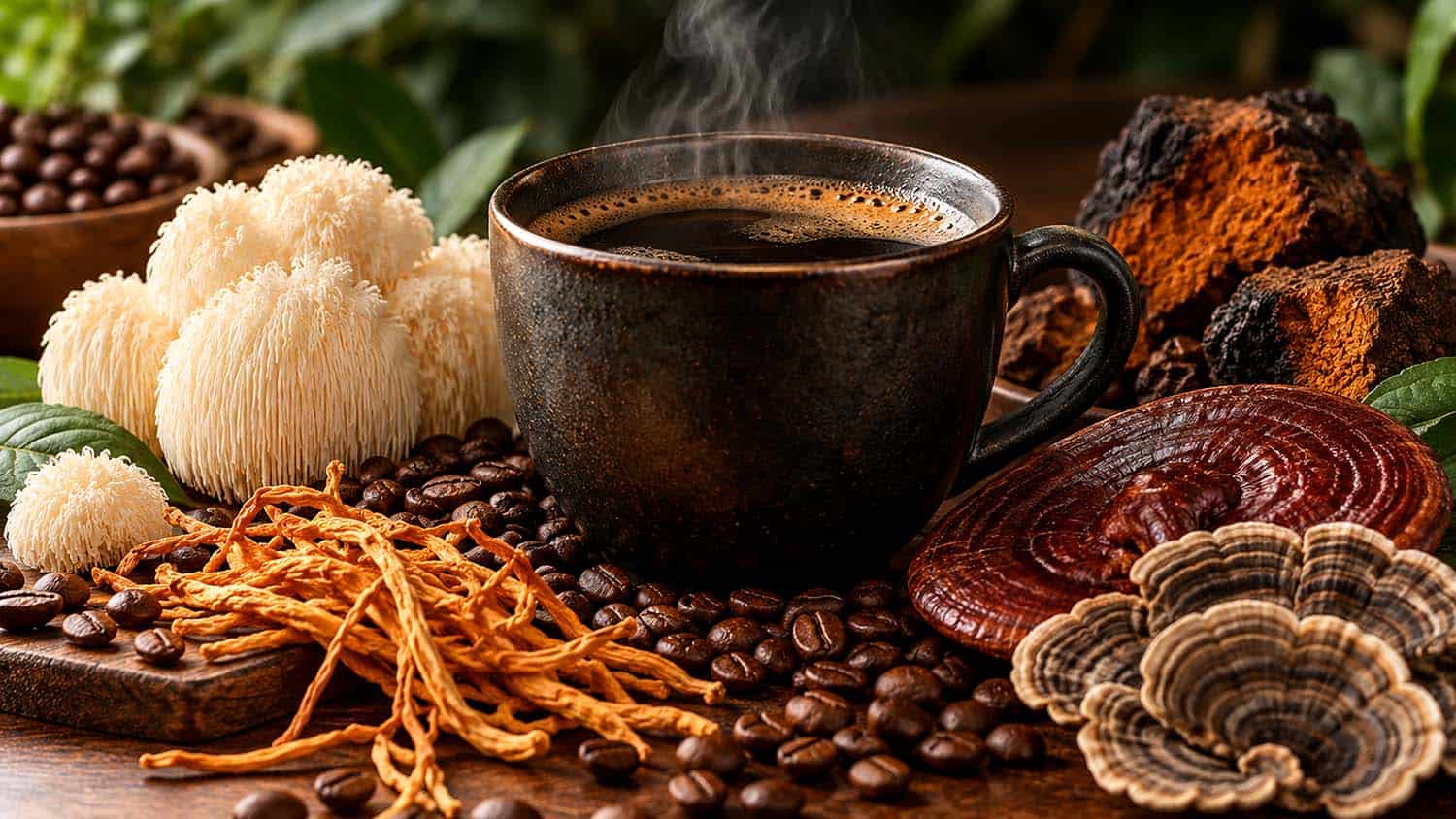
Reishi, Chaga, and Turkey Tail show up in blends for stress, antioxidant, and immune claims. Here is how each proposed benefit lines up with the evidence:
| Proposed benefit | Main ingredient | Evidence type | Practical limitation |
|---|---|---|---|
| Alertness | Caffeine | Strong human evidence | Caffeine varies widely by blend |
| Focus and memory | Lion’s Mane | Small human trials | Extract doses differ from coffee doses |
| Energy and endurance | Cordyceps | Some human trials | Mostly exercise and fatigue settings |
| Stress support | Reishi | Limited human, mostly animal | Cortisol effects not shown for coffee |
| Antioxidant support | Chaga | Lab and animal studies | High in oxalates |
| Gut and immune support | Turkey Tail | Test tube studies | Extracts may lack whole-mushroom fiber |

Energy and focus are where mushroom coffee has its strongest case, because caffeine works reliably and two mushrooms have early human data. Caffeine does the heavy lifting for alertness, Lion’s Mane has a handful of small cognition trials, and Cordyceps has research in fatigue and exercise.
Caffeine blocks a brain chemical called adenosine that builds up and makes you feel sleepy. That is why a cup sharpens your attention within about half an hour. Most adults can have up to 400 mg of caffeine a day without problems, and the mushroom coffee benefits associated with blends usually contain 45 to 90 mg of caffeine, compared with 80 to 100 mg in an 8-ounce cup of black coffee.
For you, that means a mushroom blend can feel smoother simply because you’re taking in less caffeine. Less caffeine can also help some people sleep better, though the mushrooms themselves don’t cause better sleep.
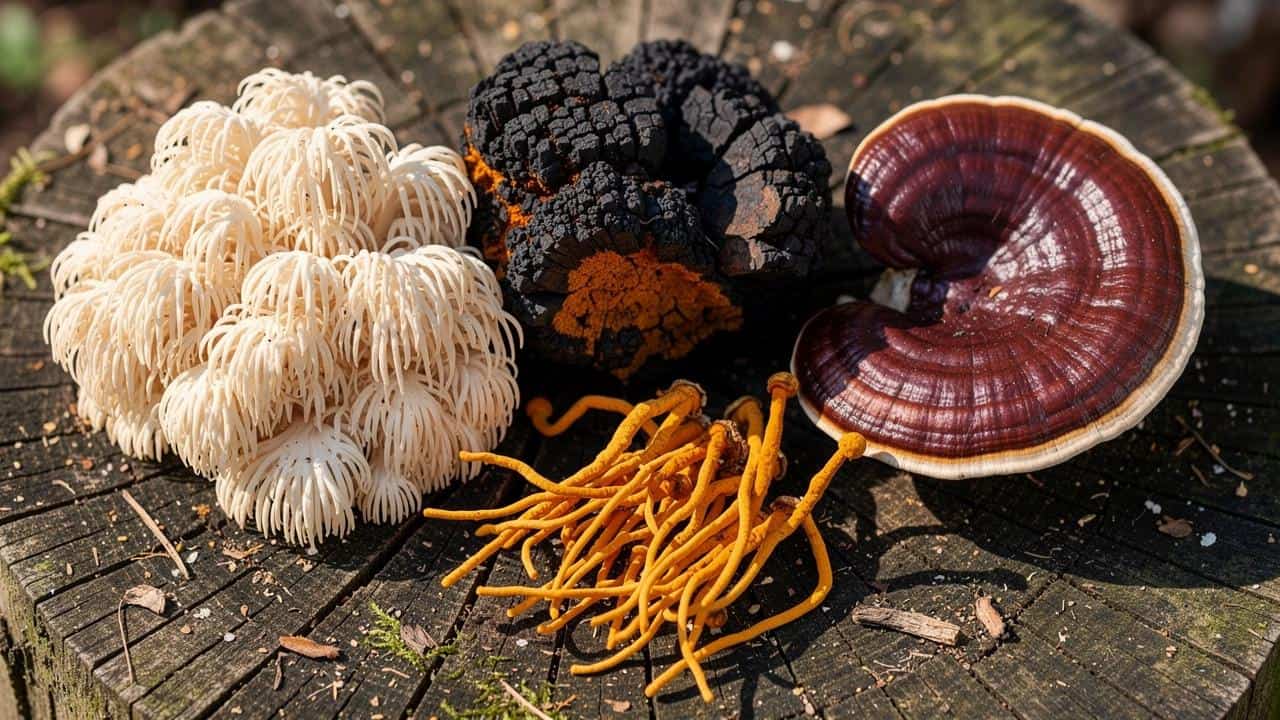
The most cited human data is modest. In a 2023 trial, 41 healthy adults aged 18 to 45 finished a cognitive task faster after a single dose of Lion’s Mane, and after 28 days they reported feeling less stressed, though that change wasn’t statistically significant. A 2024 analysis also linked Lion’s Mane to better cognition and energy in older adults making mushroom coffee the perfect solution to get your daily mushroom coffee benefits.
These studies used Lion’s Mane supplements at set doses. A coffee blend may contain a different amount, so the results suggest a direction, not a promise for your morning cup.
Cordyceps may help your body use oxygen and make cellular energy (ATP), which is why it’s linked to stamina. A 2021 study in Frontiers found it helped against fatigue and weakness, and a 2017 trial found Cordyceps militaris improved tolerance to high-intensity exercise. Researchers still want to pin down which compounds matter and confirm safety.
Like Lion’s Mane, these results come from supplement doses in specific groups, often active adults. If you already feel a lift from your coffee, caffeine is the more likely reason.
Reishi, Chaga, and Turkey Tail have interesting early research, but almost all of it comes from animals, test tubes, or extracts given as supplements. Medicinal mushrooms have centuries of traditional use, and clinical trials in people are still catching up.
Reishi is often called an adaptogen, meaning a substance thought to help your body handle stress and balance the stress response. Some studies suggest adaptogens can affect cortisol, the main stress hormone.
That has not been shown for mushroom coffee, and Reishi’s human evidence is thin. Reishi extracts have also shown potential for lowering blood cholesterol and, in turn, heart disease risk, mostly in early studies.
Chaga mushrooms are rich in antioxidants, including polyphenols, which help counter oxidative stress and manage chronic inflammation. Lab and animal work points to anti-inflammatory and immune effects.
Mushrooms contain plenty of anti-inflammatory compounds, but it’s unclear whether those compounds survive in mushroom extracts used in coffee.
Turkey Tail contains beta-glucans, a type of fiber-like carbohydrate that may feed gut bacteria and nudge the immune response. Most research exploring its immune-boosting properties comes from test tube studies.
A concentrated mushroom extract or fruiting body extract may also hold far less fiber than a whole mushroom. Because of this, gut microbiome claims for a cup of coffee remain unproven.
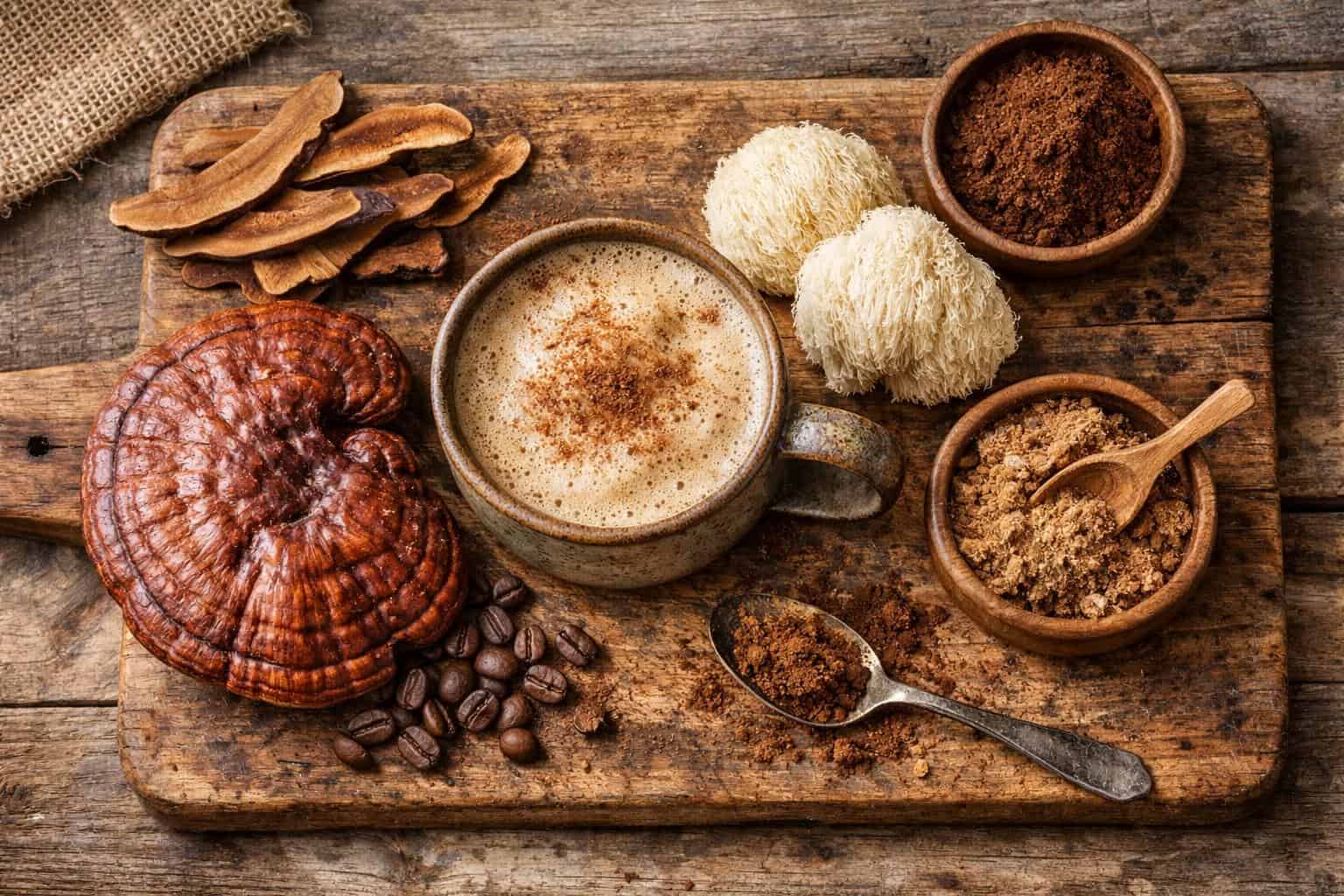
Research shows the mushroom coffee benefits between mushrooms and coffee each have some real benefits on their own, while the combined drink has almost no direct study. That gap is the key to judging any claim.
A test tube result shows a compound can do something to cells. An animal study shows it can happen in a living body. Only human trials show it happens in people at realistic doses. Harvard Health notes there is very little research on medicinal mushrooms that includes humans, and none of it was done on mushroom coffee.
A simple rule helps: if a claim rests on cells or mice, treat it as a hypothesis.
Most trials give a measured capsule of one species. A coffee blend mixes several species, often in unlisted amounts, then gets brewed with hot water. Researchers don’t know whether mixing mushrooms with coffee helps, harms, or changes their effects. Some experts suggest eating whole mushrooms like shiitake or king trumpet gives you more fiber and nutrients than an extract.
Treat mushroom coffee as a pleasant coffee alternative with possible extras. That framing fits the evidence.
The medicinal properties of mushrooms vary by type, growing conditions, the part of the mushroom used, and the stage of processing. Hot water pulls out beta-glucans, while alcohol extraction pulls out other compounds, so a “dual extract” and a plain powder are not equal. Chemistry studies, such as one measuring bioactive substances in coffee with Cordyceps and Lion's Mane fruiting bodies, show what’s in a blend. They don’t show what it does in your body.

The mushroom coffee benefits more than make-up for any side effects in healthy adults, but it carries both caffeine side effects and mushroom-specific risks. Long-term safety of daily use is not well studied.
Common issues include bloating, nausea, jitters, headaches, and poor sleep if you drink it late. Cordyceps paired with caffeine may cause a racing heart or dizziness in some people. On the medication side, Reishi can raise bleeding risk with blood thinners, and Cordyceps militaris might lower blood sugar, which matters if you take diabetes medicine. Chemotherapy drugs and immunosuppressants are also a concern.
Chaga is very high in oxalates, which can raise the risk of kidney stones. Rare liver injury cases have also been reported with Reishi products.
Check with your doctor first if any of these apply to you:
Mushroom coffee isn’t advised for children, mainly because of caffeine and a lack of research.
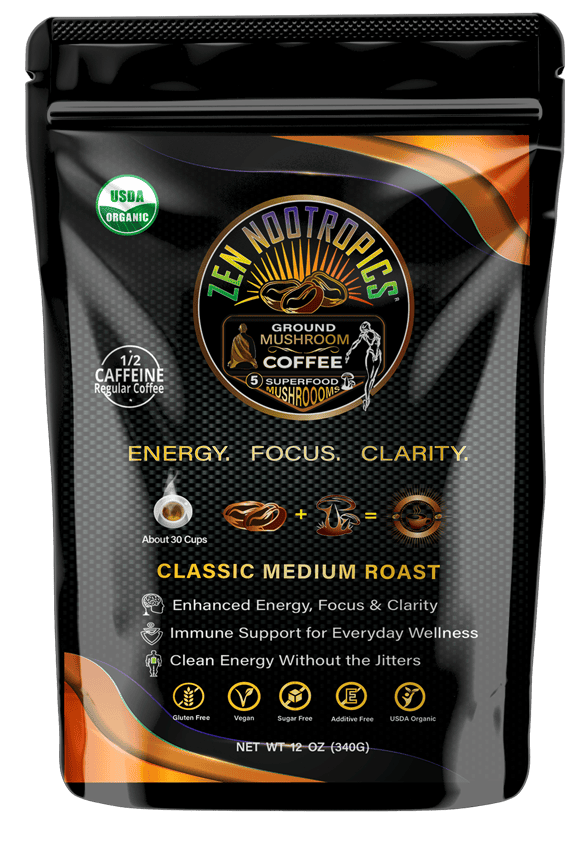
A good label tells you which species are inside, ideally with Latin names like Hericium erinaceus for Lion’s Mane. Look for listed caffeine content, mushroom amounts, and third-party testing with a Certificate of Analysis (COA). Coffee sourcing details help too. Zen Nootropics, for example, lists USDA organic Colombian coffee and its five functional mushrooms (Lion’s Mane, Cordyceps, Reishi, Chaga, and Turkey Tail) on its pre-ground blend, which gives you a clear starting point for checking ingredients against your health needs.
Mushroom coffee can support energy and focus mainly through caffeine, often at a gentler dose than regular coffee. Lion’s Mane and Cordyceps have early human research for cognition and stamina, while claims for Reishi, Chaga, and Turkey Tail rest mostly on lab and animal work. Species, dose, extraction, and brewing all shape how far any study result reaches into your cup. If you enjoy the taste, like a blend with dark chocolate and cinnamon notes, and check labels for species, caffeine, and testing, it can fit well into a balanced morning routine.
Not in any proven way. Regular coffee already has well-studied benefits, and mushroom coffee adds possible extras whose effects in a brewed blend haven’t been tested. Its clearest edge is lower caffeine in many blends, which can mean fewer jitters.
You’ll feel caffeine within about 30 minutes. Any mushroom-related effects are less certain; Lion’s Mane trials looked at single doses and 28-day use, but at supplement doses that may differ from your cup.
For most healthy adults, one or two cups a day is likely fine. Long-term daily use hasn’t been well studied, so talk with a doctor if you take medications or have kidney or liver issues.
No research shows that drinking mushroom coffee for weight loss produces meaningful changes in metabolism or fat burning. Claims about shedding pounds are largely unsupported.
Relying on mushroom coffee for weight loss is not backed by clinical trials. It works best as an enjoyable coffee alternative, while diet, exercise, and sleep drive true weight loss.