Mushroom Coffee Side Effects: Risks and Safety Tips
You want a morning coffee that fits your focus goals and agrees with your body. Mushr...
Read Article →

Lion’s mane mushroom coffee is a cup of regular coffee blended with ingredients from the lion’s mane mushroom. People drink it because they want steady focus, mental clarity, and a morning ritual that feels a bit more balanced. Lion’s mane mushroom coffee combines coffee with Hericium erinaceus ingredients, pairing caffeine’s well-proven alertness effects with the […]
Lion’s mane mushroom coffee is a cup of regular coffee blended with ingredients from the lion’s mane mushroom. People drink it because they want steady focus, mental clarity, and a morning ritual that feels a bit more balanced. Lion’s mane mushroom coffee combines coffee with Hericium erinaceus ingredients, pairing caffeine’s well-proven alertness effects with the possible cognitive support that researchers are still studying in lion’s mane.

In regards to lion’s mane mushroom coffee, the caffeine side is well understood. The mushroom side is newer, and most of its research uses concentrated extracts in capsules, studied in people, animals, or lab dishes. When you know which findings come from where, you can read a label with clear eyes and decide what your cup can and cannot promise.

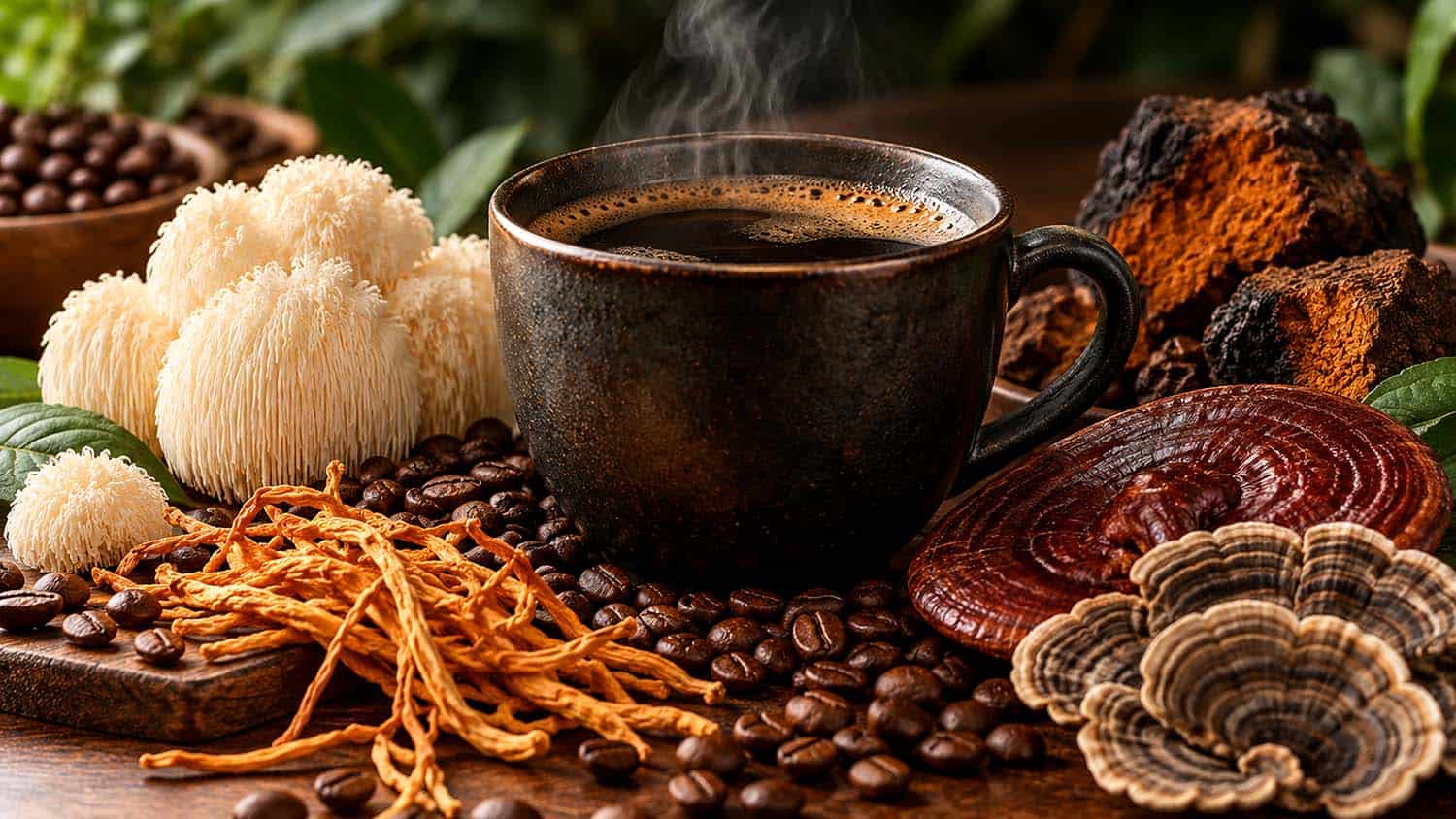
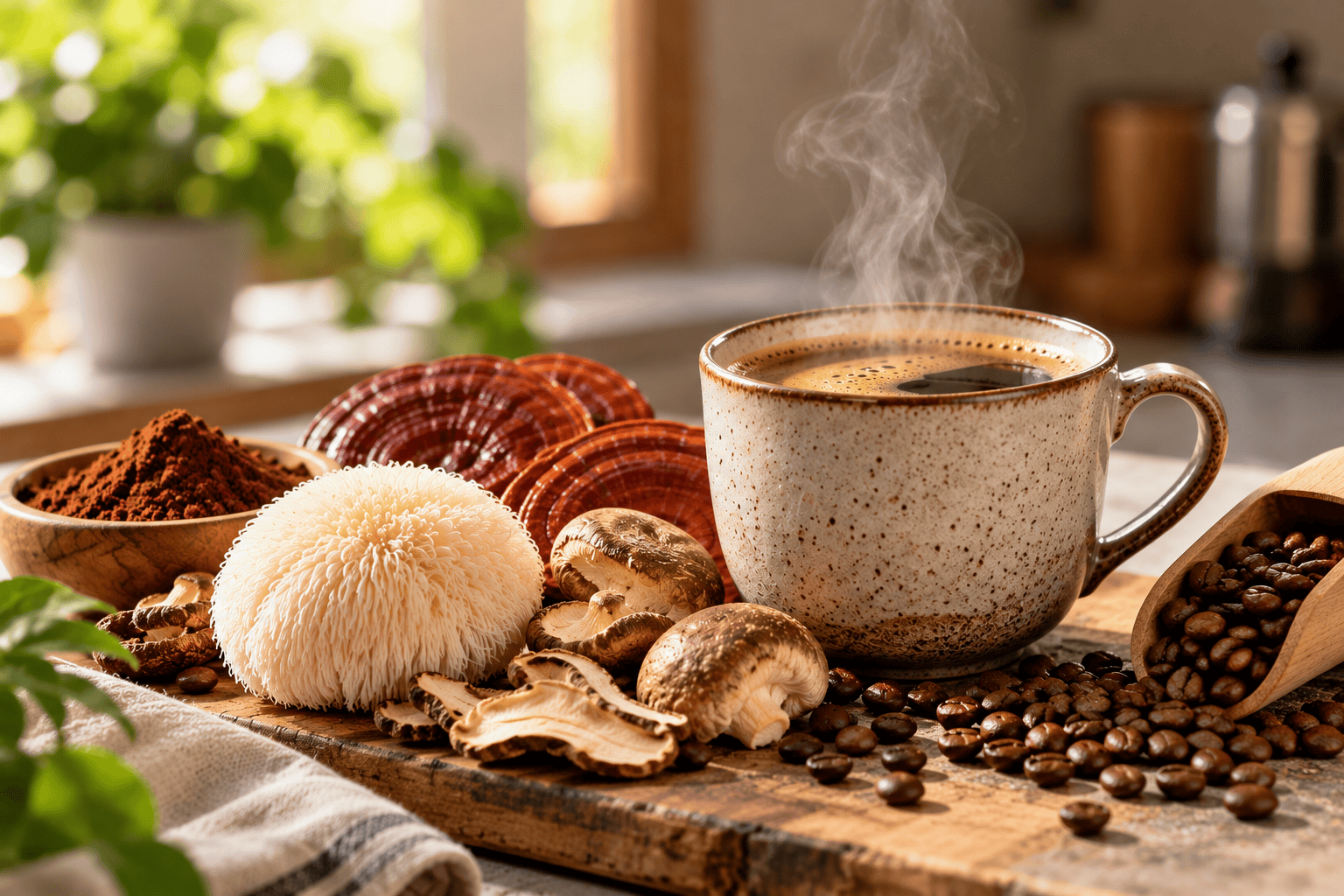
Lion’s mane mushroom coffee is ground or instant coffee mixed with dried lion’s mane powder or extract, often alongside other functional mushrooms like cordyceps and reishi. The mushroom adds little flavor, and the blend brews much like your usual coffee.
Hericium erinaceus is the scientific name for lion’s mane, a white, shaggy mushroom that grows on hardwood trees. Its long, hanging spines look a bit like a lion’s mane, which explains the common name. People in East Asia have eaten it as food and used it in traditional practices for centuries.
It is a culinary mushroom with a mild, seafood-like taste when cooked. It has no psychoactive effects. Researchers study it for two families of compounds, called hericenones and erinacines, which you’ll read about below.
Makers dry the mushroom, then either grind it into powder or run it through an extraction process with hot water, alcohol, or both. That powder or extract is blended into roasted ground coffee or instant coffee before packaging. Researchers have looked at using Hericium erinaceus powder as an additive in food products, and coffee is one of the easiest places to put it.
Most people report a nutty or earthy note, or no mushroom taste at all. Darker roasts tend to cover any earthiness well.
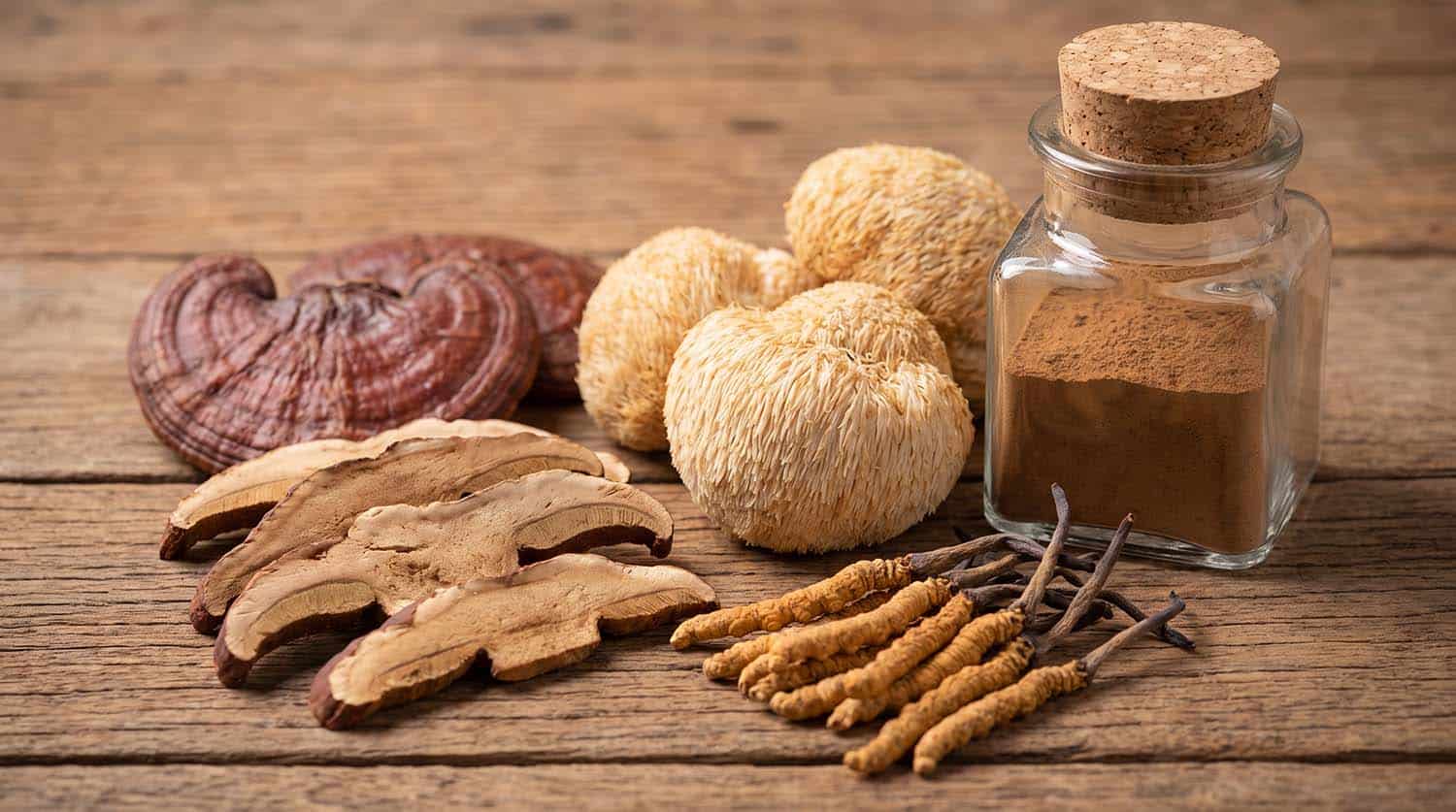
Many functional mushroom coffee blends pair lion’s mane with other species, each linked to a different traditional use. Cordyceps is associated with energy and endurance. Reishi and chaga are often called adaptogens, a non-medical term for substances thought to help the body handle stress. Turkey Tail is studied for gut and immune support.
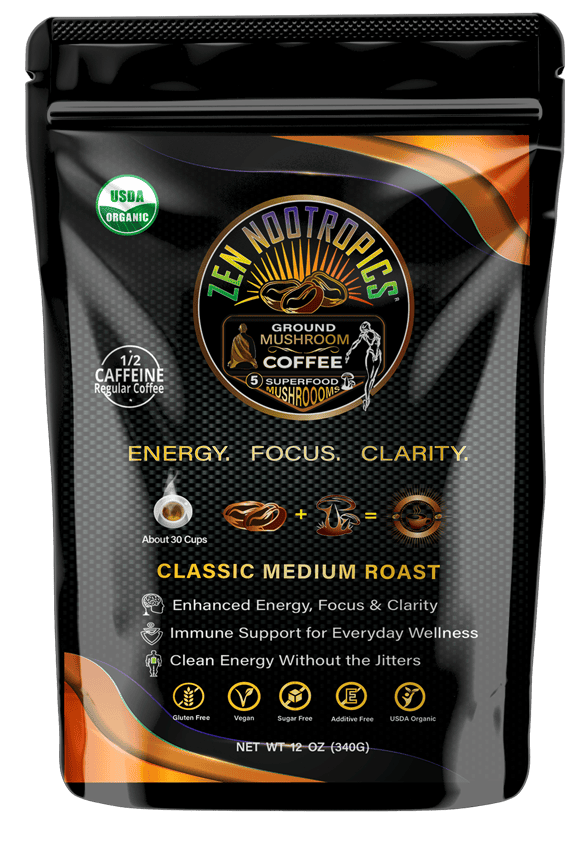
For example, Zen Nootropics mushroom coffee blends Lion’s Mane, Cordyceps, Reishi, Chaga, and Turkey Tail into pre-ground organic Colombian coffee with dark chocolate and cinnamon notes. A multi-mushroom blend gives you a wider mix of ingredients in one cup. Keep in mind that each mushroom’s research stands on its own, and a blend has not been tested as a combination.

Caffeine is responsible for the alertness you notice within the hour, while lion’s mane compounds are studied for slower effects on nerve cells. These two ingredients work through different pathways, and no study has shown that pairing them in coffee adds up to more than caffeine alone.
Caffeine blocks adenosine receptors in your brain. Adenosine builds up during the day and makes you feel sleepy, so blocking it keeps you more awake and alert. You usually feel this within 20 to 45 minutes.
This effect is one of the best-studied in nutrition science. It’s also the part of your cup that causes jitters or restless sleep if you have too much or drink it too late.
Hericenones and erinacines are natural compounds found in lion’s mane. Hericenones come mostly from the fruiting body (the visible mushroom), and erinacines come mostly from the mycelium (the root-like network). Both are alcohol-soluble, which is why some extracts use alcohol.
In lab and animal studies, these compounds appear to encourage nerve growth factor (NGF) production. NGF is a protein that helps nerve cells grow and stay healthy. That finding is the main reason people link lion’s mane with brain health, but lab results on NGF do not show that drinking lion’s mane leads to sustained focus in people.
No published clinical trial has tested caffeine and lion’s mane together in a coffee drink. You’ll see many claims that the pairing gives “jitter-free” energy, but those claims rest on reasoning, not direct testing. The lion’s mane in lion’s mane mushroom coffee had been reported by many people to provide some clarity and focus, not necessarily the energy, which is usually associated with the cordyceps.
What you can say with confidence is simpler. Caffeine gives you alertness now. Lion’s mane is being studied for possible longer-term cognitive support, mostly at extract doses higher than many coffees contain.

Human research on lion’s mane mushroom coffee shows early, modest signals for memory and mood, while stronger results come mostly from animals and lab dishes. None of the main studies used mushroom coffee.
The best-known human trial came from Japan in 2009. Older adults with mild cognitive impairment took tablets containing 3 grams of dried lion’s mane fruiting body powder daily for 16 weeks. Their test scores improved compared with placebo, then slipped back after they stopped.
Other small trials have looked at mood, anxiety, depression, and quick thinking in healthy adults, with mixed results. Taken together, modest clinical trials suggest possible cognitive benefits, especially in people with cognitive impairment. The trials are small and short, so they can’t confirm effects on brain fog or everyday focus in healthy coffee drinkers.
Lab and animal studies are where lion’s mane looks most impressive. In mice and rats, extracts have improved memory and learning tasks and shown neuroprotective properties. Cell studies show antioxidants and anti-inflammation activity, plus effects on immune health markers.
These results help scientists decide what to test next. They don’t tell you what happens in a human body at a normal serving size. Harvard Health notes that there is very little research on medicinal mushrooms that includes humans, so animal benefits may not carry over.
Studies use measured doses of a specific lion’s mane extract, often in grams per day. A coffee serving may contain far less, and processing and brewing could change the compounds. A British Dietetic Association spokesperson told the BBC there is “no robust evidence that lion’s mane in typical coffee doses can meaningfully improve memory, focus, or brain health”.
That gap is the key point. You can enjoy lion’s mane coffee as part of your routine, while treating cognitive benefits as possible, not proven.
The form of lion’s mane in your coffee to create lion’s mane mushroom coffee shapes what’s in the cup, and labels vary widely in how much they tell you. Fruiting body versus mycelium and powder versus extract are the two main choices to look for.
The fruiting body is the mushroom you can see and pick. Mycelium is the thread-like root network, often grown on grain like rice or oats in a lab. When mycelium is harvested with its grain, the final powder can contain a lot of starch.
Fruiting body and mycelium are both real parts of the fungus with different compound profiles. The 2009 human trial used fruiting body powder. Some newer studies use mycelium enriched in erinacines. A label that names which part was used tells you more than one that just says “lion’s mane.”
Mushroom powder is dried, ground mushroom with nothing removed. Lion’s mane cell walls contain chitin, a tough fiber your body digests poorly. An extract uses hot water, alcohol, or both to break down those walls and pull out compounds. A dual extract uses both, aiming to capture water-soluble beta-glucans and alcohol-soluble hericenones.
Some brands sell “full spectrum mushrooms,” a marketing term with no standard definition. It may mean fruiting body plus mycelium, or powder plus extract. Check the ingredient list for specifics.
| Form | How it’s made | What a good label shows | What it does not establish |
|---|---|---|---|
| Fruiting body powder | Mushroom dried and ground | “Fruiting body,” amount in mg | That compounds absorb well or match study doses |
| Mycelium powder | Root network grown on grain, then dried | Substrate (grain), amount, starch or beta-glucan % | How much is mushroom versus grain |
| Fruiting body extract | Fruiting body processed with water, alcohol, or both | Solvent, extract ratio, mg per serving | That the extract matches one used in a trial |
| Dual extract | Water plus alcohol extraction | Both solvents, beta-glucan % | Cognitive benefits in coffee form |
Beta-glucans are fibers found in mushroom cell walls, studied mainly for immune support. A stated beta-glucan percentage helps you tell real mushroom content from grain starch, since basic tests can confuse the two. Look for a method that separates beta-glucans from alpha-glucans (starch).
An extract ratio like 10:1 means 10 parts dried mushroom made 1 part extract. It describes concentration, not quality or proof of benefit. No standard beta-glucan level has been linked to cognitive effects in coffee.
The most useful mushroom coffee label tells you which mushrooms are inside, in what form, and how much caffeine you’re getting. Start with the coffee you’ll enjoy daily, then use the label to set fair expectations.
Look for a total mushroom amount per serving in your lion’s mane mushroom coffee, or better, the amount of lion’s mane alone. Many blends list a combined “mushroom blend” figure, which makes it hard to know each mushroom’s share. Compare that number with study doses (often 1 to 3 grams daily) knowing that no proven coffee dose exists.
Serving size matters too. A scoop of ground coffee brewed into one mug is one serving, and two mugs doubles both the mushrooms and the caffeine.
Third-party testing means an outside lab checks a product. Look for a Certificate of Analysis (COA) that covers heavy metals, microbes, and mushroom identity. Mushrooms absorb what’s in their growing material, so heavy metal testing is worth checking.
Transparent brands name the mushroom part, the solvent for any extract, and where the coffee comes from. Terms like arabica coffee, USDA organic, or single-source origin describe the coffee, not the mushrooms in lion’s mane mushroom coffee.
Caffeine depends on the coffee, not the mushrooms. A popular instant mushroom coffee has about 50 mg of caffeine per cup versus about 95 mg for regular coffee, but ground blends brewed full strength are close to regular coffee.
Some products add L-theanine, ashwagandha, or healthy fats like MCT oil. Each adds its own effects and safety points, so read them as separate ingredients.
If you’d like to try lion’s mane at home, here’s an optional recipe (makes 1 serving, 5 minutes):
Lion’s mane coffee is well tolerated by most healthy adults, and most side effects come from the caffeine. The mushrooms add a few points worth knowing, especially if you have allergies or take medication.
Some people get bloating, nausea, or diarrhea from mushroom coffee, especially with a sensitive stomach or IBS. Lion’s mane and reishi extracts have both been tied to stomach upset. Starting with a half serving lets you see how you feel.
If you’re allergic to mushrooms or molds, skip functional mushrooms. Itching or rash is possible, and trouble breathing needs emergency care right away.
Caffeine can cause jitters, anxiety, headaches, and a racing heart in sensitive people. Mushrooms do not cancel those effects. If you’re sensitive, choose a half-caf blend or a smaller cup.
For better sleep, avoid caffeinated drinks within 8 hours of bedtime. Most people do best keeping lion’s mane coffee as a morning drink.
Talk with your doctor before drinking functional mushrooms if you take medication. Reishi may raise bleeding risk with blood thinners. Some mushrooms may lower blood sugar or blood pressure, which matters with diabetes or heart medications. Chaga is high in oxalates, a concern if you’ve had kidney stones.
If you’re pregnant or breastfeeding, avoid mushroom coffee until you’ve spoken with your provider, since research is lacking. It isn’t meant for children because of the caffeine.
Lion’s mane mushroom coffee gives you the alertness of caffeine plus a mushroom ingredient that researchers are still studying for brain health. The strongest evidence comes from extracts in small human trials, animal studies, and lab work, so no coffee blend has proven cognitive benefits. When you read a label, look for the mushroom part, the form, the amount per serving, the caffeine level, and third-party test results, then decide if the blend fits your morning.
It’s good for a flavorful morning coffee that also adds lion’s mane to your routine. The caffeine supports alertness, while lion’s mane is studied for cognitive support. Those cognitive effects have not been proven in coffee form.
Only if the blend uses less coffee per serving. Many instant mushroom coffees contain about half the caffeine of a regular cup, but full-strength ground blends brew close to normal coffee.
No proven dose exists for lion’s mane in lion’s mane mushroom coffee. Human trials have used about 1 to 3 grams of lion’s mane extract or powder daily, and many coffees contain less, so check the label for an exact amount.
Most healthy adults can drink it daily, often up to 2 cups. Watch your total caffeine, and ask your doctor first if you take medication or have a health condition.
Be careful pairing it with blood thinners or diabetes medications, especially in blends that include reishi or cordyceps. Stacking it with energy drinks or other caffeine sources can lead to too much caffeine.
Hot water is one method used to make lion’s mane extracts, so brewing temperature is unlikely to ruin the main compounds. How well each compound survives in brewed coffee has not been studied directly.