What Does Mushroom Coffee Taste Like? Flavor Guide
You can expect mushroom coffee made with real coffee to taste like roasted coffee wit...
Read Article →

You want a morning coffee that fits your focus goals and agrees with your body. Mushroom coffee side effects can include digestive upset, caffeine-related jitters, anxiety, sleep disruption, headaches, and allergic reactions. Your risk comes from the complete blend, including its coffee, functional mushrooms, and any added fibers or sweeteners. Understanding potential mushroom coffee side […]
You want a morning coffee that fits your focus goals and agrees with your body. Mushroom coffee side effects can include digestive upset, caffeine-related jitters, anxiety, sleep disruption, headaches, and allergic reactions. Your risk comes from the complete blend, including its coffee, functional mushrooms, and any added fibers or sweeteners.
Understanding potential mushroom coffee side effects helps you identify what your body tolerates. You get a clearer safety picture by checking the caffeine amount, reading every ingredient, and reviewing medication concerns before your first cup. Evidence about individual mushroom extracts provides useful precautions, but it does not establish the safety of every finished coffee blend.
You may experience digestive discomfort, stimulant effects, or an allergic reaction after drinking mushroom coffee. Recognizing common mushroom coffee side effects and tracking the timing of your symptoms helps your clinician assess the cause.
Your digestive symptoms can include stomach upset, nausea, bloating, gas, or diarrhea. In some cases, drinking a potent blend on an empty stomach can trigger sudden nausea. Possible triggers include the coffee itself, mushroom ingredients, added prebiotic fiber, and sugar alcohols.
Pay attention to whether symptoms begin after a new blend or a larger serving. If digestive discomfort returns with each cup, stop drinking the product and discuss it with your clinician.
If you have caffeine sensitivity, a caffeinated mushroom blend can still leave you feeling jittery or anxious. Drinking it late in the day also increases your risk of sleep disruption, insomnia or other mushroom coffee side effects while you sleep, so you may not notice those symptoms unless you drink the coffee in the morning.
Anyone vulnerable to caffeine-related mushroom coffee side effects should monitor their total daily intake. Count caffeine from your other drinks and supplements when judging your intake. Your response to caffeine includes potential effects on sleep and anxiety, even when your drink also contains functional mushrooms.
You may notice headaches, dizziness, or an increased heart rate after a caffeinated blend. These symptoms have several possible causes, including caffeine exposure, a change in your usual caffeine intake, medication effects, or another health problem.
Dry mouth is another symptom to track when it comes to mushroom coffee side effects, especially if you also take medicines that cause it. Avoid assuming that every new symptom comes from the mushrooms, and seek assessment if symptoms persist or feel severe.
If you develop itching, hives, or swelling after a cup, treat those symptoms as a possible allergic reaction. A mushroom allergy is one concern; milk ingredients, flavorings, or other additions also deserve attention.
Stop using the blend and keep its packaging for medical review. Follow the emergency guidance below if you develop breathing trouble or swelling involving your mouth or throat.
Your exposure changes with the recipe, extract strength, and serving size, so these factors mush be considered when evaluating mushroom coffee side effects. Because recipes vary widely, your likelihood of experiencing mushroom coffee side effects depends heavily on the specific blend you choose.
Check whether your blend uses instant coffee, ground coffee, or a coffee substitute. Instant coffee still contributes caffeine unless it is decaffeinated, and your preparation affects how much you drink.
Chicory contains inulin, a prebiotic fiber that can cause gas and bloating in sensitive people. Sugar alcohols also deserve attention if you experience diarrhea, while creamers introduce their own ingredients and allergens.
Your label should identify each mushroom species and explain whether the product contains powder or an extract. Extraction changes which compounds are present and their concentration, so equal weights do not guarantee equal exposure.
You may see beta-glucans, a group of polysaccharides, listed on the label. Cordycepin is another compound associated with certain cordyceps preparations, but its amount varies with the material and processing. Labels such as “medicinal mushrooms” or “adaptogens” do not provide a safety threshold.
You need evidence about a finished beverage to draw firm conclusions about that beverage. An isolated extract tested for cognitive function or immune system effects has a different composition from coffee mixed with several mushroom ingredients.
Your serving size and health status also differ from controlled research conditions. Mushroom coffee safety therefore requires product-specific judgment, especially when long-term use or medication combinations are involved. If your taking medication, you may want to discuss mushroom coffee side effects with a clinician.
You should assess each mushroom separately because its precautions differ from those of the other ingredients. A blend containing five species combines several exposures, even when you drink only one cup.
With lion’s mane, watch for digestive symptoms or signs of allergy. Eating culinary mushrooms comfortably does not establish how you will respond to a concentrated lion’s mane extract when your considering mushroom coffee side effects.
Mild digestive complaints are among the most frequently reported lion’s mane and mushroom coffee side effects during the first few days of use. If you develop a rash or recurring stomach discomfort, stop the blend and review the full label with your clinician. Ask about possible medication concerns if you use blood-thinning or immune-suppressing treatment, since human interaction evidence remains limited.
If you use insulin or other glucose-lowering treatment you must research mushroom coffee side effects, discuss cordyceps before adding it to your routine. Concerns about blood sugar effects come largely from laboratory and animal work, so your response cannot be predicted from those findings.
Your pharmacist should review the exact preparation and your medication list. If your clinician approves use, follow their glucose-monitoring advice and keep your prescribed treatment unchanged unless they direct you otherwise.
If you take medicines that affect clotting, ask your clinician about Reishi mushroom before drinking a blend that contains it. Potential mushroom coffee side effects that contain Reishi that cause bleeding warrant caution, although the size of the risk from a coffee serving remains uncertain.
In addition, Reishi mushroom extracts can sometimes cause mild digestive discomfort or dizziness in sensitive people. Rare liver injury reports have involved Reishi preparations, but they do not establish your risk from a particular blend. You should also know that acute hepatitis after mushroom coffee consumption was reported in a 2025 conference abstract. That report does not establish which ingredient caused the injury or how frequently liver toxicity occurs.
If you have kidney problems or a history of calcium oxalate kidney stones, get medical advice before using chaga. Without truly understanding the mushroom coffee side effects, your taking a risk with your health. Chaga mushroom contains oxalates, and its oxalate content varies by preparation.
Because chaga mushroom can accumulate high levels of oxalates, excessive intake may burden kidney function. Published case reports describe oxalate nephropathy, a form of kidney injury, after heavy or prolonged chaga use.
While oxalate nephropathy is uncommon, people with existing kidney problems should still take precautions. Those reports do not measure the risk from an ordinary serving of a specific coffee blend. Ask for product-specific information before assuming that a small scoop provides a low oxalate exposure.
With Turkey Tail, pay attention to digestive tolerance and your medical treatment. Stomach discomfort or changes in bowel habits are reasons to consider mushroom coffee side effects and pause a new product.
If you receive immunosuppressive treatment, discuss Turkey Tail with your treating specialist. Some of its compounds affect immune activity, but the clinical effect of combining a coffee blend with your medicine remains uncertain and could trigger mushroom coffee side effects.
You need a clinician or pharmacist to review a new blend if you take relevant medicines or have a condition that raises your risk. Certain health profiles increase your vulnerability to mushroom coffee side effects, especially when prescription medications are involved.
If you take blood thinners, including anticoagulants such as warfarin, seek advice before starting a mushroom blend. Potential medication interactions deserve attention even when direct human evidence for a particular combination is limited.
Bring the complete ingredient list if you take diabetes medications or immunosuppressants. Your pharmacist should assess the caffeine as well as the mushrooms, and your surgical team should know about the product before a planned procedure.
If you have kidney disease or recurrent kidney stones, your clinician should review chaga exposure. With liver disease, you also need advice about concentrated extracts and any unexplained changes in liver tests.
If you have a heart rhythm condition, poorly controlled blood pressure, or troublesome palpitations, review caffeine use with your care team. An autoimmune condition or a transplant history also warrants specialist advice before you add immune-active ingredients.
If you are pregnant or breastfeeding, avoid starting concentrated functional mushroom blends unless your maternity clinician approves the exact product. Safety information for these extracts during pregnancy and breastfeeding is limited.
Your caffeine intake needs a separate review, including caffeine from other drinks. For children, consult a pediatric clinician before offering a caffeinated mushroom product, since adult serving instructions do not establish an appropriate pediatric dose.
If you have a known mushroom allergy, avoid mushroom coffee until an allergist has reviewed the ingredients. Testing your tolerance at home with a small serving creates an unnecessary risk.
Your reaction to one mushroom does not reliably predict your response to every species. Give your allergist the species names and any information about shared equipment or other allergens.
You can make a more informed choice by checking ingredient amounts and testing details before your first serving. A gradual start is appropriate only after you have addressed allergy and medical concerns.
Look for caffeine per serving and the amount of each mushroom ingredient. A total “mushroom blend” weight leaves you unable to calculate your exposure to individual species.
Check whether the label identifies fruiting bodies, mycelium, or mycelium on grain. Mycelium on grain includes fungal material grown on a grain substrate, so review the grain ingredients if you have dietary restrictions. Also inspect added fibers, sweeteners, and creamers.
Ask what a brand means by third-party testing and whether you can review a certificate of analysis (COA). A useful COA identifies the product or batch, the laboratory, and the tests performed.
Check the actual scope of testing, such as heavy metals, microbial contamination, or ingredient identity. A passing result applies to the substances tested and the stated limits; it does not establish freedom from allergies or medication interactions. Organic certification also addresses different questions from contaminant testing.
If the ingredients suit your health situation, start with a smaller portion within the label directions. Paying close attention during this trial period helps you catch early mushroom coffee side effects before they escalate.
Record the serving, timing, and any symptoms, including effects on your sleep. Avoid adding mushroom capsules, gummies, or tinctures at the same time, since that increases your total exposure. Stop if a reaction develops.
You share many caffeine-related effects across mushroom coffee and regular coffee, while mushroom blends add ingredient-specific precautions. Comparing regular coffee reactions with mushroom coffee side effects requires matching serving sizes and caffeine levels.
Your caffeine dose is more useful than the drink’s category name when assessing stimulant effects. Both drinks also require a review of anything you add to your cup.
| Consideration | Regular coffee | Mushroom coffee |
|---|---|---|
| Caffeine exposure | Varies by serving and preparation | Varies by coffee content and preparation |
| Digestive triggers | Coffee and added ingredients | Coffee, mushrooms, and added ingredients |
| Mushroom allergy exposure | Absent in plain coffee | Present |
| Medication review | Caffeine and additions | Caffeine, mushrooms, and additions |
| Ingredient information needed | Coffee type and serving | Species, amounts, and extract details |
Your mushroom blend needs a closer label review because each added ingredient changes the assessment. Regular coffee also deserves caution when your medicines or health conditions affect caffeine tolerance.
You may experience fewer jitters if switching lowers your total caffeine intake. That explanation requires checking the caffeine amount and how much you drink.
Mushrooms do not neutralize caffeine, and a blend name does not establish a lower dose. If your caffeine sensitivity is strong, even a reduced amount deserves caution.
You should stop drinking the blend when new symptoms suggest an adverse reaction. While mild digestive changes may resolve quickly, severe or persistent mushroom coffee side effects warrant immediate evaluation by a healthcare provider.
Call 911 if you develop breathing trouble, throat or tongue swelling, chest pain, or collapse. A rapidly worsening reaction requires urgent treatment even if you have tolerated the product before.
If you have prescribed epinephrine and symptoms of anaphylaxis, use it as directed and call 911. Avoid driving yourself when you feel faint or have chest symptoms.
Stop the product and contact your clinician if digestive discomfort persists, persistent nausea develops, vomiting recurs, or you develop palpitations or an increased heart rate. Save the package and note your serving size and other caffeine intake.
Seek prompt medical care for yellow skin or eyes, dark urine, severe abdominal pain, or reduced urination. Blood in your stool, black stools, unusual bleeding, and severe dizziness also need assessment. Bring a list of your medicines and supplements.
You support mushroom coffee safety by matching the ingredients to your health needs and responding promptly to symptoms. Check your caffeine exposure, review medication concerns, and choose a product with clear serving instructions.
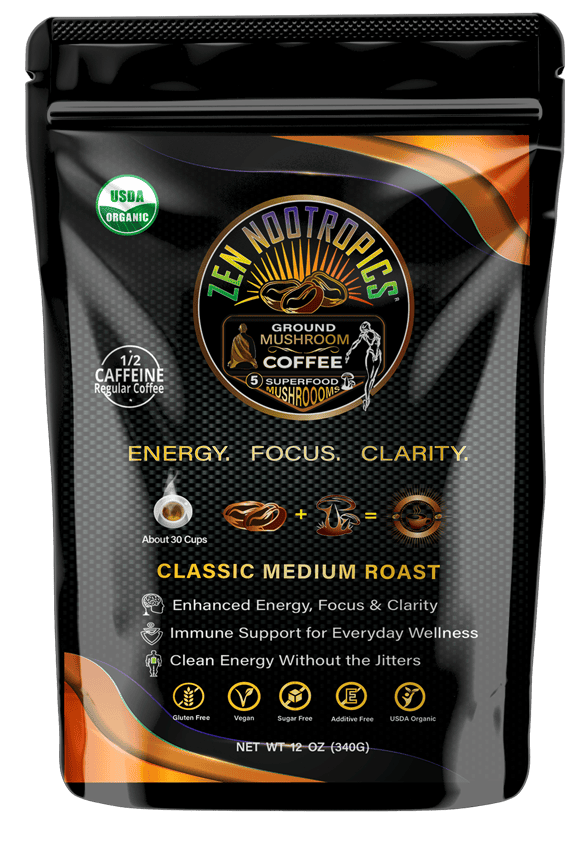
If you are considering Zen Nootropics, its pre-ground coffee combines USDA organic Colombian coffee with Lion’s Mane, Cordyceps, Reishi, Chaga, and Turkey Tail. Apply the same label checks and health precautions to this combination of functional mushrooms before making it part of your routine. The benefits of drinking Zen Nootropics is that its 100% USDA organic with no extra ingredients and therefore you are less likely to experience mushroom coffee side effects.
You can use these answers to address common concerns about daily use and symptoms after switching. Your clinician should assess reactions that persist or interfere with your routine.
Daily use requires checking your product’s serving directions, caffeine content, and fit with your medical history. While many people tolerate daily use, long-term mushroom coffee side effects remain understudied in clinical research.
Your blood pressure can rise temporarily after a caffeinated mushroom coffee. If you have hypertension or take blood-pressure medicine, ask your clinician whether you should monitor readings when changing your coffee routine.
You may develop headaches or brain fog if switching sharply reduces your usual caffeine intake. A gradual caffeine reduction helps limit withdrawal symptoms, while persistent symptoms deserve medical review.
You should not expect mushroom coffee to target belly fat. Evidence does not establish a belly-fat reduction benefit from finished blends, and added sugar or creamers contribute to your calorie intake.
Treat symptoms after drinking mushroom coffee as possible adverse effects, not evidence of detoxing. Unpleasant mushroom coffee side effects usually signal ingredient sensitivities, digestive irritation, or caffeine intolerance. Pause the product and use the severity and duration of your symptoms to decide whether you need medical care.
If you want to explore Zen Nootropics mushroom coffee, you can review the blend alongside the main mushroom coffee guide.