Does Mushroom Coffee Break a Fast? Rules by Fast Type
A morning coffee ritual fits more easily into fasting when the drink matches the plan...
Read Article →
Chaga mushroom coffee combines coffee with chaga powder or extract, adding an earthy flavor and fungal compounds to a familiar morning drink. For coffee drinkers interested in functional mushrooms, the most useful starting point is the ingredient label: the form of chaga and the amount per serving help explain what reaches the cup. Some blends […]
Chaga mushroom coffee combines coffee with chaga powder or extract, adding an earthy flavor and fungal compounds to a familiar morning drink. For coffee drinkers interested in functional mushrooms, the most useful starting point is the ingredient label: the form of chaga and the amount per serving help explain what reaches the cup.

Some blends brew through a regular coffee maker; others dissolve in hot water. That distinction affects preparation, texture, and convenience. Chaga itself is caffeine-free, so a blend’s stimulant content comes from its coffee and any other caffeinated ingredients.
A well-chosen product fits an existing routine without requiring dramatic expectations. Human evidence for chaga’s health benefits remains limited, and its oxalate content deserves attention before regular use, particularly for people with kidney concerns.
For a broader look at how chaga fits into coffee blends, see the mushroom coffee ingredients guide.

A chaga coffee blend contains coffee plus a chaga ingredient, sometimes alongside other functional mushrooms. Labels distinguish the coffee base, the mushroom form, and any additional ingredients.
Chaga is the common name for Inonotus obliquus, a fungus associated with birch trees in cold climates. The dark, woody growth sold as chaga mushroom differs from the familiar cap-and-stem mushrooms found in grocery stores.
In coffee, chaga contributes earthy flavor and compounds such as polysaccharides and polyphenols. The amount delivered depends on the ingredient’s composition, extraction method, and serving size.
The coffee portion still supplies the recognizable roasted aroma and caffeine. Adding chaga to an unchanged serving of coffee leaves that serving’s caffeine amount unchanged.
Chaga powder consists of dried material ground into smaller particles. Chaga mushroom extract has undergone processing with water, alcohol, or both to recover particular compounds; a dried version is sold as chaga extract powder.
These forms have different preparation requirements. Raw ground material leaves sediment and requires appropriate brewing, while a beverage-ready extract is designed for easier mixing.
Useful label details include:
An extract ratio alone does not establish clinical effectiveness or reveal the product’s oxalate content. A statement about measured composition provides more specific information about the finished ingredient.
Ground coffee blends require brewing and separation of the grounds. Instant coffee products contain soluble coffee and are prepared by mixing with water.
A label naming arabica coffee or organic arabica coffee identifies the coffee ingredient. Separate wording should explain the mushroom component. An organic claim attached to coffee does not automatically describe every ingredient in the package.
For ground blends, the grind must suit the brewing equipment. For instant products, the complete ingredient list reveals whether the serving also contains sweeteners, powdered milk, flavorings, or other additions.
Chaga is commonly included in blends marketed around antioxidant and immune support. Lion’s mane is associated with cognitive-support positioning, while reishi coffee is marketed around relaxation and balance.
Those associations describe product positioning; evidence and effective amounts differ across ingredients. Findings about one mushroom species do not establish benefits for another species or for a finished coffee blend.
A multi-mushroom label also needs careful reading. A total mushroom-blend weight gives less detail about chaga exposure than an individually stated chaga amount.

The clearest expectations are a coffee-based drink with earthy flavor and caffeine determined by its formulation. Claims about chaga coffee benefits require more caution because human evidence remains limited.
Chaga research is dominated by laboratory and animal work. Well-designed human trials establishing benefits from drinking chaga coffee remain scarce.
That gap limits claims about improved immunity, healthy aging, and other advertised outcomes. Clinical benefits from combining mushrooms with caffeine still require validation.
A laboratory finding about a concentrated extract does not establish the effect of a brewed serving. Extraction conditions and the amount consumed influence exposure, and a finished blend needs its own evidence to support specific outcome claims.
Chaga contains compounds investigated for antioxidant activity, including polyphenols. It also contains polysaccharides, a broad category of carbohydrates that includes beta-glucans.
An antioxidant test measures activity under particular experimental conditions. It does not establish that drinking the product prevents illness or produces anti-aging effects.
Similarly, “total polysaccharides” and “beta-glucans” describe different measurements. A label reporting total polysaccharides does not reveal how much of that total consists of beta-glucans.
Claims involving iron or magnesium require serving-level nutrition information. The presence of minerals in raw material does not establish a nutritionally meaningful amount in a prepared cup.
Chaga coffee taste is commonly described as earthy, woody, and mildly nutty. Roast level and the proportion of coffee strongly influence the finished flavor.
An extract-heavy drink has a different texture from a filtered ground blend. Grittiness suggests suspended particles; adding more water changes concentration but does not remove those particles.
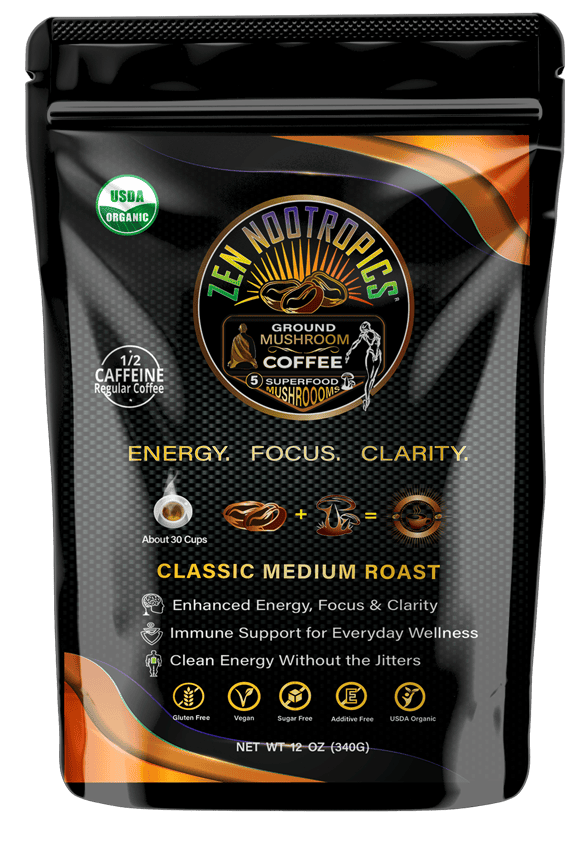
Zen Nootropics describes its pre-ground blend as bold, complex, and smooth, with tasting notes of dark chocolate and cinnamon. Those are tasting notes, so the ingredient list remains the place to check for added flavorings.
Chaga contributes no caffeine and does not neutralize caffeine already present in coffee. Stirring an extract into a full cup leaves the original caffeine dose intact.
A formulation containing less coffee per serving can deliver less caffeine, provided the serving and brewing method support that comparison. “Mushroom coffee” alone does not establish a lower caffeine amount.
Jitters depend partly on dose and individual sensitivity. A stated caffeine amount offers a firmer basis for selection than a general promise of balanced energy, especially for people who experience palpitations or sleep disruption.
Chaga coffee preparation follows the product’s format: ground blends require brewing, while soluble extracts and instant products require mixing. Package directions should determine the serving amount because concentrations differ.
A pre-ground mushroom coffee blend is prepared with equipment compatible with its grind. The package’s coffee-to-water directions provide the starting point, followed by adjustments to water or brewing technique for taste.
Zen Nootropics offers pre-ground coffee for most coffee machines, pour overs, French presses, and some espresso machines. Its blend combines USDA organic Colombian coffee with Lion’s Mane, Cordyceps, Reishi, Chaga, and Turkey Tail.
A paper filter helps separate fine particles from a ground blend. French press preparation leaves more suspended material, so a heavier texture does not by itself indicate a stronger mushroom serving.
A beverage-ready extract is added to brewed coffee at the manufacturer’s stated serving amount. Mixing the measured powder with a little warm liquid first helps disperse clumps before the rest of the coffee is added.
An instant coffee blend already includes the coffee component. Preparing it with brewed coffee adds caffeine beyond the amount supplied by the instant serving.
For people learning how to make chaga coffee, the distinction between a standalone extract and a complete instant blend prevents accidental double-strength preparation. The ingredient list and preparation instructions should make that distinction clear.
Chaga chunks are prepared as a simmered tea and then strained. Preparation takes longer than stirring a soluble extract into a drink, and the supplier’s directions should specify the method.
Chaga tea serves as a caffeine-free beverage when prepared without coffee or other caffeinated ingredients. It also works as part of the liquid in a coffee drink.
Home preparation produces an uncertain concentration of chaga compounds and oxalates. Darker color does not establish potency or safety, and straining removes solids without reliably removing dissolved oxalates.
A chaga latte combines a prepared chaga beverage or labeled extract serving with milk or a plant-based alternative. A chagaccino frequently includes coffee or espresso, although café recipes differ.
For a hot version, the prepared beverage is combined with warmed, frothed milk. For an iced version, extract powder disperses more evenly when mixed into warm liquid before cooling and adding ice.
Cinnamon or cocoa changes the flavor without requiring additional chaga. At a café, the useful questions concern the mushroom serving, added sugar, and whether the drink includes espresso.
Kidney history and medication use deserve review before chaga mushroom coffee becomes a regular habit. Chaga mushroom extract also introduces safety questions beyond the caffeine considerations of ordinary coffee.
Chaga contains oxalates, compounds that bind calcium and contribute to crystal formation. Published case reports describe serious kidney injury following sustained consumption of chaga powder.
Those reports establish a reason for caution, while leaving the frequency of harm and a universally safe beverage dose unresolved. Powder amounts from individual cases should never be treated as a threshold below which every product is safe.
People with kidney disease or a history of calcium oxalate stones should avoid starting chaga without medical advice. High-dose vitamin C use also belongs in that conversation because vitamin C metabolism contributes to oxalate production.
Preclinical findings raise concerns about effects on platelet activity and blood glucose. The clinical significance of combining chaga with medications remains uncertain.
People taking anticoagulant or antiplatelet medication should have a pharmacist or prescriber assess the product before use. Examples include warfarin and clopidogrel.
The same precaution applies to insulin and other blood-sugar-lowering medicines. Prescribed treatment should remain unchanged unless the treating clinician directs an adjustment, and the product label should be included in the medication review.
Pregnancy and breastfeeding warrant avoidance unless a qualified clinician specifically approves the product. Human safety information for chaga in these circumstances is insufficient.
Caffeine requires a separate assessment because a mushroom ingredient does not remove the coffee’s stimulant effects. People with caffeine-sensitive conditions need to consider the entire day’s intake.
Other reasons for medical advice include immunosuppressant use, autoimmune conditions, or planned surgery. Anyone with a known allergy to a listed mushroom ingredient should avoid that product.
A clearly measured serving reduces guesswork, but long-term daily-use safety remains incompletely characterized. Combining coffee with separate mushroom capsules, tinctures, or powders increases total exposure.
A useful quality check is a batch-specific certificate of analysis from an independent laboratory. Relevant testing includes ingredient identity, heavy metals, and microbial contamination; oxalate testing addresses a separate chaga-specific concern.
A “tested” claim needs detail about what was measured. Organic certification and contaminant testing answer different questions, and neither establishes an effective health dose.
New symptoms warrant stopping the product and seeking appropriate advice. Reduced urination, unusual bleeding, or a serious allergic reaction requires prompt medical attention.
A suitable chaga coffee provides clear preparation directions and enough ingredient detail to support an informed choice. The practical priorities are the chaga form, serving amount, caffeine information, and suitability for the person’s health circumstances.
Coffee blends also need to match the equipment already in use. A pre-ground format suits a brewing routine, while a soluble product suits preparation directly in a mug.
Zen Nootropics combines organic Colombian coffee with five functional mushrooms in a pre-ground format. Its mushroom coffee offers a starting point for shoppers seeking a coffee-forward blend; product questions about serving details or suitability belong with the brand’s support team before purchase.
Chaga mushroom coffee raises recurring questions about everyday use and individual suitability. The answers below summarize the main decisions involved.
Chaga mushroom coffee is an optional beverage with unproven chaga-specific health benefits in humans. Its suitability rests on the formulation, caffeine exposure, and the drinker’s medical circumstances.
People with a known chaga allergy should avoid it, and those with kidney disease or a kidney-stone history need medical clearance before use. Pregnancy, breastfeeding, and use of blood thinners or diabetes medication also warrant clinician review.
Chaga carries a documented kidney concern because its oxalates have been linked to kidney injury after sustained powder consumption. A universally safe amount for every preparation has not been established.
Mushroom coffee adds ingredient-specific risks and uncertainty about benefit while retaining caffeine-related effects when coffee is included. Chaga-containing products require particular attention to oxalates, medication precautions, and serving transparency.
Daily chaga coffee use requires consideration of the product’s serving amount and the person’s health profile. Long-term safety remains insufficiently established, so regular users should avoid stacking chaga products and discuss ongoing use with a clinician when risk factors apply.