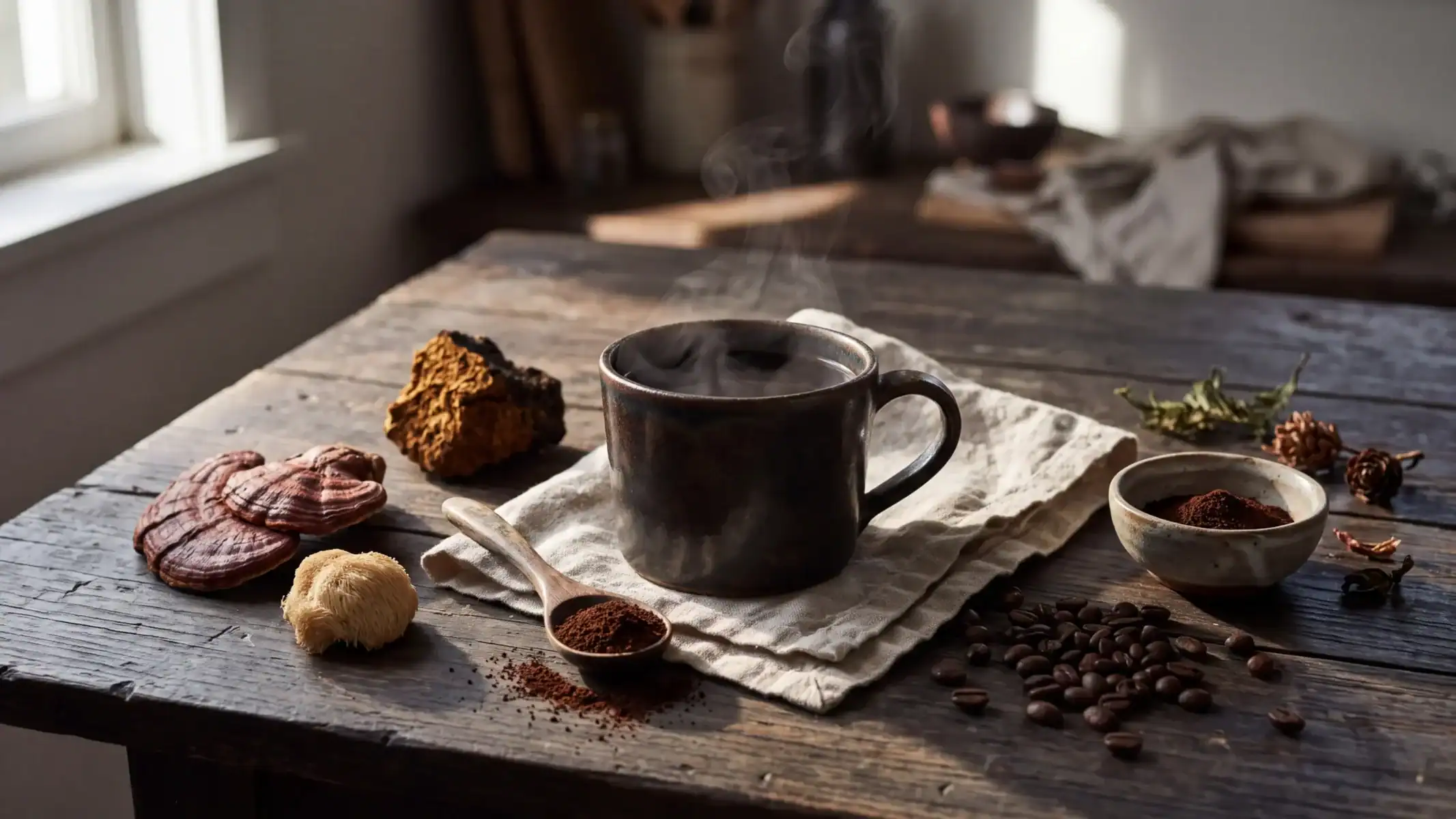
Does Mushroom Coffee Break a Fast? Rules by Fast Type
A morning coffee ritual fits more easily into fasting when the drink matches the plan...
Read Article →
Cold brew mushroom coffee is made by steeping a ground coffee-and-mushroom blend in cold filtered water in the refrigerator for 12–18 hours, then filtering and diluting it to the desired strength. An overnight batch provides a chilled base for a morning coffee or an iced latte, with the brewing work completed ahead of serving. Zen […]
Cold brew mushroom coffee is made by steeping a ground coffee-and-mushroom blend in cold filtered water in the refrigerator for 12–18 hours, then filtering and diluting it to the desired strength. An overnight batch provides a chilled base for a morning coffee or an iced latte, with the brewing work completed ahead of serving.
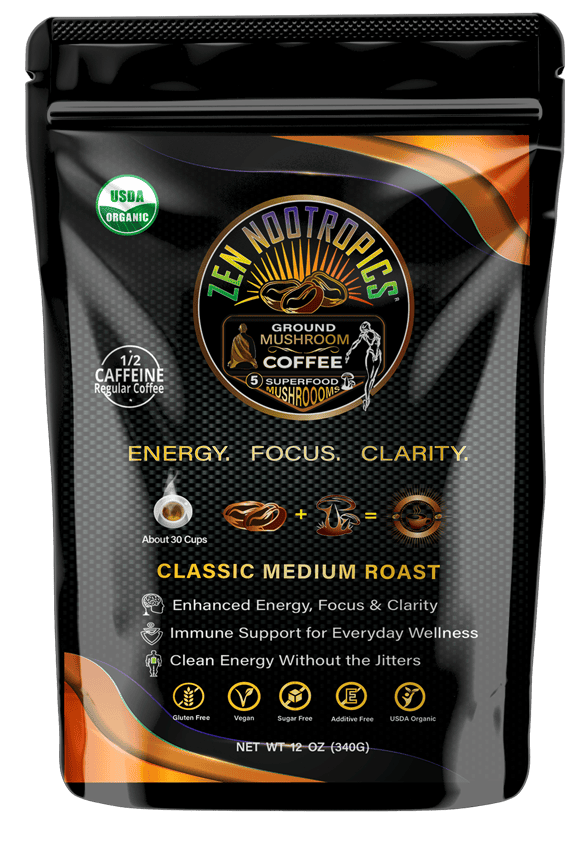
Zen Nootropics offers functional mushroom coffee made with organic Colombian coffee and mushroom extracts. For cold preparation, the important choices are the blend’s format, the coffee-to-water ratio, and a filtration method suited to its grind.
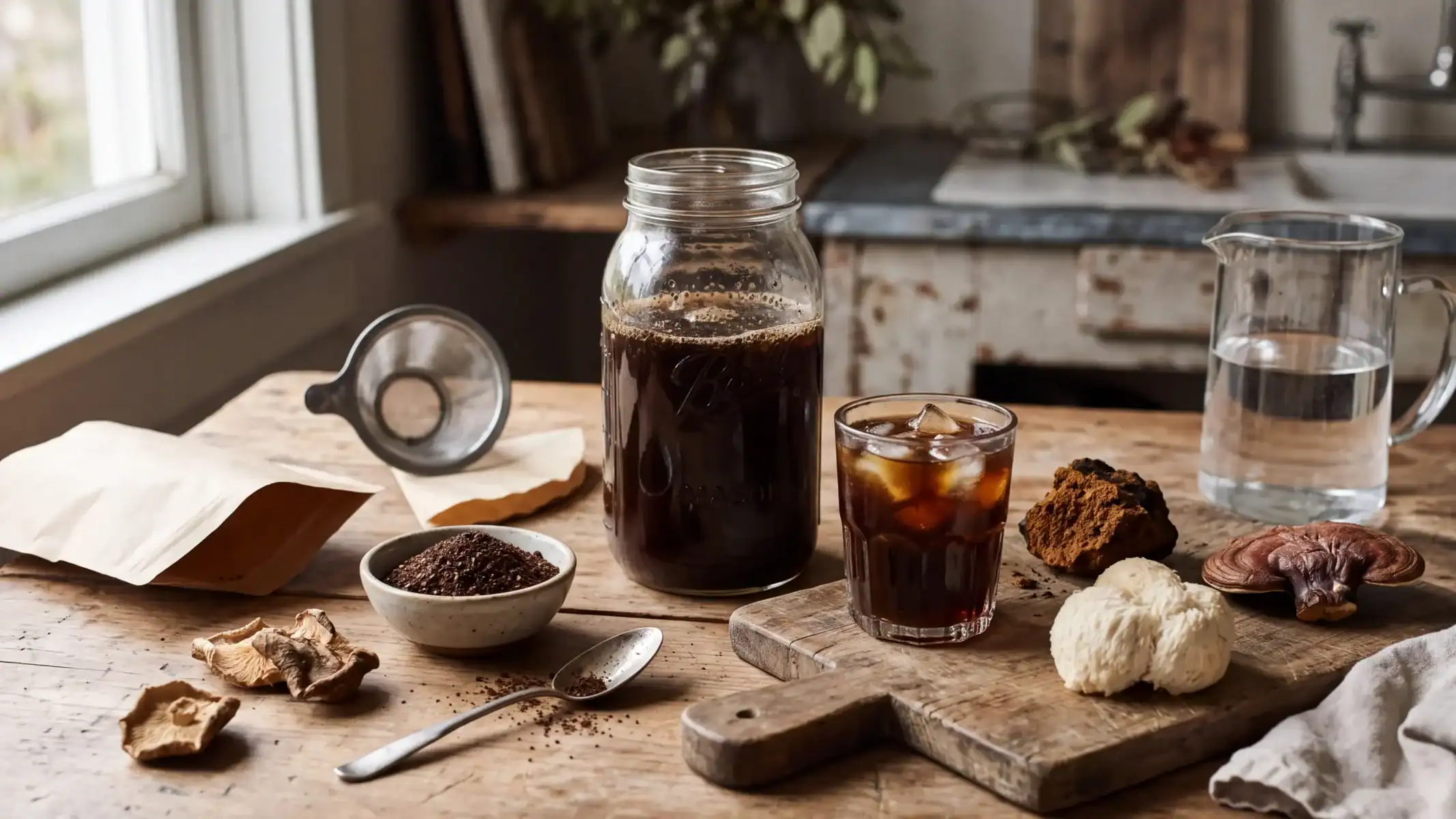
A refrigerated immersion brew provides a practical starting method for ground mushroom coffee. The illustrative recipe below includes both a ready-to-drink option and a concentrate, with package directions taking priority.
This mushroom coffee recipe uses a ground blend containing coffee and functional mushroom ingredients. Instant blends follow their own mixing directions.
Illustrative recipe details
Ingredients
Equipment
These quantities are brewing examples, not mushroom dosage recommendations. If the package specifies a serving limit, the batch size and number of servings should preserve that limit.
Ratios describe the weight of the ground blend relative to the brewing water. For these examples, water measurements in milliliters correspond approximately to the same weight in grams.
| Preparation | Illustrative ratio | Ground blend | Brewing water | Serving adjustment |
|---|---|---|---|---|
| Ready-to-drink starting point | 1:8 | 100 g | 800 mL | Taste before adding water |
| Cold brew concentrate | 1:4 | 100 g | 400 mL | Start with equal volumes concentrate and water |
The ready-to-drink version produces a fairly strong starting brew. For the concentrate, equal-volume dilution is a starting point for flavor, with the final serving size still governed by the product’s directions.
A smaller trial batch helps prevent waste when a blend’s grind or mushroom ingredients behave differently in cold water. Both ingredient quantities should be scaled by the same proportion.
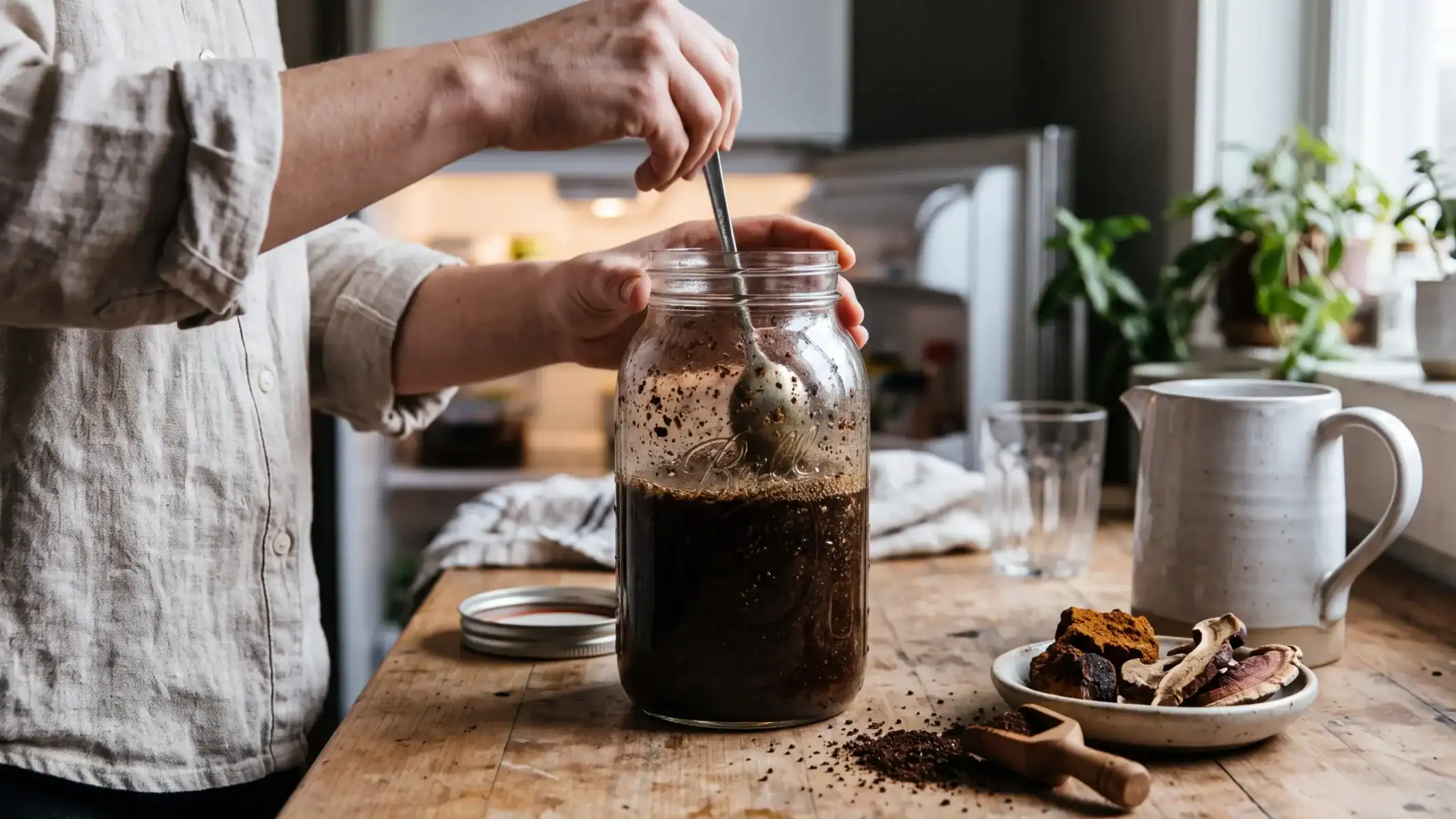
The grounds need thorough wetting and a covered, refrigerated steep. Cold brew coffee extracts slowly, and grind size affects how quickly the flavor develops.
Repeated stirring during the steep is unnecessary. Keeping the vessel closed also limits exposure to refrigerator odors.
Filtration stops contact with the bulk of the grounds and improves the finished drink’s texture. A mesh strainer catches larger particles, while a paper filter captures finer sediment.
The final volume will be lower than the starting water volume because the grounds absorb liquid. Dilution should therefore use the measured amount of filtered concentrate.
Ground mushroom coffee works with overnight immersion, while soluble products follow their mixing instructions. The presence of lion’s mane, cordyceps, reishi, or chaga does not establish how a particular formulation behaves in cold water.
A coarse grind leaves larger particles that separate more readily from the liquid. Finer grounds create more sediment and slow the flow through paper filters.
Grind also changes extraction speed. A fine-ground blend needs an earlier flavor check because its greater exposed surface extracts more quickly under comparable conditions.
Coarse grinding remains a practical preference for immersion brewing. A pre-ground product still deserves a small trial before a large batch is prepared.
Zen Nootropics sells pre-ground coffee for use in most coffee machines, pour overs, French presses, and some espresso machines. That documented versatility does not establish a dedicated coarse cold-brew grind.
For an initial cold batch, the shorter end of the 12–18-hour steep offers a sensible checkpoint. If the mesh-strained liquid contains visible sediment, paper filtration provides a cleaner texture.
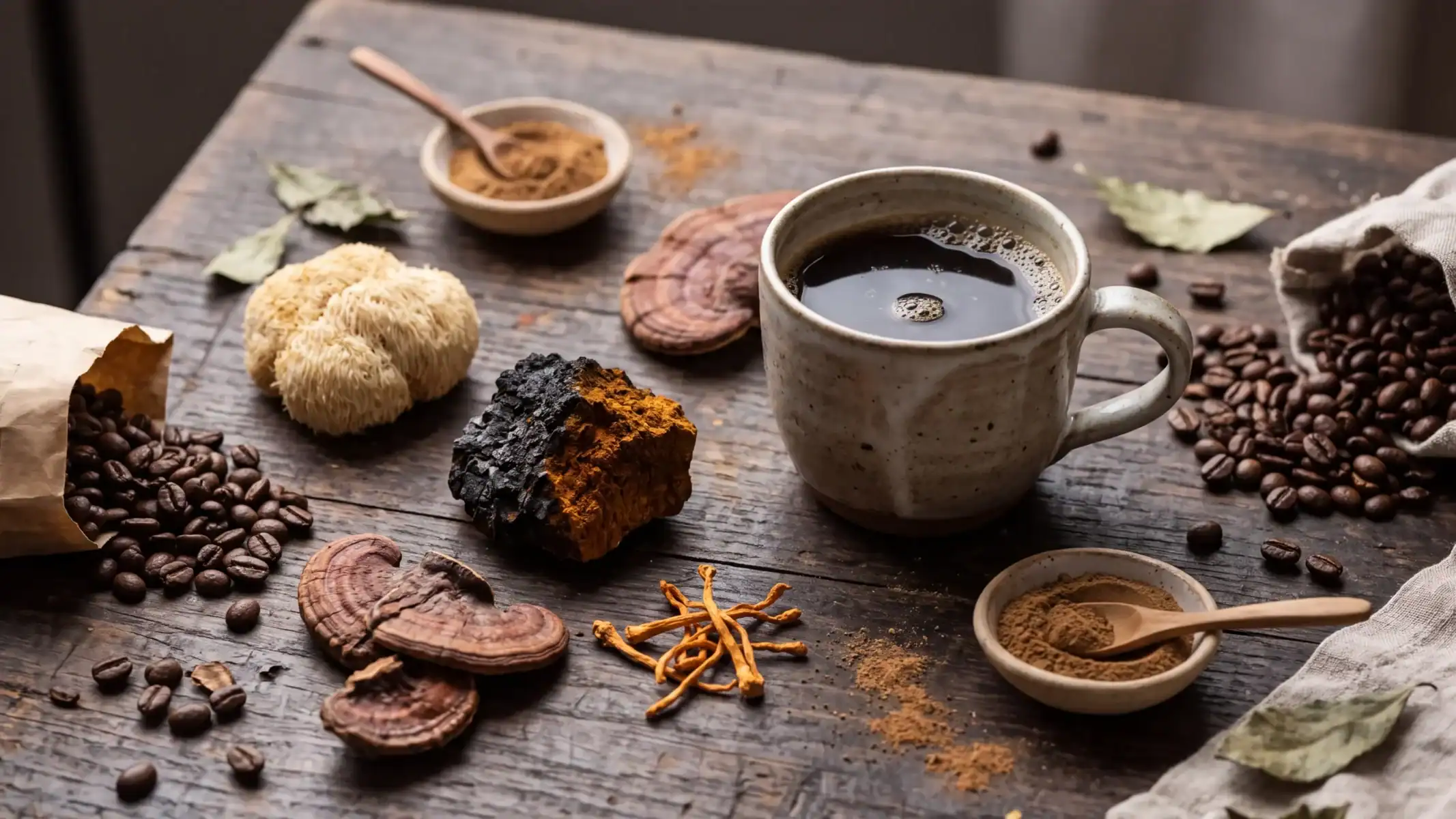
The brand’s mushroom coffee combines Colombian coffee with Lion’s Mane, Cordyceps, Reishi, Chaga, and Turkey Tail. The mushroom coffee ingredients and brewing guide covers blend formats. Product directions should guide the quantity used, and a household cold-brew recipe should not be treated as a verified mushroom-extract dosing method.
Cold-water dispersibility depends on the mushroom extract and the finished formulation. Some extracts mix readily; other powders clump, float, or settle.
A powder labeled water-soluble should be mixed according to its package directions. Where those directions permit it, a small amount of warm water helps wet stubborn powder before the chilled coffee is added.
Visible dispersion alone does not establish complete dissolution or the amount of a particular compound in the drink. Raw mushroom powder and a prepared extract also require different handling, so they should not be substituted interchangeably.
Instant mushroom coffee contains coffee that has already been brewed and dried. Its preparation involves dissolving the product, so an overnight soak adds unnecessary waiting time.
For an iced drink, the labeled serving is dissolved in the amount and temperature of water specified on the package, then chilled or poured over ice. Products that mix poorly in cold water benefit from the manufacturer’s recommended warm-water step.
A jar containing dry coffee grounds requires filtration after extraction. A fully soluble instant blend follows a different preparation process, even when both drinks are served cold.
A plain, refrigerated batch provides the most flexible base for cold mushroom coffee. Milk and flavorings belong in the serving glass so the remaining batch stays easy to portion and monitor.
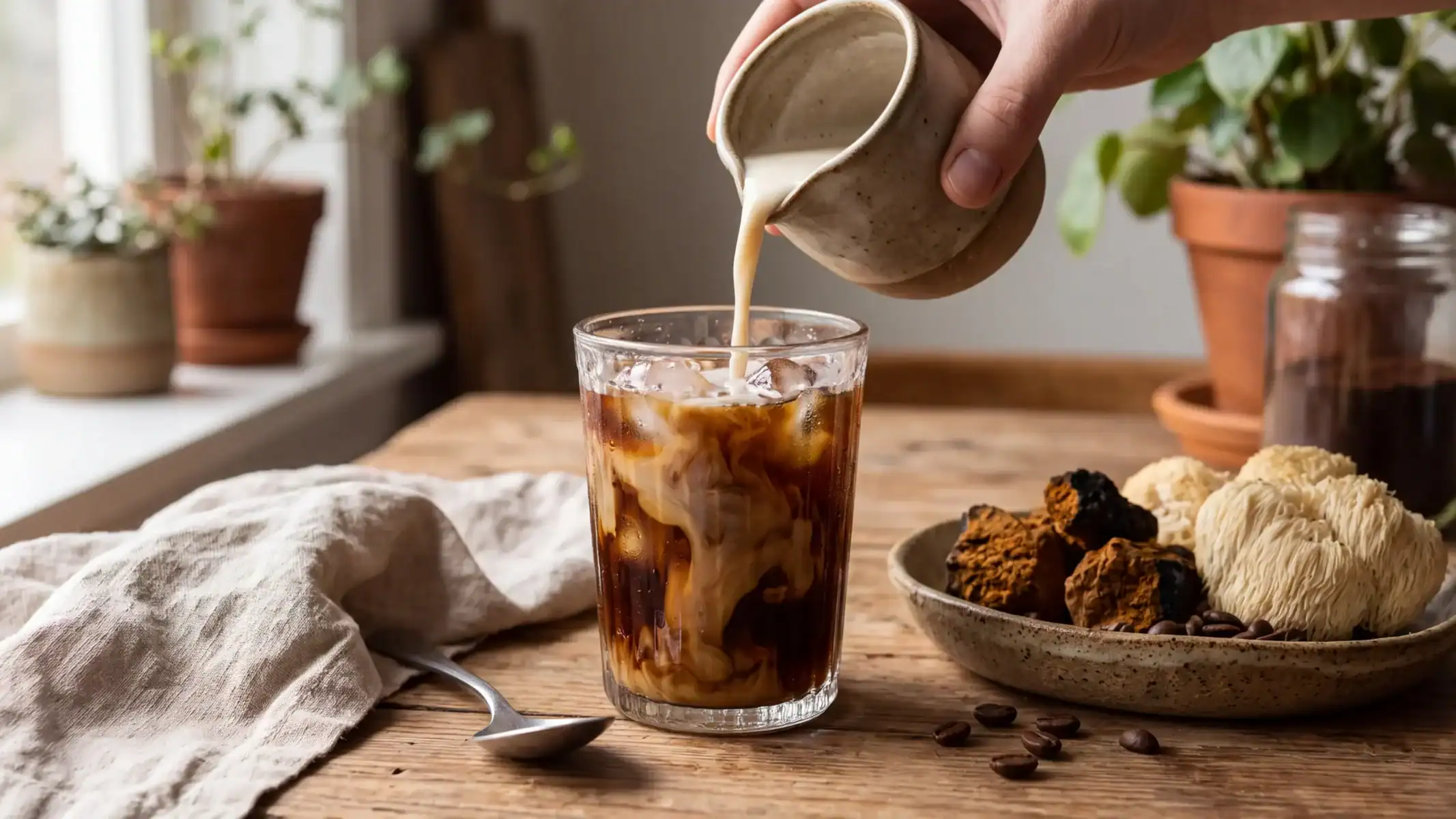
An iced mushroom coffee latte starts with filtered coffee and chilled milk. Oat milk gives a fuller texture, while almond milk produces a lighter drink with a nutty flavor.
For an illustrative serving, equal volumes of concentrate and milk provide a starting blend. The milk counts toward dilution, so a separate equal portion of water would produce a weaker latte.
Ice adds further dilution as it melts. A ready-to-drink batch therefore needs a lighter addition of milk if the goal is to retain a pronounced coffee flavor.
A small pinch of cinnamon or cardamom adds aroma without changing the brewing process. Adding spice to an individual serving keeps the base batch consistent.
Ground spices leave particles in cold liquid and sometimes collect at the surface. Mixing them into the milk first distributes them more evenly, though some sediment remains.
Zen Nootropics describes its coffee as having dark chocolate and cinnamon tasting notes. Tasting the plain brew before adding spices helps prevent those flavors from becoming crowded.
Homemade cold brew needs continuous refrigeration in a clean, covered container. Cold steeping provides no heat treatment, so clean equipment and careful handling remain important.
For a conservative household routine, both diluted coffee and concentrate should be prepared in quantities intended for use within 2–4 days. Diluted homemade cold brew has a reported refrigerated storage window of 2–4 days; that window is not a validated shelf-life guarantee for every mushroom blend.
Milk should be added at serving time and handled according to its own storage instructions. Any batch with mold, an unusual odor, unexpected fizzing, or uncertain refrigeration history should be discarded; normal appearance alone does not establish safety.
Troubleshooting works best when a single variable changes between batches. A brief record of ratio and steep time makes the next adjustment easier.
A paper filter that has stopped draining should be replaced. Squeezing the grounds through it pushes fine particles into the finished drink.
Caffeine intake follows the coffee formulation and serving size, while mushroom-related claims require evidence specific to the ingredients and product. Cold brewing alone establishes neither a lower caffeine dose nor a particular wellness outcome.
Cold water extracts caffeine during the long steep. A concentrated recipe uses substantial ground coffee relative to water, so the amount consumed depends on dilution and portion size.
The practical variables include the amount of coffee in the blend, the brewing ratio, extraction conditions, and the volume served. The presence of functional mushrooms does not establish a low-caffeine beverage.
A package caffeine figure is most useful when the preparation matches the labeled method and serving size. A homemade concentrate prepared differently should not automatically inherit that number.
Smoothness describes sensory qualities such as bitterness and mouthfeel. Acidity involves chemical measurements, including pH and titratable acidity, which do not follow directly from taste.
A coffee that tastes mellow still contains caffeine and other compounds relevant to individual tolerance. Reflux symptoms also respond to factors beyond perceived sourness, including serving volume and timing.
For someone with reflux, a smaller portion and a record of symptoms provide more useful personal feedback than a smooth-tasting cup alone. Persistent symptoms deserve clinical advice.

A finished cup’s taste and appearance provide little information about its mushroom-compound content. Beta-glucans are one group of mushroom polysaccharides, and their amount and extractability depend on the ingredient and its processing.
Commercial mushroom extracts have already undergone processing before entering a coffee blend. An overnight refrigerator steep is a separate preparation step whose effect on the finished dose requires product-specific testing.
Cold preparation alone does not demonstrate greater preservation, improved absorption, or stronger clinical effects. Evidence about an isolated mushroom extract also does not establish the same outcome for a homemade coffee batch.
Professional advice is appropriate before regular use during pregnancy or breastfeeding, or when a person has a relevant medical condition or takes medication. Mushroom ingredients and caffeine each deserve consideration.
Particular discussion points include anticoagulant or antiplatelet medicines, diabetes treatment, immunosuppressants, kidney disease, and mushroom allergies. The product label and a complete medication list help a clinician or pharmacist assess the formulation.
Anyone experiencing palpitations, significant digestive symptoms, or sleep disruption should pause the drink and seek appropriate advice. Breathing difficulty or swelling requires urgent medical attention.
A repeatable batch of cold brew mushroom coffee starts with measured ingredients and a consistent refrigerated steep. Zen Nootropics ground mushroom coffee offers a pre-ground option, with package directions guiding the amount used.
The useful routine is straightforward: select an illustrative ratio, check the first batch at the shorter steep time, and filter carefully. Subsequent batches should change one variable at a time.
Keeping milk separate preserves serving flexibility. A dated container and a modest batch size support the conservative 2–4-day refrigerated routine outlined above.
Ground mushroom coffee suits refrigerated immersion brewing when its package directions permit that preparation. The following answers clarify common ingredient and handling decisions.
Pre-ground mushroom coffee works for cold brewing when the product’s preparation directions allow it. Finer grounds call for an earlier flavor check and careful paper filtration.
The caffeine amount depends on the blend, brewing method, and portion consumed. A homemade concentrate requires particular care because its serving strength differs from a standard labeled preparation.
Water is the recommended steeping liquid for this recipe, with milk added after filtration. Direct milk steeping creates additional handling concerns and falls outside the preparation described here.
A conservative household plan is to use the refrigerated batch within 2–4 days, subject to stricter product instructions. That window assumes clean preparation and continuous refrigeration; mishandled coffee should be discarded sooner.
Cold brewing has no established advantage for preserving the health benefits of a finished mushroom coffee blend. Ingredient processing and the compounds present require product-specific evaluation, and cold preparation alone cannot establish a medicinal benefit.
Cold brew strength and serving size can change caffeine intake substantially. See the FDA caffeine guidance when comparing drinks. For serving ideas, see our iced mushroom coffee recipes. If you want a hot immersion brew, see the French press mushroom coffee guide.