Does Mushroom Coffee Break a Fast? Rules by Fast Type
A morning coffee ritual fits more easily into fasting when the drink matches the plan...
Read Article →
A comfortable morning coffee routine starts with a serving that fits a person’s reflux triggers and daily habits. Mushroom coffee can trigger acid reflux because coffee-containing blends retain coffee compounds and caffeine that provoke heartburn in susceptible people. Some people tolerate a smaller or lower-caffeine serving better. Adding mushrooms, though, does not establish that a […]
A comfortable morning coffee routine starts with a serving that fits a person’s reflux triggers and daily habits. Mushroom coffee can trigger acid reflux because coffee-containing blends retain coffee compounds and caffeine that provoke heartburn in susceptible people.
Some people tolerate a smaller or lower-caffeine serving better. Adding mushrooms, though, does not establish that a drink is low acid or suitable for GERD. For anyone exploring mushroom coffee acid reflux concerns, the useful distinction is between measurable product characteristics and personal symptom patterns.
Regular coffee triggers reflux symptoms in some people, including those drinking coffee blended with mushrooms. Caffeine content contributes to the picture, alongside other coffee compounds and the amount consumed.
The lower esophageal sphincter (LES) helps keep stomach contents from moving back into the esophagus. When this barrier relaxes inappropriately or functions poorly, reflux exposes the esophagus to stomach contents and sometimes produces heartburn.
GERD involves troublesome recurring reflux or related complications. Coffee is a potential reflux trigger, although drinking it does not establish that someone has GERD.
Caffeine is one factor to consider when looking into mushroom coffee acid reflux symptoms. Coffee also contains compounds that influence digestive activity and stomach acid secretion, so caffeine content alone cannot predict a person’s response.
A mushroom blend that replaces some coffee with mushroom extracts might provide less caffeine per serving. The actual amount depends on its formulation and preparation; the word “mushroom” supplies no reliable caffeine measurement.
A sensitive stomach describes an experience, not a diagnosis. Burning behind the breastbone, upper abdominal discomfort, and bloating involve different possible mechanisms and deserve separate attention.
For reflux-like symptoms, limiting individually identified dietary triggers is a practical management approach. A repeatable pattern after a particular drink provides a more useful basis for changing that habit than a broad “stomach-friendly” label.
Adding mushroom extracts does not establish that the finished coffee has lower acidity. A low-acid coffee claim needs measurements from the prepared beverage, with the brewing conditions clearly identified.

Beverage pH measures hydrogen ion activity at the time of testing. Titratable acidity describes how much base is needed to neutralize acids to a defined endpoint, capturing a different aspect of the drink’s chemistry.
Neither measurement directly measures reflux episodes. A beverage with a higher pH still reaches a stomach containing much stronger acid, and symptoms also involve the reflux barrier and esophageal sensitivity.
Roasting changes coffee’s acid composition. Chlorogenic acids break down during heating, while thermal reactions, including pyrolysis, change the balance of quinic acids and other compounds.
Bean characteristics and extraction conditions also influence the finished cup. Some cold brew preparations have lower titratable acidity than comparable hot preparations, but brewing method alone does not establish heartburn tolerance.
A concentrated cold brew served in a large portion also complicates comparison. Its caffeine exposure depends on the concentrate strength and dilution.
A useful acidity result identifies the product and the preparation tested. Water composition, coffee-to-water ratio, and extraction conditions affect whether that result describes the cup someone drinks at home.
“Smooth,” “rich,” and “low bitterness” describe sensory qualities. They provide no measured pH, and a pH result by itself supplies no clinical evidence that a finished mushroom coffee reduces reflux.
For more beverage choices and the tradeoffs behind acidity claims, compare our low-acid coffee alternatives guide; an alternative is not automatically safe for everyone with reflux.
Research on functional mushrooms supports investigation of their compounds, but it does not establish mushroom coffee as a GERD treatment. Evidence about an isolated ingredient has limited relevance to a finished drink with a different dose and preparation.
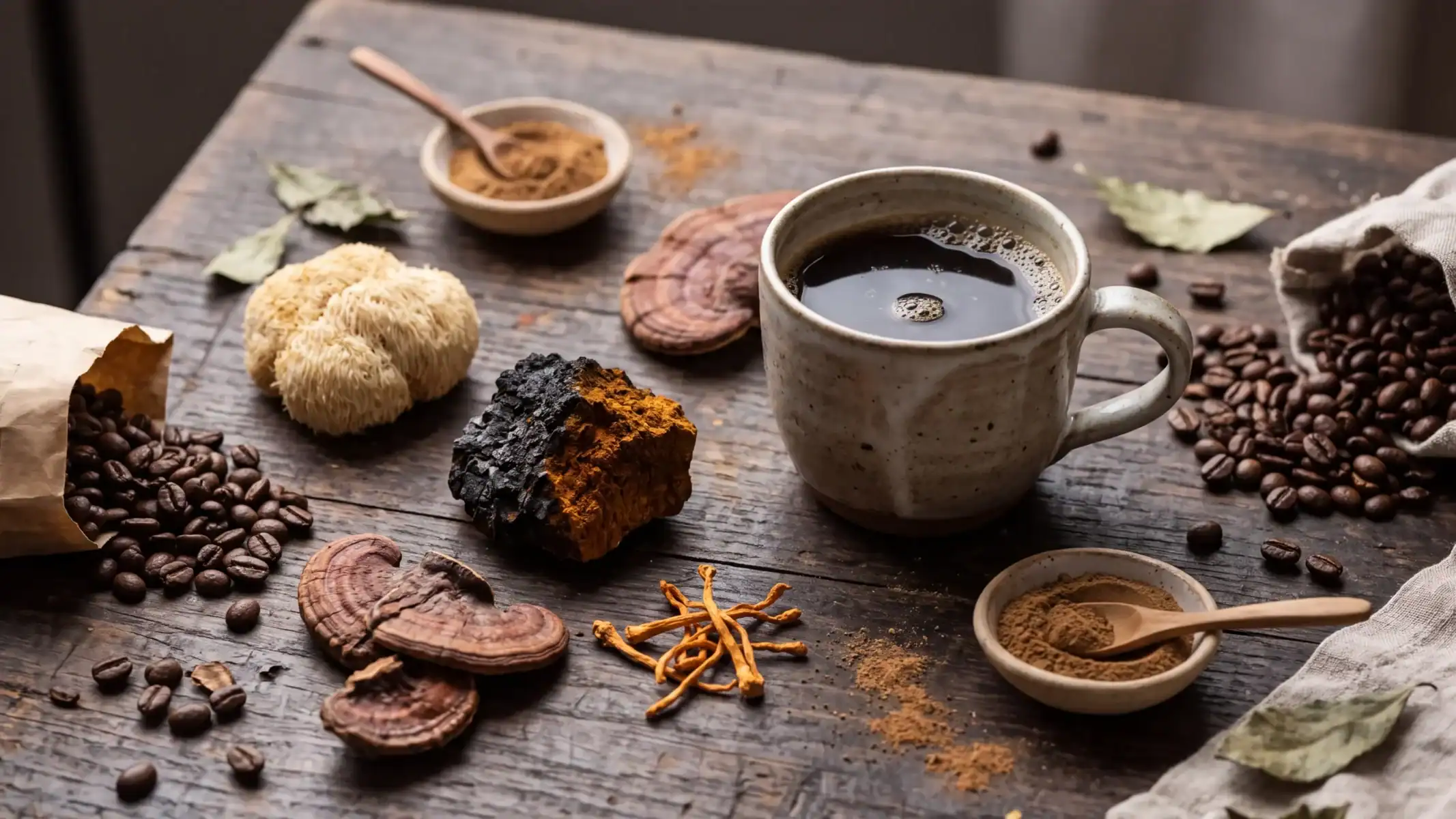
Functional mushrooms, also called medicinal mushrooms, include lion’s mane, chaga, reishi, cordyceps, and turkey tail. Their compounds and research applications differ substantially.
An ingredient experiment measures outcomes under specific conditions. Demonstrating a biological effect in cells or animals does not show that drinking a commercial blend reduces heartburn in people.
Finished formulations require their own clinical evaluation. A useful reflux trial would assess symptoms and relevant clinical outcomes using the actual beverage at its intended serving size.
Beta-glucans are polysaccharides found in mushroom cell walls. Their structure and concentration vary with the species and extraction method, so a mushroom name alone does not describe the delivered dose.
Research involving stomach-lining protection addresses a different question from reflux into the esophagus. Even a favorable gastric finding would leave unanswered whether a beverage improves LES function or reduces esophageal acid exposure.
Gut health claims also cover a broad range of outcomes. Changes involving microbes or digestive comfort cannot establish heartburn relief without measurements specific to reflux.
Stress influences symptom perception and daily habits that affect reflux. Products described as adaptogens are marketed around the stress response, but that positioning does not demonstrate GERD treatment benefits.
Immune support is another separate outcome. Claims involving reishi or turkey tail supply no basis for changing prescribed reflux medication or assuming protection against esophageal injury.
Serving information and disclosed ingredients provide the most useful starting point for comparing mushroom coffee products. For a reflux-sensitive shopper, measured caffeine and clearly described preparation are especially useful.
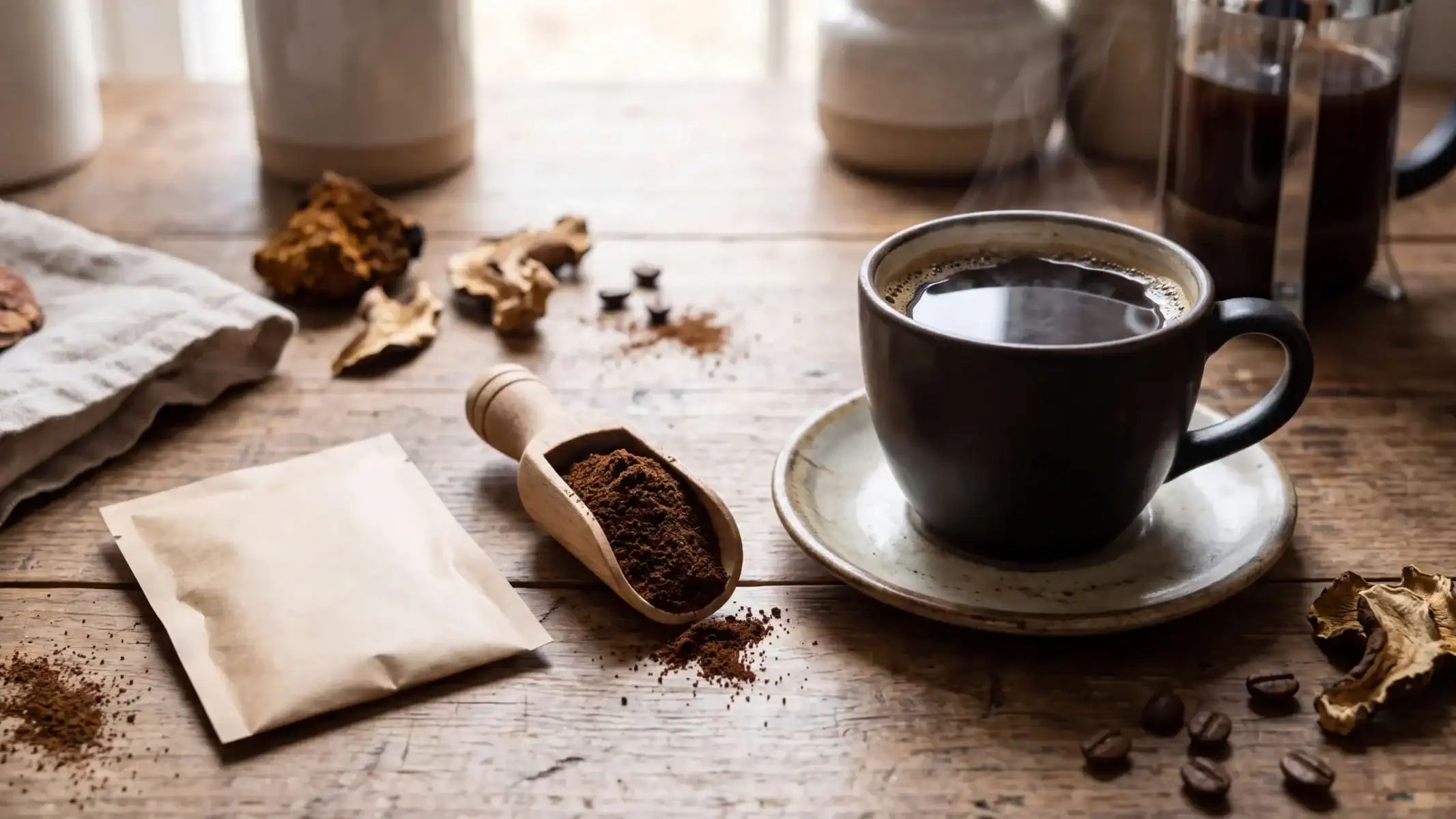
A scoop, sachet, and brewed mug represent different amounts of product. Comparisons work best when the dry serving and final beverage volume are both clear.
The label or manufacturer should identify caffeine content per prepared serving when that information is available. Coffee content also helps explain the formulation, although a mushroom-to-coffee ratio cannot independently establish caffeine exposure.
Ground blends introduce another variable because extraction changes with brewing. A strong French press preparation and a more diluted pour-over need separate consideration even when they start with the same product.
An acidity claim becomes useful when it includes a test method and preparation details. A numerical result without those conditions is difficult to apply to a home-brewed cup.
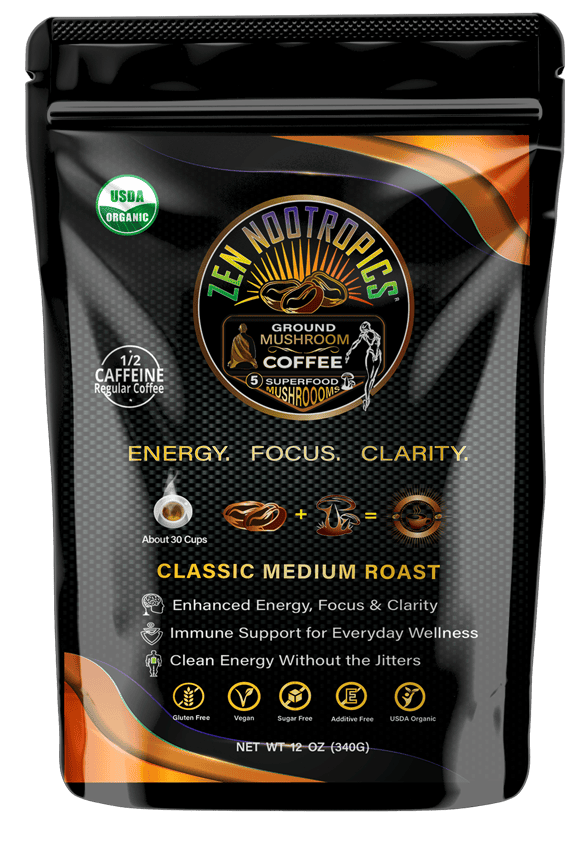
As an optional comparison, readers can review the mushroom coffee ingredients and brewing guide. Its coffee combines USDA organic Colombian coffee with five functional mushrooms and comes pre-ground for use in most coffee machines, pour overs, French presses, and some espresso machines.
Those details help clarify the product format. Its dark chocolate and cinnamon tasting notes describe flavor; they do not establish measured acidity or reflux tolerance.
When comparing blends for mushroom coffee acid reflux concerns, remember that the complete formula includes more than coffee and mushrooms. Cocoa, peppermint flavoring, added fats, or other ingredients deserve attention when they have previously accompanied symptoms.
Creamers and sweeteners added at home belong in the same assessment. A plain serving followed by a heavily flavored version changes several variables and makes the cause of discomfort harder to identify.
People taking medication or managing chronic conditions should discuss concentrated mushroom extracts with a pharmacist or clinician. Ingredient compatibility remains a separate question from heartburn tolerance.
A cautious trial uses a small serving during the day while other relevant habits remain steady. This is consumer information; a clinician’s advice takes priority for anyone with diagnosed GERD or concerning symptoms.
Someone whose clinician considers a trial appropriate should begin with a serving smaller than their usual coffee portion. Keeping preparation consistent helps separate the effect of serving size from changes in brew strength.
The accompanying meal and usual additives should remain familiar. Introducing a new blend alongside an unusually large breakfast or several new supplements makes the result difficult to interpret.
Prescribed medication should continue as directed. Skipping treatment to make a beverage test more revealing creates unnecessary risk.
An earlier serving leaves time to observe symptoms while upright. A drink close to bedtime creates a different reflux context from the same drink earlier in the day.
Lying down after eating or drinking increases the opportunity for stomach contents to move upward. Anyone with nighttime GERD should follow their clinician’s recommended interval between intake and bedtime. The NIDDK guidance on acid reflux notes that eating meals at least two to three hours before lying down may help reduce nighttime symptoms.
A mushroom coffee acid reflux log should include the product, prepared amount, timing, and any symptoms that follow. Recording the meal and additives alongside the drink helps identify repeatable associations.
Increasing burning, sour regurgitation, or sleep disruption is a reason to stop the trial. Repeatedly using antacids to tolerate the beverage also warrants reconsideration and a discussion with a healthcare professional.

Recurring reflux deserves clinical attention, especially when it disrupts sleep or requires frequent over-the-counter treatment. Trouble swallowing, painful swallowing, unexplained weight loss, or persistent vomiting calls for prompt assessment.
Vomiting blood or passing black, tarry stools requires urgent medical care. New or severe chest pain, particularly with breathlessness, sweating, or pain spreading to the arm or jaw, requires emergency evaluation because heart-related pain can resemble heartburn.
A suitable mushroom coffee choice rests on disclosed product details and an acceptable personal symptom response. Coffee content, prepared serving size, and caffeine information help make that decision concrete.
Measured acidity answers a chemistry question, while individual tolerance answers whether a particular serving fits someone’s routine. Functional mushroom ingredients do not establish reflux-treatment benefits.
A person who develops worsening symptoms should stop the beverage and discuss recurring reflux with a clinician. Anyone choosing to compare products should keep the preparation consistent and record the response.
People with reflux benefit from product-specific answers about preparation and ingredients. These common questions address practical choices that arise when comparing mushroom coffee with regular coffee.
Some people with GERD tolerate mushroom coffee, while others experience symptoms from its coffee component. A clinician should advise on suitability when reflux is poorly controlled or there is a history of esophageal injury.
Lower caffeine sometimes improves tolerance when caffeine contributes to a person’s symptoms. It does not measure beverage acidity or account for portion size and other coffee compounds.
Decaf mushroom coffee is a reasonable option for someone whose symptoms track with caffeine exposure. Decaf still contains some caffeine and retains other coffee compounds, so symptom monitoring remains useful.
Milk helps some people tolerate the taste or drinking experience, but it does not reliably prevent reflux. A large serving of high-fat milk or cream adds another potential trigger, and lactose intolerance introduces a separate source of digestive discomfort.
A claim that Ryze is less acidic than regular coffee requires comparable measurements of the prepared drinks. Its mushroom ingredients alone do not establish that comparison, and even a higher measured pH would leave heartburn tolerance unresolved.
Recurrent symptoms, nighttime disruption, or frequent reliance on antacids warrant a medical appointment. Swallowing difficulty or unexplained weight loss needs prompt assessment, while severe chest pain or signs of gastrointestinal bleeding require urgent care.