Does Mushroom Coffee Break a Fast? Rules by Fast Type
A morning coffee ritual fits more easily into fasting when the drink matches the plan...
Read Article →
Easy mushroom coffee recipes start with a properly prepared coffee base, then add familiar flavors such as maple cinnamon, vanilla almond milk, or chocolate for a hot latte or iced drink. Ground blends are brewed and filtered before mixing; instant blends dissolve according to their package directions. The coffee base determines the texture of the […]
Easy mushroom coffee recipes start with a properly prepared coffee base, then add familiar flavors such as maple cinnamon, vanilla almond milk, or chocolate for a hot latte or iced drink. Ground blends are brewed and filtered before mixing; instant blends dissolve according to their package directions.
The coffee base determines the texture of the finished drink. Smooth, sediment-free coffee mixes readily with milk, while sweeteners dissolve most evenly before ice enters the glass. These small preparation choices help homemade coffee recipes deliver a balanced, café-style result.
The right base matches the product’s format: brewed coffee for ground blends, dissolved coffee for instant blends, and a label-directed serving for separate extracts. Each mushroom coffee recipe below starts with a prepared base so the flavor additions stay separate from the brewing process.
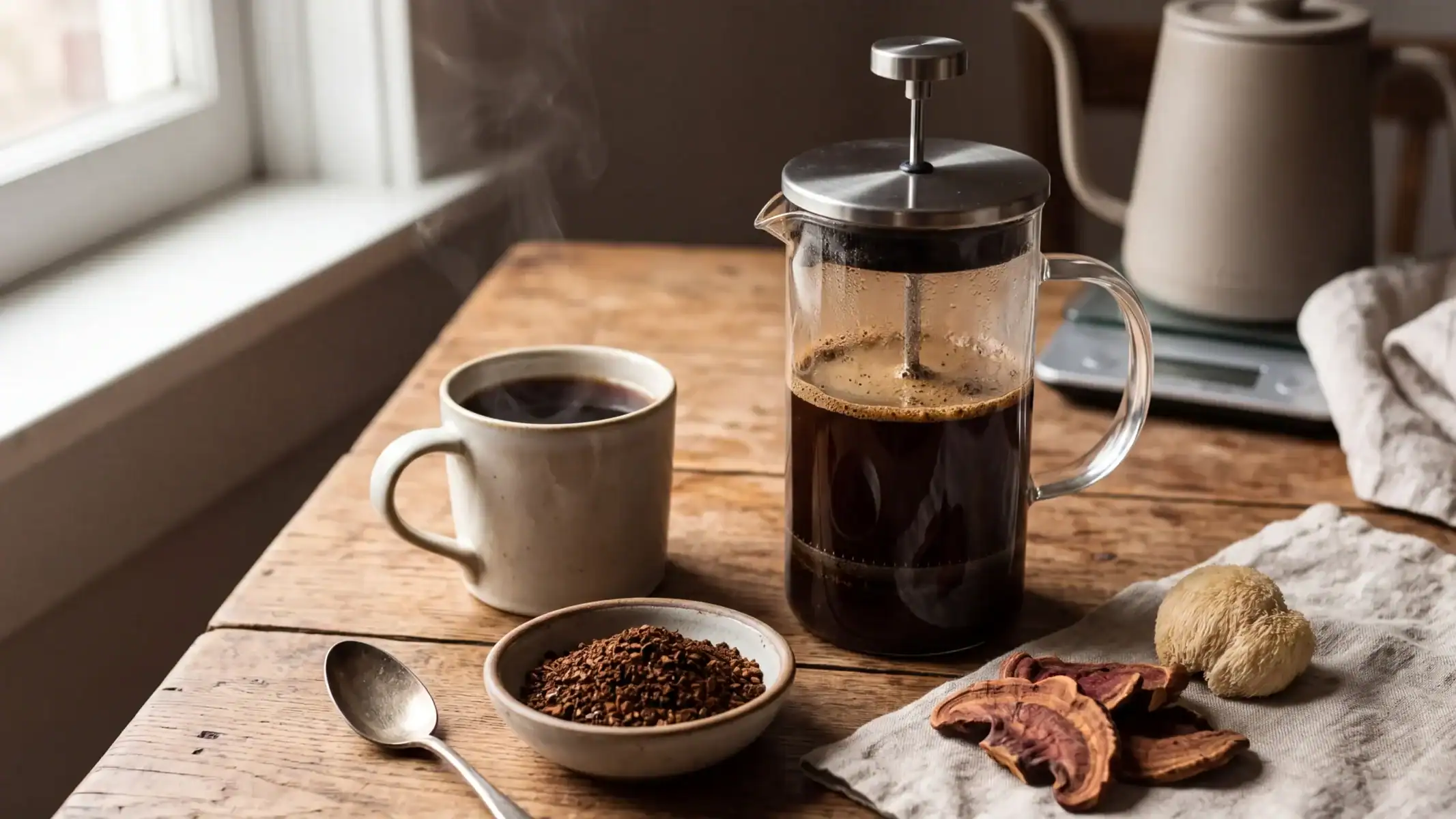
Ground mushroom coffee requires brewing equipment that separates the grounds from the finished drink. A drip machine, pour-over setup, or French press prepares the base before any milk or flavorings enter the cup.
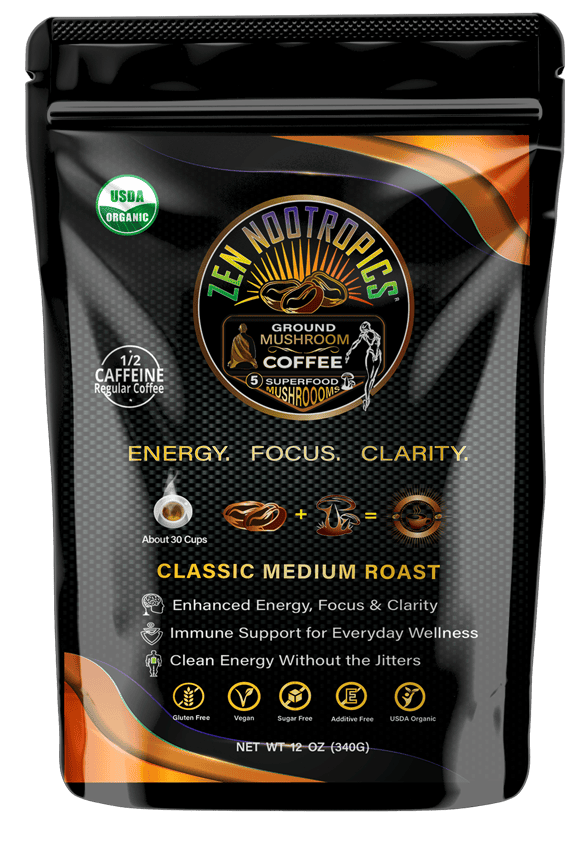
Zen Nootropics mushroom coffee combines USDA organic Colombian coffee with five functional mushrooms. Its pre-ground format works with most coffee machines, pour overs, French presses, and some espresso machines. See the mushroom coffee ingredients and brewing guide for an overview of blend formats.
For these recipes, the measured coffee means the finished liquid after brewing and separation. Ground coffee stirred directly into milk leaves a gritty drink; a filtered base provides a smoother texture.
Instant blends are prepared using the amount of powder and water stated on the package. Their ingredients vary, so the label determines whether the product dissolves readily or needs additional stirring.
Milk, sweeteners, and ice enter after the base is fully mixed. For an iced drink, a sweetener dissolves more evenly while the prepared coffee is still warm.
A recipe calling for a cup of freshly brewed coffee accepts an equivalent amount of prepared instant coffee when that preparation follows the manufacturer’s directions. Serving limits still apply if the required volume represents multiple labeled servings.
DIY mushroom coffee combines regular prepared coffee with a mushroom extract powder labeled for beverage use. The product’s serving directions govern the amount; different extracts have different concentrations.
A small portion of warm coffee helps form a smooth slurry before the remaining coffee is added. Some powders remain suspended and settle as the drink stands, so another stir before drinking improves consistency.
A separate extract adds to the mushroom ingredients already present in a premixed blend. A single product used within its labeled serving directions makes intake easier to track.

Warm milk and dissolved flavorings give hot mushroom coffee a smooth, cohesive texture. The recipes below use prepared coffee, except for the coffee-free cacao option.
All recipes make 1 serving. Prep and cook times begin after the coffee base is ready; suggested warming temperatures apply to the assembled drinks, while package directions govern coffee preparation and extract use.
Maple syrup complements coffee’s roasted flavor, while a small amount of cinnamon adds warmth without overwhelming the cup.
Prep time: 2 minutes
Cook time: 2 minutes
Warming temperature: 150°F
Ingredients
Method
For a dairy-free variation, the same quantity of almond milk replaces the milk. Ground cinnamon remains partly suspended, so a little settling is expected.
A vanilla almond mushroom latte uses equal parts prepared coffee and almond milk for a softer coffee flavor. Unsweetened milk keeps the sweetness adjustable.
Prep time: 3 minutes
Cook time: 3 minutes
Milk temperature: 150°F
Ingredients
Method
A barista-style almond milk suits a foam-forward version. Regular almond milk also works, with foam texture varying by formulation.
A mushroom mocha combines a coffee base with cocoa and warm milk. Mixing the cocoa into a paste first prevents dry pockets from floating on the surface.
Prep time: 3 minutes
Cook time: 3 minutes
Warming temperature: 150°F
Ingredients
Method
Oat milk creates a fuller texture, while almond milk produces a lighter drink. Sweetened milk changes the balance, so the maple syrup is best adjusted after the first taste.
This mushroom cacao latte uses a beverage-ready extract and milk as its base. It also works as mushroom hot chocolate, although cacao contains caffeine and theobromine, so the drink is coffee-free rather than caffeine-free.
Prep time: 3 minutes
Cook time: 3 minutes
Milk temperature: 150°F
Ingredients
Method
The exact extract quantity comes from its own label. A mushroom coffee blend would introduce coffee into this preparation.
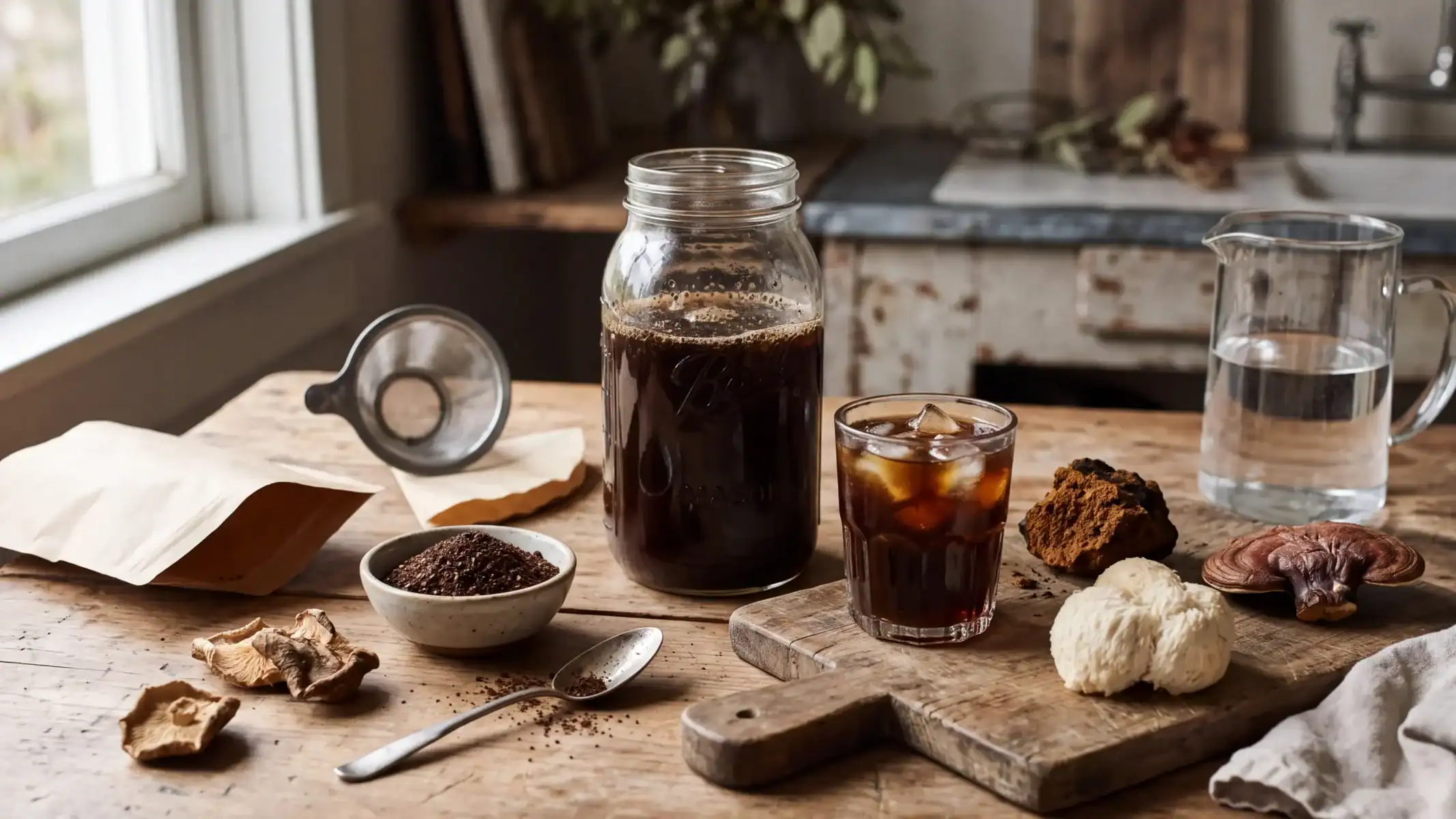
Chilled prepared coffee gives iced drinks a strong flavor while limiting immediate ice melt. These are assembled beverages made from an existing coffee base; cold-brew extraction is a separate preparation method.
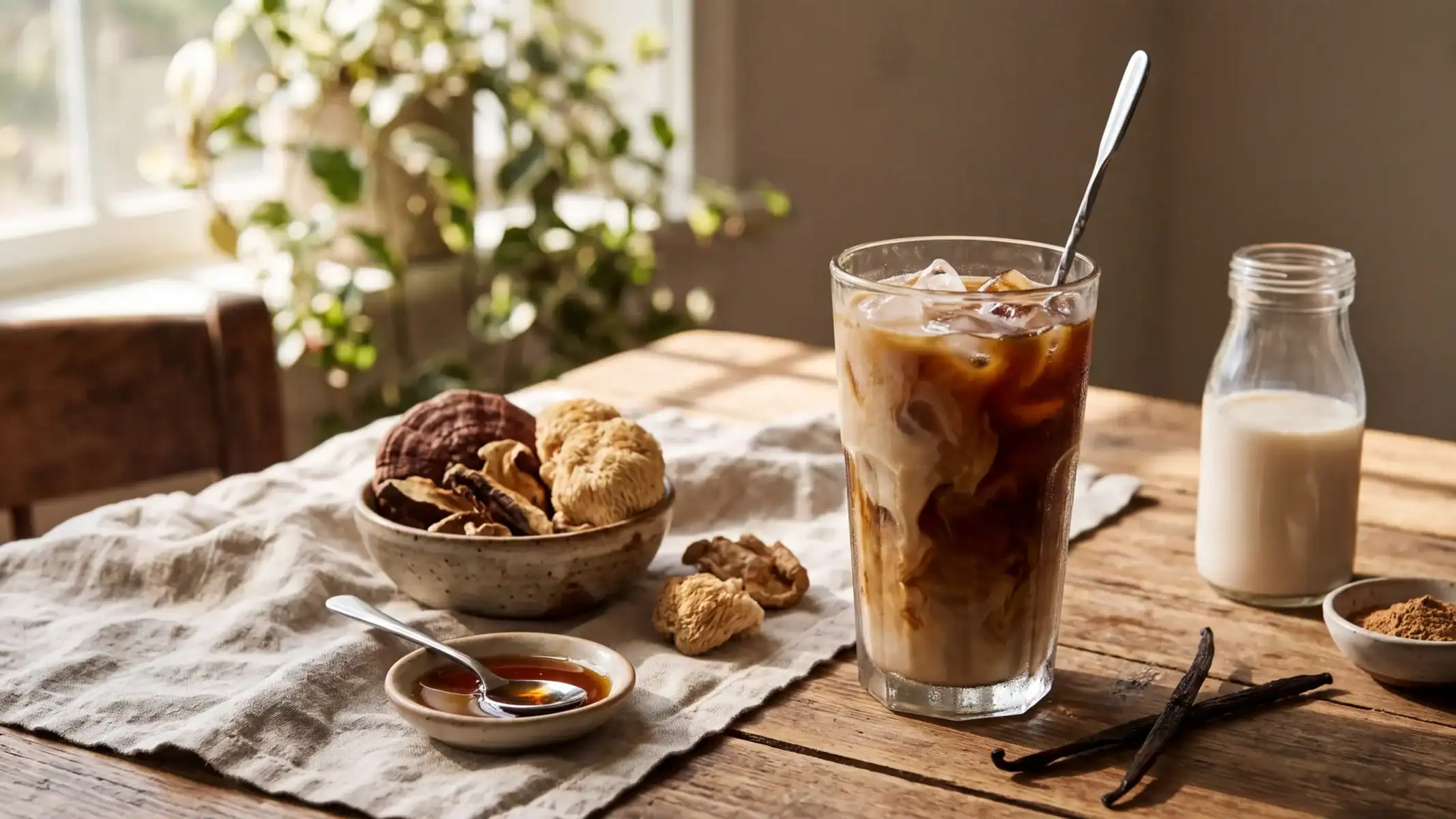
Iced mushroom coffee comes together cleanly when the vanilla and sweetener are mixed into the coffee before the milk and ice.
Prep time: 3 minutes
Cook time: 0 minutes
Serving temperature: Cold, over ice
Ingredients
Method
For a creamier version, oat milk replaces the almond milk in the same quantity. Freshly prepared hot coffee needs cooling before assembly to preserve the intended strength.
A mushroom coffee smoothie gets its creamy texture from frozen banana and almond butter. The coffee base supplies the roasted flavor, while the banana contributes sweetness.
Prep time: 5 minutes
Cook time: 0 minutes
Serving temperature: Cold, blended
Ingredients
Method
Sunflower seed butter replaces almond butter for a different flavor, with oat milk replacing almond milk when appropriate. The frozen banana provides body; a fresh banana produces a thinner drink.
Dalgona mushroom coffee works predictably as a prepared mushroom coffee drink topped with a separate instant-coffee foam. Traditional dalgona coffee uses instant coffee, sugar, and hot water to create its whipped topping.
Prep time: 8 minutes
Cook time: 0 minutes
Water temperature: 180°F for the topping
Serving temperature: Cold, over ice
Ingredients
Method
Ground coffee is unsuitable for the whipped topping. The additional instant coffee increases caffeine intake, so this preparation deserves particular attention from caffeine-sensitive drinkers.
Better flavor starts with a well-prepared base and additions that complement its roast profile. Ingredient labels also help distinguish culinary flavor choices from the serving directions for functional mushrooms.
Mushroom coffee taste reflects the coffee roast, mushroom ingredients, and any flavorings already included. A plain sip before mixing reveals whether the drink needs sweetness, creaminess, or a lighter coffee concentration.
Zen Nootropics describes its blend as bold, complex, and smooth, with dark chocolate and cinnamon tasting notes. Cocoa reinforces its chocolate character, while vanilla rounds out roasted flavors.
Milk choices change texture:
Sweetened milk contributes sweetness before any syrup enters the cup. Spices work best in small measured quantities because cinnamon and cacao also add texture.
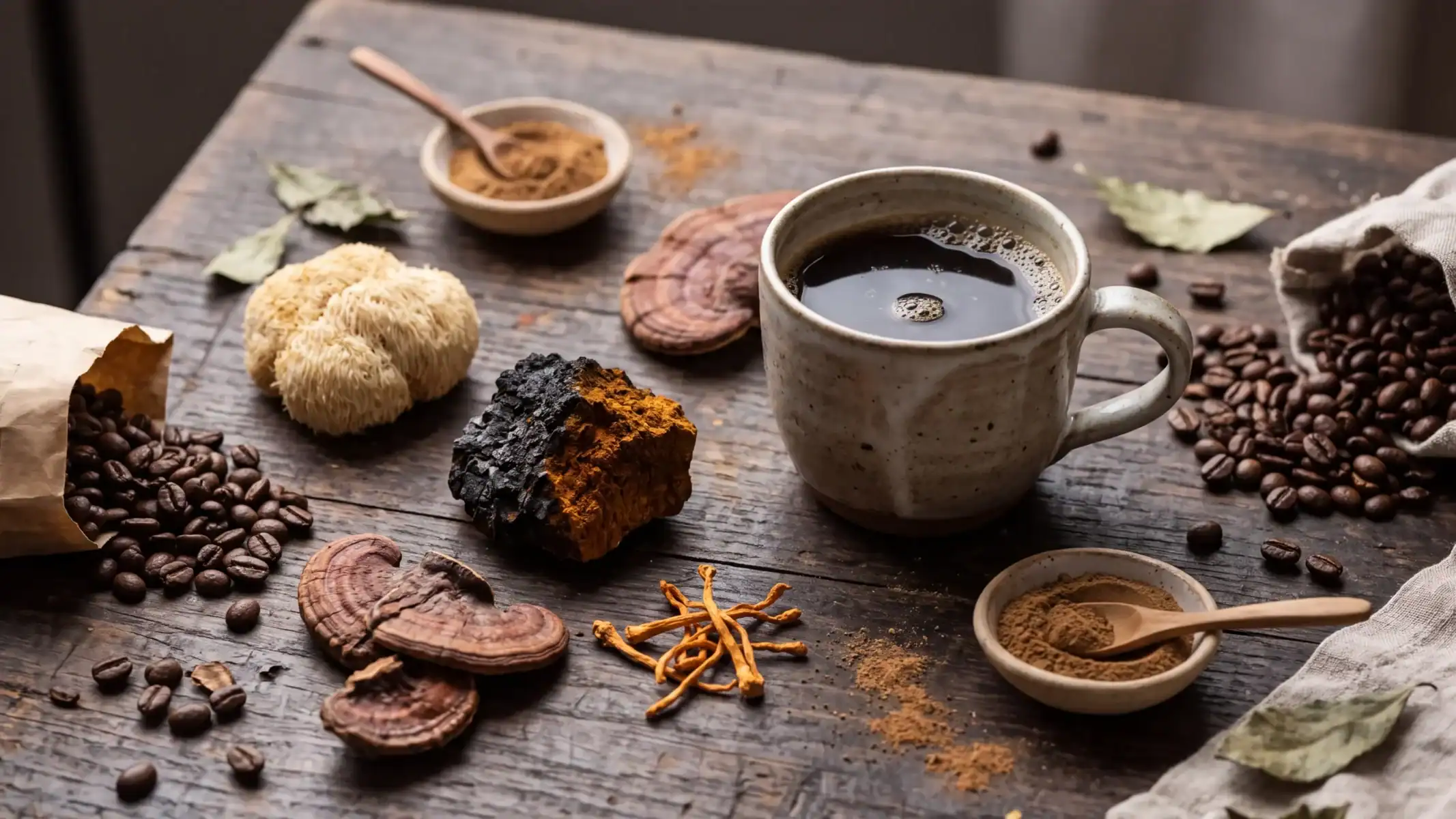
The five functional mushrooms in Zen Nootropics serve different roles in the brand’s wellness positioning. Those intended uses are separate from guaranteed effects of a finished drink.
The terms adaptogens and adaptogenic mushrooms appear frequently in wellness marketing. They do not establish an effective dose or guarantee a particular response, and a prepared coffee drink should not be treated as a medical treatment.
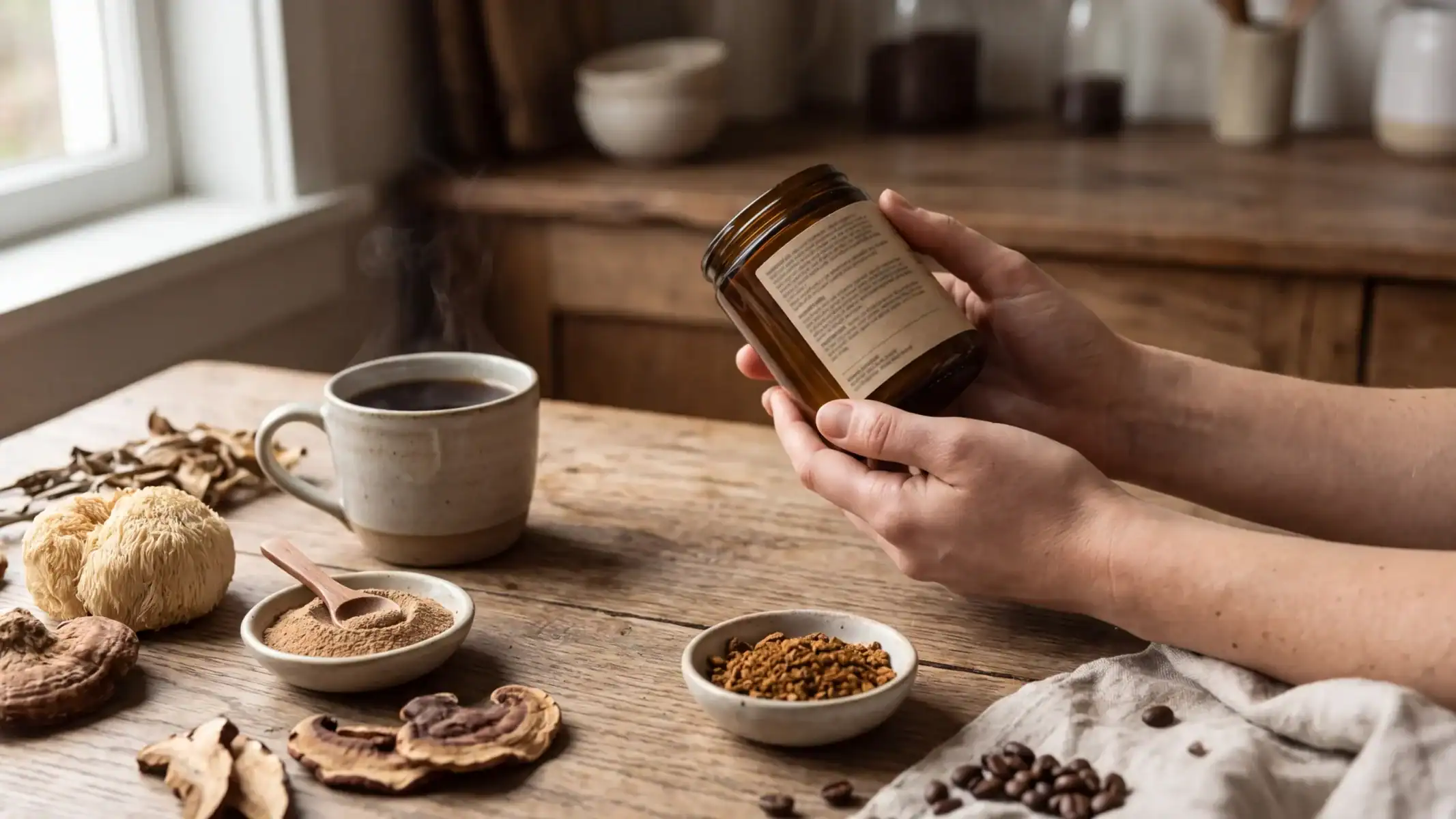
A useful extract label identifies the mushroom species and states the serving size clearly. Mushroom powder, concentrated extract, and myceliated grain describe different materials, so equal spoonfuls do not establish equivalent mushroom content.
Helpful label details include:
Beta-glucans information offers a more specific composition detail than a broad “polysaccharides” statement. It still does not establish that a product produces a particular health outcome.
An organic coffee ingredient also has a specific scope. Zen Nootropics identifies its Colombian coffee as USDA organic; that description should remain attached to the coffee ingredient.
A repeatable mushroom coffee routine starts with one preferred recipe and a consistent, label-directed base. Recording the milk quantity and sweetener amount makes the next cup easier to reproduce.
Ground blends need brewing and separation before mixing. Instant products follow their own preparation directions, while separate extracts require attention to serving size.
For shoppers comparing a mushroom coffee blend, Zen Nootropics offers a pre-ground option with five functional mushrooms and dark chocolate and cinnamon notes. Its product information provides a practical next step for checking brewing compatibility before choosing a blend for these drinks.
Prepared mushroom coffee accepts familiar coffee additions when the product’s preparation and serving directions remain intact. The following answers address common substitutions and consumption concerns.
A creamy vanilla preparation is a useful starting point for balancing mushroom coffee taste. The vanilla almond latte above provides measured proportions, and adjusting one ingredient at a time makes the preferred balance easier to identify.
Mushroom coffee mixes with milk, cocoa, maple syrup, vanilla, nut butter, and fruit in blended drinks. Smooth ingredients suit stirring, while frozen banana and nut butter need a blender for an even texture.
Prepared mushroom coffee or a compatible instant blend can be combined with regular coffee within the products’ serving directions. The combination increases total coffee intake, while a separate mushroom extract powder adds mushroom ingredients without adding coffee unless its formulation includes it.
All of these recipes work with dairy-free milk, including almond milk and oat milk. Unsweetened versions give clearer control over sweetness, and barista-style formulations suit recipes that call for foam.
Mushroom coffee still carries caffeine-related concerns when it contains caffeinated coffee, and mushroom ingredients may cause digestive discomfort or allergic reactions. People taking medications, those managing medical conditions, and those who are pregnant or breastfeeding should discuss functional mushroom products with a qualified clinician before use.
For caffeine-sensitive readers, serving size and the amount of coffee in each recipe matter. The FDA guidance on caffeine offers general context. For a make-ahead base for the iced recipes, try the cold brew mushroom coffee recipe. For a hot immersion brew, follow our French press mushroom coffee steps.