Does Mushroom Coffee Break a Fast? Rules by Fast Type
A morning coffee ritual fits more easily into fasting when the drink matches the plan...
Read Article →
Mushroom coffee gut health claims often center on mushroom polysaccharides, but finished-blend evidence remains limited. Mushroom coffee offers potential gut-health benefits through mushroom polysaccharides, while evidence that finished blends improve digestion or the gut microbiome remains limited. For people seeking a comfortable daily cup, the most useful distinction is between promising mushroom ingredients and demonstrated […]
Mushroom coffee gut health claims often center on mushroom polysaccharides, but finished-blend evidence remains limited. Mushroom coffee offers potential gut-health benefits through mushroom polysaccharides, while evidence that finished blends improve digestion or the gut microbiome remains limited. For people seeking a comfortable daily cup, the most useful distinction is between promising mushroom ingredients and demonstrated benefits from a brewed serving.
Functional mushrooms contain compounds that gut bacteria ferment. Digestive comfort also reflects the coffee itself, its caffeine content, and added ingredients. A blend that feels gentler on the stomach provides a useful personal benefit, although that experience alone says little about long-term gut health.
Start with the mushroom coffee ingredients guide for a breakdown of the coffee base and the mushroom ingredients used in blends. If your concern is discomfort after a cup, see our separate guide to mushroom coffee bloating and possible triggers.
The strongest rationale comes from research on mushroom compounds, with a smaller body of human evidence on specific extracts. Translating those findings into a claim about a finished coffee requires matching the ingredient, dose, and preparation.
Mushroom polysaccharides include beta-glucans and other complex carbohydrates that resist digestion in the upper digestive tract. Certain gut microbiota ferment these compounds, producing metabolites such as short-chain fatty acids.
Laboratory and animal experiments have reported changes in beneficial bacteria, including Lactobacillus and Bifidobacterium, after exposure to particular mushroom preparations. Results vary with the mushroom species and extraction method. Calling every mushroom ingredient a proven prebiotic goes beyond this evidence: a prebiotic must be selectively used by microorganisms and confer a health benefit.
Experiments involving lion’s mane, turkey tail, reishi, chaga, and cordyceps also examine antioxidants and compounds with anti-inflammatory activity. Some preparations influence oxidative stress, gut inflammation, or markers of intestinal barrier function in experimental models. Those findings establish biological plausibility; they do not establish that coffee containing the same species repairs the human gut lining.
Human trials provide preliminary evidence that certain mushroom extracts affect stool bacterial composition. Small trials involving turkey tail polysaccharopeptide preparations have reported shifts in the gut microbiome of healthy volunteers.
Those results apply to the specific extracts and dosing schedules used. A concentrated preparation taken directly differs from an unspecified quantity blended into ground coffee and brewed through a filter.
A microbiome change also requires careful interpretation. Higher microbial diversity alone does not establish better digestion, and an increase in a particular bacterial group does not automatically translate into symptom relief. Clinically useful evidence would connect those changes with outcomes such as improved stool consistency or reduced digestive discomfort.

Clinical evidence for finished mushroom coffee blends remains sparse. Ingredient research does not establish how much active material reaches the cup or whether the combination produces a meaningful digestive benefit.
A useful product trial would evaluate the marketed blend at its stated serving size against an appropriate comparison beverage. It would also measure digestive symptoms and adverse effects, alongside any microbiome outcomes.
Until that evidence becomes stronger, claims that a blend “heals the gut,” treats intestinal inflammation, or reliably increases beneficial bacteria exceed what ingredient-level findings support. A consumer’s response remains valuable for assessing tolerance, with separate evidence needed for broader health claims.
Mushroom coffee feels easier on digestion for some people when the finished serving reduces a personal trigger, such as caffeine exposure. Mushroom content alone does not determine acidity, bowel urgency, or reflux symptoms.
Regular coffee stimulates digestive activity through several components. Coffee consumption stimulates gastrin release and gastric acid secretion, and both caffeinated and decaffeinated coffee affect colonic activity in some people.
Caffeine contributes to stimulation, while chlorogenic acid and other coffee compounds also interact with digestive physiology. That helps explain why switching to decaf does not eliminate every coffee-related symptom.
Acid reflux involves the movement of stomach contents into the esophagus, so beverage acidity tells only part of the story. A person with a sensitive stomach should assess reflux, abdominal discomfort, and bowel urgency separately. A beverage might improve one symptom while leaving another unchanged.
Adding mushroom extracts does not neutralize caffeine or guarantee lower acidity. Caffeine reduction occurs when a prepared serving contains less caffeinated coffee, uses decaffeinated beans, or otherwise delivers a measured lower dose.
Serving size and brewing method influence the comparison. A larger mug of a lower-caffeine blend still adds to daily caffeine exposure, and a stronger brew changes the amount consumed.
Claims such as “smooth” describe taste without establishing a measured pH or acid concentration. Consumers seeking a gentler cup should look for caffeine information per prepared serving and supporting measurements for low-acid claims.
Stress influences digestive symptoms through the gut-brain axis, including signaling involving the vagus nerve. Changes in stress response affect gut motility and the perception of abdominal discomfort.
Reducing caffeine helps some caffeine-sensitive people feel less stimulated, with possible benefits for their digestive experience. That response does not establish that a mushroom ingredient directly changes vagal activity.
Reishi and other functional mushrooms are marketed as adaptogens. The term alone provides no clinical evidence that a coffee blend regulates stress-related digestive symptoms. Regular meals and adequate sleep remain useful parts of a routine for people whose symptoms worsen during stress.
Serving size, added ingredients, and individual health conditions shape the safety of mushroom coffee blends. A formulation marketed for digestive health still requires the same attention to reactions and interactions as other concentrated botanical products.

A larger serving increases exposure to every ingredient in the blend. That includes coffee, mushroom extracts, and any added prebiotic fibers.
Fermentable fibers such as inulin and fructooligosaccharides feed gut microbes, but rapid increases in intake frequently cause gas. Some sugar alcohols used as sweeteners also produce bloating or loose stools at sufficient amounts. Artificial sweeteners differ chemically, so they should be assessed individually.
A practical approach is to introduce one new product at a time and begin with a smaller portion when the label permits. Keeping the usual milk or creamer unchanged makes a new reaction easier to interpret.
Mushroom coffee can cause bloating, nausea, diarrhea, or abdominal discomfort. These effects reflect individual tolerance to the extracts, coffee, or added ingredients.
Mushroom extracts themselves can be hard on digestion, particularly for people already experiencing digestive troubles. Symptoms that begin after a new blend warrant pausing it and assessing the ingredient list.
Persistent symptoms deserve medical evaluation. Severe abdominal pain, bloody stools, or unexplained weight loss require prompt attention, while breathing difficulty or swelling after consumption requires urgent care.
People with kidney disease, recurrent kidney stones, or inflammatory bowel disease should discuss concentrated mushroom products with a healthcare professional before starting them. Pregnancy, breastfeeding, and mushroom allergies also warrant extra caution.
Chaga mushroom products raise particular concerns because some preparations contain substantial oxalates. High intake has been associated with kidney injury in case reports, making preparation and exposure relevant to risk.
Reishi mushroom and other extracts warrant a medication review for people taking anticoagulants or immunosuppressants. Potential interactions depend on the ingredient and medicine involved. A clinician or pharmacist should review the full label, including other supplements taken alongside the coffee.
Ingredient transparency provides a practical basis for evaluating mushroom coffee for gut health. A useful label connects each claim to an identifiable ingredient and a clear amount per serving.
A label should identify the mushroom species and distinguish whole mushroom powder from an extract. Lion’s mane and turkey tail have different research histories, so a generic “mushroom complex” gives limited information.
The most useful details include:
A total blend weight does not reveal the quantity of each constituent. For pre-ground coffee, the amount added to the dry grounds also differs from the amount extracted into the finished beverage. Product-specific testing is needed to establish that relationship.
Caffeine information should describe the prepared serving being consumed. A comparison with regular coffee is useful only when the serving sizes and brewing assumptions are clear.
For added prebiotic fiber, the label should identify both the ingredient and its amount. The presence of mushrooms alone does not establish a meaningful fiber dose, especially when the product uses concentrated extracts.
Probiotics require a separate assessment. Strain identity, viable quantity through shelf life, and compatibility with the recommended brewing temperature all affect the claim. Evidence for one strain should not be transferred to an unidentified probiotic blend.
Extraction terms describe processing, while testing establishes what a product contains. Hot-water extraction targets water-soluble constituents, and dual extraction combines water and alcohol processing to obtain different groups of compounds.
Dual extraction does not automatically establish superior bioavailability or a digestive benefit. For a proposed prebiotic effect, the relevant question includes whether fermentable compounds reach gut microbes.
Useful documentation includes batch-linked testing for identity and contaminants, such as heavy metals and microbial contamination. A certificate should identify the product or batch tested. An extraction ratio by itself does not disclose the delivered beta-glucan amount or demonstrate a clinical outcome.

Mushroom coffee is a reasonable beverage option for people who enjoy it and tolerate its ingredients, with gut-health expectations grounded in the distinction between extract research and finished-blend evidence. Digestive comfort is best assessed through the prepared serving and a consistent routine.
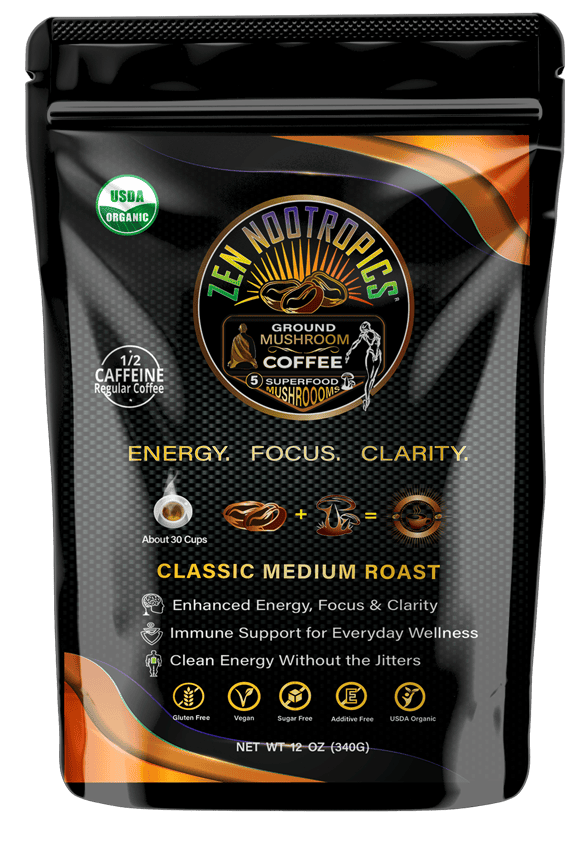
Zen Nootropics combines USDA organic Colombian coffee with Lion’s Mane, Cordyceps, Reishi, Chaga, and Turkey Tail. Consumers considering that format can check serving details against their caffeine preferences and dietary needs.
A gradual introduction makes tolerance easier to assess. Persistent digestive symptoms call for medical evaluation, and ongoing treatment should continue as directed by the treating clinician.
Mushroom coffee’s digestive effects are product-specific, and ingredient claims need to be interpreted alongside serving details. These distinctions help clarify common questions about daily use and digestive health.
An improvement in the gut microbiome has not been established for mushroom coffee blends as a category. Certain mushroom extracts have changed bacterial composition in small human trials, but increased microbiome diversity alone does not demonstrate a health benefit.
A meaningful prebiotic dose cannot be assumed from the words “mushroom coffee.” The amount and type of fermentable material must be disclosed, and evidence should support a benefit at that serving level.
Mushroom coffee may reduce bloating when switching removes a personal trigger, such as a larger caffeine serving or a poorly tolerated additive. Mushroom extracts and added prebiotics also cause gas in some people, so a new blend should be assessed cautiously.
Daily use is reasonable for adults who tolerate the product and have no relevant contraindications. Serving instructions, total caffeine intake, and medication interactions should guide the routine, particularly when several mushroom supplements are used together.
Mushroom coffee cannot replace treatment for digestive conditions. People with ongoing symptoms or a diagnosed disorder should follow their clinician’s treatment plan and discuss new concentrated mushroom products before adding them.