
Mushroom Coffee for Beginners: Choose and Brew Your First Cup
For beginners who already use a coffee maker, pre-ground mushroom coffee offers a fam...
Read Article →
Cordyceps mushroom coffee is a coffee product containing Cordyceps powder or extract, either individually or alongside other functional mushrooms. The ingredients, mushroom species, and preparation methods can vary considerably between cordyceps mushroom coffee products. For readers exploring functional coffee alternatives, cordyceps mushroom coffee combines the familiar taste and caffeine of traditional coffee with an ingredient […]
Cordyceps mushroom coffee is a coffee product containing Cordyceps powder or extract, either individually or alongside other functional mushrooms. The ingredients, mushroom species, and preparation methods can vary considerably between cordyceps mushroom coffee products.
For readers exploring functional coffee alternatives, cordyceps mushroom coffee combines the familiar taste and caffeine of traditional coffee with an ingredient that has attracted interest in exercise and wellness research.
Cordyceps mushroom coffee is regular coffee blended with Cordyceps (and often other functional mushrooms), and its energy comes mainly from the coffee’s caffeine; human studies on Cordyceps extracts for endurance are small and mixed, and no study has tested a finished coffee blend. That makes the label, the species, and the dose worth checking before you buy.
Cordyceps mushroom coffee is a coffee product that includes Cordyceps powder or extract, either by itself or as part of a mushroom blend. The species used, the form of the product, and the other mushrooms in the mix all shape what you are drinking.

The name “cordyceps” covers more than one fungus. The wild “caterpillar fungus” was long called Cordyceps sinensis, but it was reclassified into the genus Ophiocordyceps in 2007. It grows on moth larvae in cold, high places, is rare, and is costly. In 2018, Chinese regulators stopped its use in dietary supplements over heavy metal concerns.
Cordyceps militaris is a related species that can be grown in cultivation. Many coffee blends use it, or they use lab-grown mycelium from strains related to O. sinensis, such as the Cs-4 strain used in several older studies. These are different materials, so results from one should not be assumed for another.
| Feature | Ophiocordyceps sinensis | Cordyceps militaris |
|---|---|---|
| Source | Wild, on moth larvae | Commonly cultivated |
| Cost and supply | Rare, expensive | Wider supply |
| Common in products as | Fermented mycelium strains (e.g., Cs-4) | Fruiting body or mycelium |
| Human exercise studies | Several small trials | Fewer, small trials |
Ground blends mix mushroom powder or extract into ground coffee that you brew like normal. Instant drinks are powders that dissolve in hot water and may include freeze-dried coffee, cacao, or no coffee at all. Ground blends feel closest to a regular brew. Instant mixes trade some flavor depth for speed.
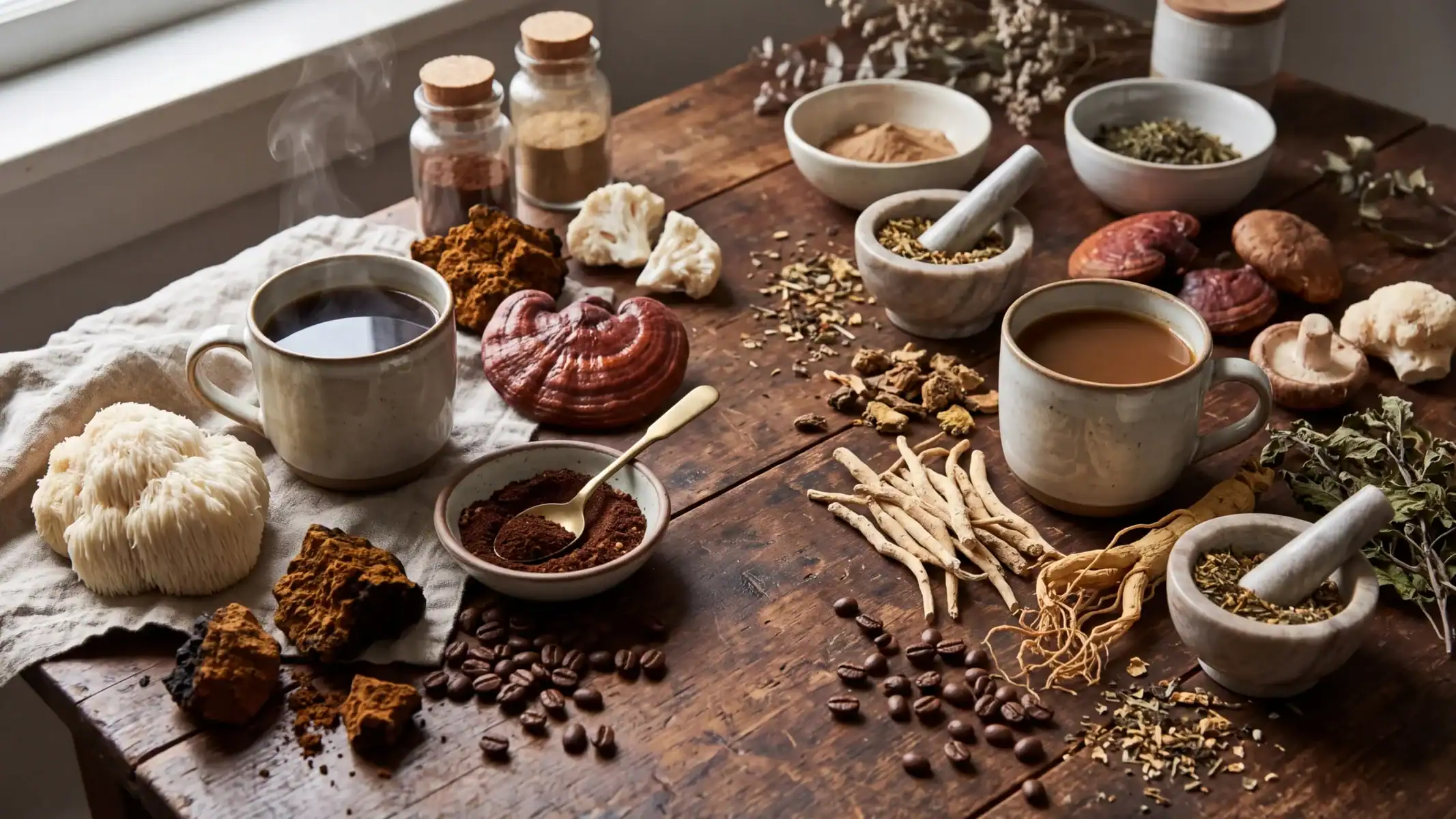
Cordyceps is usually the “energy” mushroom in a blend. Lion’s Mane is linked to focus, Reishi to calm, Chaga to antioxidants, and Turkey Tail to gut and immune support. These links come from tradition and early research. Combining them gives a broad wellness theme, though each extra mushroom also means a smaller share of the scoop for each one.
Brands add Cordyceps because of its long history as a “stamina” ingredient and because its compounds sound like a natural match for an energizing drink. Tradition and lab chemistry explain the interest, but they are different from proven effects in people.
In traditional Chinese medicine, Cordyceps has been used for fatigue, coughs, and as an adaptogen or immune stimulant. Modern marketing turned that into claims about energy, stamina, and athletic drive. Medicinal mushrooms have also become part of the wider nootropics trend, where focus and energy are sold together.

Cordyceps contains several compounds researchers study:
Lab studies on these compounds help explain why Cordyceps is studied. The amount in a coffee scoop, and how your body handles it, has not been measured in coffee products.
Human research on Cordyceps focuses on capsule or tablet extracts and exercise, and the results are mixed. Claims about antioxidants, inflammation, type 2 diabetes, insulin sensitivity, heart health, kidney function, and respiratory health come mostly from animal, lab, or clinical studies in sick patients, and none tested coffee.
The human trials are small and used different products:
Memorial Sloan Kettering describes exercise studies in healthy people as mixed. Ideas about ATP, cellular energy production, and oxygen use come largely from rodent studies. A broad 2026 review of natural products noted that more clinical evidence is needed before performance recommendations can be made.
Study doses ran from 1 to 4 grams a day of a specific, standardized product. A coffee scoop with five mushrooms may contain far less Cordyceps, from a different species or part. Brewing, heat, and serving size also change what reaches your cup. Because of this, extract results do not show that any finished coffee blend improves endurance, immunity, or focus.
Caffeine has well-studied effects on alertness, while Cordyceps effects on energy are proposed and still being tested. In a mushroom coffee, the caffeine does most of the work you feel.
| Factor | Caffeine | Cordyceps |
|---|---|---|
| How it works | Blocks adenosine receptors | Proposed; not established in people |
| Human evidence | Strong | Small, mixed |
| Felt effect | Within about 45 minutes | Not a known quick effect |
| Safety guide | 400 mg/day for healthy adults (FDA) | No set daily limit |
Caffeine blocks adenosine, which reduces fatigue and boosts alertness. It peaks in the blood within 45 minutes and has a half-life of about 4 to 5 hours. Cordyceps contains adenosine-like compounds, and researchers have suggested effects on energy pathways, but these ideas have not been shown to change how you feel after a cup.
No. Some blends replace part of the coffee with mushroom powder, which lowers caffeine per scoop. Others use a full measure of coffee. Caffeine depends on the beans, the amount you use, and how you brew, so check the label or ask the brand.
No. Many people describe a steadier feel with mushroom coffee, and some enjoy pairing coffee with L-theanine for that reason. Lower caffeine, food, sleep, and your own sensitivity all play a part. Studies have not shown that Cordyceps itself prevents jitters or crashes.
A good label tells you what species you are getting, what part of the mushroom, how it was processed, and how much is in each serving. These details let you compare products. They do not prove a product works.
Comparing cordyceps mushroom coffee products starts with understanding exactly what the ingredient label discloses. Mushroom species, extraction methods, and serving amounts provide useful information for making an informed purchase.
Look for the Latin name, such as Cordyceps militaris. Then check whether the product uses the fruiting body (the mushroom itself) or mycelium (the root-like network). Mycelium grown on grain can carry leftover grain starch, so a clear disclosure helps.
Plain powder is dried, ground mushroom. An extract concentrates certain compounds, often through hot water extraction, which pulls out polysaccharides such as beta-glucans. Ratios like “10:1” describe concentration, not quality, unless the brand explains what they mean.
A label that lists “mushroom blend: 1,000 mg” does not tell you how much Cordyceps is inside. Look for the Cordyceps amount per serving on its own. Even with that number, compare it to study doses carefully, since the studies used specific products.
Brands that share lab tests for heavy metals, microbes, or beta-glucan content give you useful safety and identity information. A lab test confirms what is in the bag. It does not mean the product has been clinically tested for benefits.
Cordyceps has a limited side effect record, but it can affect blood sugar and bleeding, and the coffee brings its own caffeine concerns. Memorial Sloan Kettering reports no major side effects, which is different from proven long-term safety.
Some people notice stomach upset, bloating, or loose stools with mushroom products. If you are allergic to mushrooms or molds, avoid these blends. The caffeine can cause restlessness, poor sleep, a racing heart, or anxiety, especially at high intakes.
Talk with your healthcare provider before use if any of these apply:
Safety in pregnancy and breastfeeding has not been established, so skip it unless your doctor approves. Human trials have lasted weeks to a few months. Effects of daily use over years have not been studied.
Make cordyceps coffee the way the package tells you to. Ground and instant products need different methods.

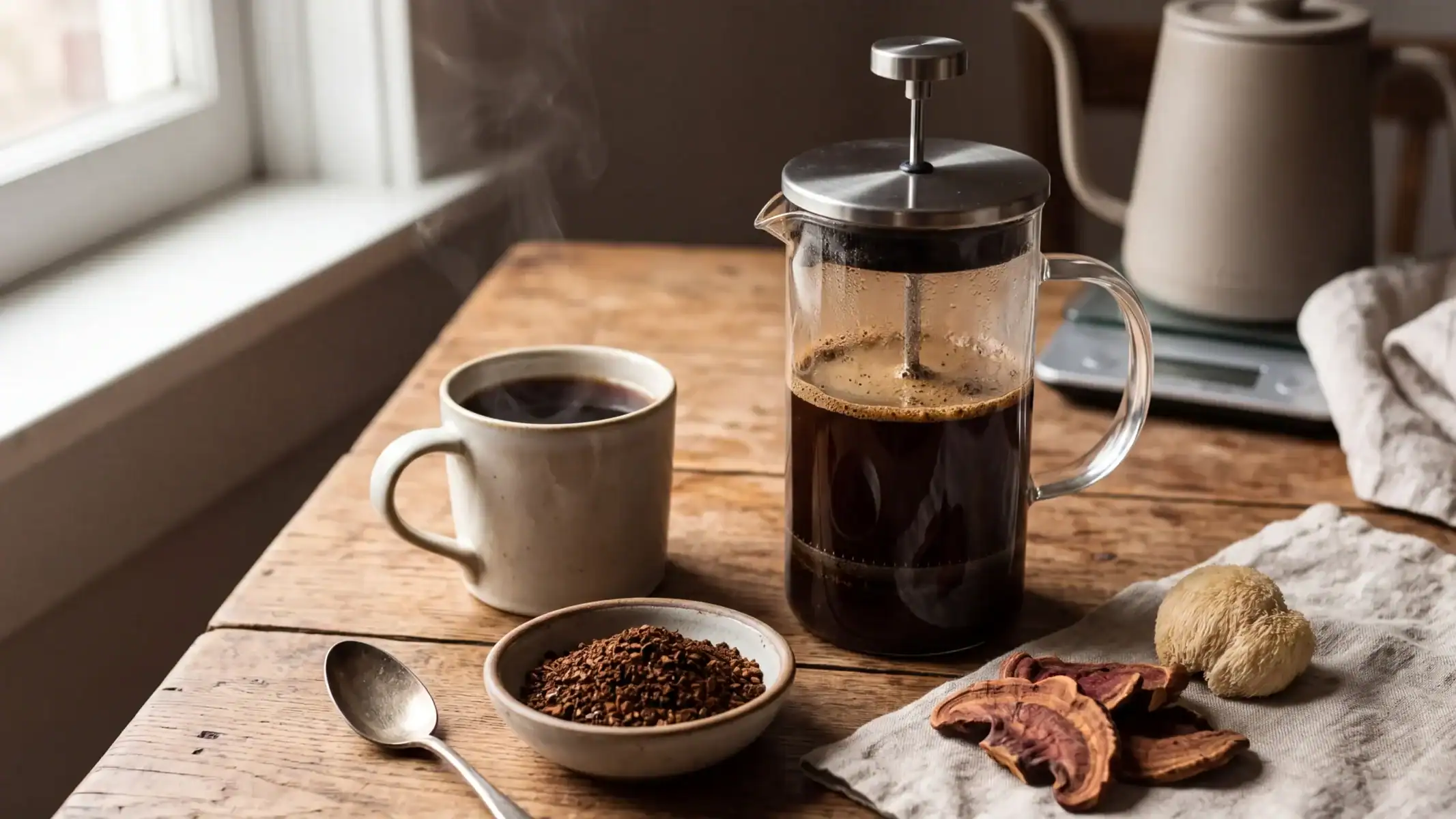
Brew ground mushroom coffee in a drip machine, pour over, or French press using the scoop size on the bag. Some pre-ground blends work in certain espresso machines, but grind size matters, so check the label. Stir instant powders into hot water and mix well, since mushroom powder can clump.
Preparing cordyceps mushroom coffee depends on whether you purchase a ground coffee blend or an instant powder. Following the manufacturer’s instructions helps maintain the intended coffee-to-water ratio and serving size.
Most blends taste close to regular coffee, with an earthy note from the mushrooms. Roast and bean choice shape the flavor more than the mushrooms do. Stick to the listed serving, and remember that a stronger brew means more caffeine.
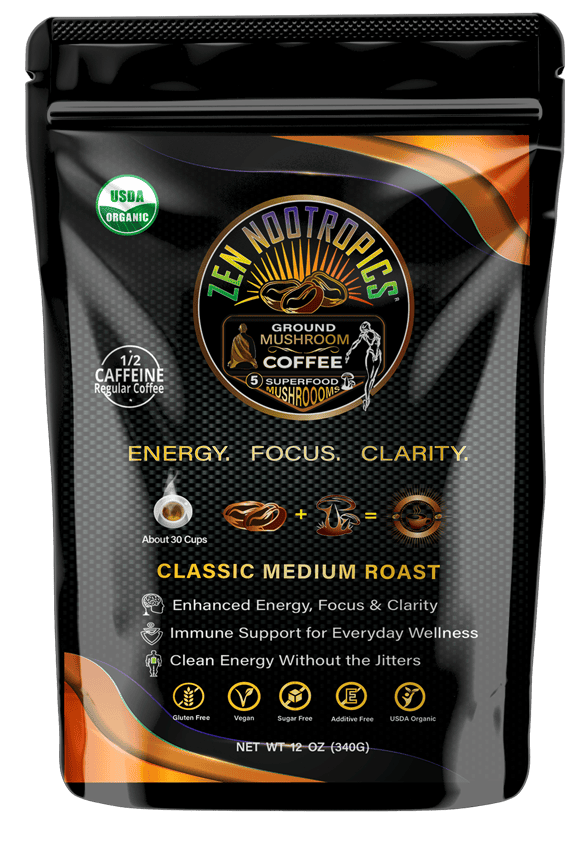
Zen Nootropics offers a cordyceps mushroom coffee blend combining Colombian coffee with five functional mushrooms: Lion’s Mane, Cordyceps, Reishi, Chaga, and Turkey Tail. This formulation provides a convenient way to incorporate functional mushroom ingredients into a familiar coffee routine, without assuming clinically proven benefits from the finished blend.
The blend combines single-source Colombian beans with Lion’s Mane, Cordyceps, Reishi, Chaga, and Turkey Tail. Its tasting notes are dark chocolate and cinnamon, and it is ground for most coffee machines, pour overs, French presses, and some espresso machines. Zen positions it around balanced, sustained energy, while the caffeine itself comes from the coffee.
Use the label guide above for any brand, Zen included. Look at species, mushroom part, extraction, and per-serving amounts, and contact the company with questions. Zen’s support line is (916) 352-3336, open 8:00 AM to 7:00 PM PST.
Cordyceps mushroom coffee gives you a familiar brew with a traditional “stamina” mushroom added. Its felt energy comes from caffeine. Human Cordyceps studies used capsules at 1 to 4 grams a day and found mixed exercise results, with no trials on coffee blends. Pick a product with clear species and dose details, follow the serving directions, and check with your doctor if you take blood sugar or blood-thinning medicine.
Yes, if it contains real coffee, it contains caffeine. The amount depends on how much coffee is in the blend and how you brew it. Healthy adults should keep total caffeine under about 400 mg a day.
It tastes mostly like coffee, with a mild earthy note. The beans and roast shape most of the flavor. Some blends, like Zen’s, list notes such as dark chocolate and cinnamon.
Many people drink it daily, but long-term safety of daily Cordyceps has not been studied. Stay within the serving size and your caffeine limits. Ask your doctor first if you have diabetes, take blood thinners, or are pregnant.
Possible issues include stomach upset, caffeine jitters, and poor sleep. Cordyceps may also lower blood sugar and raise bleeding risk with certain drugs. Stop and talk to a doctor if you notice unusual symptoms.
No. Small trials on Cordyceps extracts for exercise performance found mixed results, and none tested coffee blends. The energy you feel comes mainly from caffeine.
You can buy it online from mushroom coffee brands. Before you buy, check the Cordyceps species, the mushroom part, the extraction method, and the Cordyceps amount per serving. If you want a pre-ground option made with Colombian coffee and five mushrooms, Explore Zen Nootropics Mushroom Coffee and review its ingredients.