Mushroom Coffee for Beginners: Choose and Brew Your First Cup
For beginners who already use a coffee maker, pre-ground mushroom coffee offers a fam...
Read Article →
Mushroom coffee combines coffee with functional mushroom ingredients; adaptogenic coffee is a broader category that includes mushrooms, herbs, or both, marketed for stress-response support. For people seeking focus and sustained energy, the categories overlap enough that two differently named products can contain similar formulas. The mushroom coffee vs adaptogenic coffee distinction starts with ingredients. A […]
Mushroom coffee combines coffee with functional mushroom ingredients; adaptogenic coffee is a broader category that includes mushrooms, herbs, or both, marketed for stress-response support. For people seeking focus and sustained energy, the categories overlap enough that two differently named products can contain similar formulas.
The mushroom coffee vs adaptogenic coffee distinction starts with ingredients. A mushroom blend identifies what has been added, while “adaptogenic” describes an intended wellness role. Neither label establishes caffeine content or guarantees a particular effect.
A useful comparison connects the formula to the daily routine: how much caffeine a prepared cup delivers, which added ingredients it contains, and whether those ingredients suit the person drinking it.
For the foundation behind this comparison, start with our complete guide to mushroom coffee, its ingredients, and how it is prepared.
Mushroom coffee is defined by its mushroom ingredients, while adaptogenic coffee is defined by its positioning around adaptogens. Many products fit both descriptions, although the terms are not interchangeable.
Mushroom coffee combines a coffee base with mushroom powders or extracts. Common functional mushrooms include lion’s mane, reishi, chaga, and cordyceps.
These ingredients also appear under the term “medicinal mushrooms,” reflecting traditional use and ongoing investigation. That terminology does not establish a coffee product as a medicine or demonstrate that its finished formula improves health.
Products differ in mushroom species and preparation. An extract and a whole-mushroom powder have different compositions, even when their labels name the same mushroom.
Adaptogenic coffee contains ingredients marketed for helping the body respond to stress. Formulas include mushrooms, botanical ingredients such as ashwagandha or rhodiola, or combinations of these ingredients.
“Adaptogen” is terminology used in herbal practice and wellness marketing. It provides no standardized assurance that a finished beverage produces a meaningful benefit.
Some blends also contain L-theanine, an amino acid associated with relaxation and attention research. Its inclusion adds another ingredient to evaluate; L-theanine itself is not a mushroom or an adaptogenic herb.
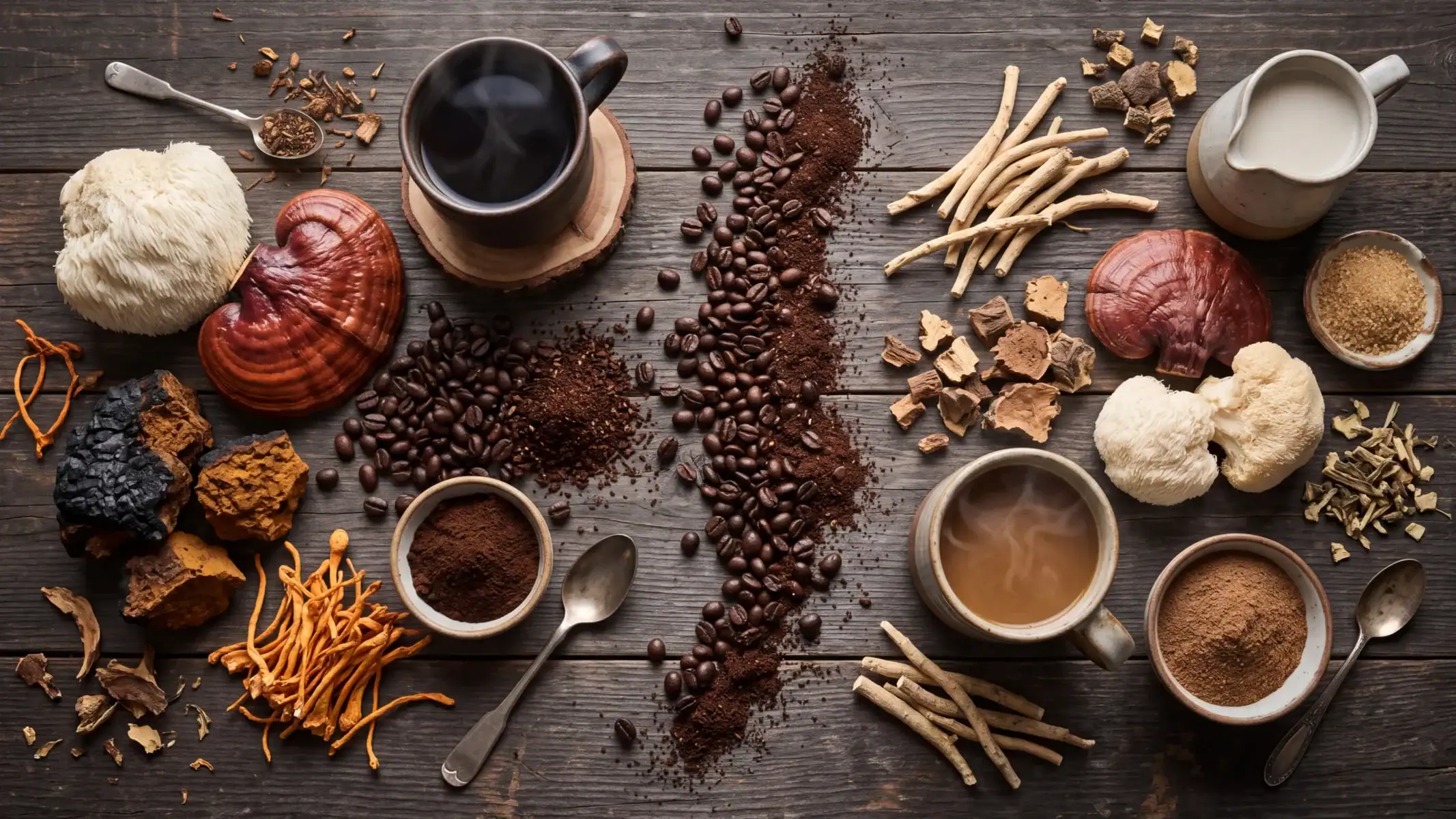
Ingredient lists reveal the practical overlap between the categories. A coffee containing reishi and lion’s mane might carry either label, while a coffee containing ashwagandha without mushrooms fits the broader adaptogenic category.
| Comparison point | Mushroom coffee | Adaptogenic coffee |
|---|---|---|
| Defining addition | Functional mushrooms | Ingredients marketed as adaptogens |
| Common examples | Lion’s mane, reishi, chaga, cordyceps | Ashwagandha, rhodiola, mushrooms |
| Coffee base | Ground, instant, or decaf | Ground, instant, or decaf |
| Caffeine disclosure | Product-specific | Product-specific |
| Flavor influences | Coffee roast and mushroom preparation | Coffee roast, herbs, and other additions |
The complete formula deserves attention, including ingredients outside the headline blend. Sweeteners, creamers, and additional stimulants change the nutritional profile or the experience of drinking it.
Caffeine and flavor depend on the recipe and preparation, while potential benefits require evidence relevant to the actual ingredients and amounts. Neither category name predicts a smoother experience or stronger cognitive support.
Either category can contain less caffeine than a particular cup of regular coffee. That happens when its serving supplies less caffeinated coffee, uses decaf, or otherwise changes the caffeine dose.
Adding mushrooms or herbs to an unchanged coffee serving does not remove its caffeine. Coffee jitters remain possible with both categories, especially with larger servings or additional caffeine elsewhere in the day.
A claim of sustained energy also needs careful interpretation. A person who reduces caffeine intake might experience fewer unpleasant effects, but that response does not establish a separate benefit from the added mushrooms.
Mushroom coffee taste depends heavily on the coffee base and the amount and type of mushroom ingredient. A coffee-forward formula has a different flavor balance from a concentrated mushroom drink with a small amount of coffee.
Earthy or woody notes are possible with mushroom ingredients. Herbal blends introduce their own bitterness or root-like flavors, while sweeteners and flavorings further change the cup.
Preparation affects the result, too. Instant products dissolve or disperse in water; ground blends require brewing, and a stronger brew changes the balance between coffee flavor and added ingredients.
Caffeine has established short-term effects on alertness and attention. Evidence for additional mushroom coffee benefits is less developed, and research on mushroom coffee remains limited.
Lion’s mane has emerging human research related to cognitive function. Cordyceps research includes exercise-related outcomes, while reishi and other mushrooms have been investigated for effects relevant to immune support.
Laboratory findings involving antioxidants or immune activity do not establish fewer illnesses in coffee drinkers. Gut health claims require similar care: changes in microbes or isolated compounds need evidence connecting them to meaningful outcomes in people.
Evidence about an ingredient applies most directly to the preparation and dose evaluated. A commercial coffee with a different extract or an undisclosed amount requires its own evidence for the same claimed outcome.
The way ingredients are delivered also changes the comparison. A measured supplement dose swallowed in full differs from mushroom material brewed through a filter, where the amount reaching the cup depends on extraction during preparation.
Combination formulas add another uncertainty. Evidence concerning lion’s mane alone does not establish that a coffee containing lion’s mane alongside herbs improves focus or provides sustained energy.
A useful label comparison starts with caffeine per prepared serving and the amounts of every added active ingredient. Extraction details and realistic serving counts then help explain what the purchase delivers.
Caffeine levels should correspond to the serving a person prepares. A scoop size, brewing instruction, and finished cup size need to be read together, particularly when a larger mug requires additional product. The FDA emphasizes that caffeine tolerance varies by individual and circumstance, so use the actual product label rather than a category-wide caffeine assumption.
Ground coffee introduces variation through the amount used and the brewing method. A package’s serving count therefore needs to match the intended preparation before its caffeine information becomes a useful comparison.
The full ingredient list should also identify additions beyond coffee and mushrooms. Guarana or tea extracts contribute caffeine, while sugar and powdered creamers affect calories and suitability for particular diets.

Species names help distinguish ingredients that share a common marketing name. Labels might identify reishi as Ganoderma lucidum or cordyceps as Cordyceps militaris.
Our functional mushroom coffee ingredient guide explains why species names, preparation, and transparent labels matter.
Useful disclosures include:
Beta-glucans are one group of mushroom constituents; triterpenes are another group associated with reishi. Dual extraction describes the use of water and alcohol to extract different compounds, but the phrase alone establishes neither potency nor a clinical benefit.
A total blend weight leaves the individual mushroom amounts unclear. An extract ratio also needs context about the starting material and measured composition before it supports a meaningful comparison.
Price per serving equals the purchase price divided by the number of servings prepared according to the label. For a recurring order, the relevant price is the amount charged on that order, including applicable delivery charges.
Instant mushroom coffee offers a relatively straightforward scoop-to-serving comparison. Ground coffee requires attention to the quantity used for each brew and the number of cups actually produced.
Value also includes ingredient transparency. A lower cost per cup and a clearly disclosed formula answer different questions, so both belong in the comparison. A prominent total mushroom weight does not reveal how much of each ingredient the serving contains. Our mushroom coffee buyer’s guide offers additional selection criteria without replacing a label-by-label comparison.
Side effects reflect the coffee base, added mushrooms or herbs, and the person’s health and medications. A familiar beverage format does not remove the need to assess concentrated ingredients.
Potential mushroom coffee side effects include digestive discomfort and allergic reactions. Added sweeteners or creamers provide other possible explanations for symptoms after a new blend.
Coffee remains a trigger for acid reflux in some people. A mushroom-containing formula offers no assurance of lower acidity or better reflux tolerance, so a “smooth” tasting description should be treated as a flavor claim.
Known mushroom allergies warrant avoidance unless an allergy clinician advises otherwise. Hives, swelling, or breathing difficulty after consumption require prompt medical attention, with emergency care for breathing problems or throat swelling.
People taking anticoagulants or antiplatelet drugs should have a clinician or pharmacist review the complete formula before use. Reishi and chaga deserve particular attention because of potential effects on bleeding.
A 2026 published case report described postoperative bleeding in a patient who had used both mushroom coffee and ginkgo biloba; it could not establish the independent contribution of either product. Surgical teams should receive the complete supplement and beverage ingredient lists and determine whether a product needs to be stopped before a procedure.
Herbal additions introduce separate interaction questions. The NIH National Center for Complementary and Integrative Health lists potential interactions for ashwagandha with thyroid medicines, sedatives, immunosuppressants and other medications. The safety assessment should cover every ingredient in the blend.

Pregnancy and breastfeeding call for clinician review before using concentrated mushroom or adaptogenic blends. Safety information for many extracts is limited, and caffeine intake requires separate consideration.
Existing kidney disease is particularly relevant to chaga because of concerns about oxalate exposure from concentrated products. Liver disease, thyroid conditions, and autoimmune conditions also warrant an ingredient-specific assessment.
A clinician needs more than the product’s category name. The current ingredient label, serving size, and intended frequency provide the details needed for a useful discussion.
The strongest purchase decision matches a transparent formula and a suitable caffeine serving to the person’s routine. Mushroom coffee offers a mushroom-focused ingredient profile, while adaptogenic coffee broadens the selection to herbs and mixed formulas.
For someone seeking focus, the next step is to compare the prepared serving and disclosed ingredient amounts. Health claims deserve evidence relevant to the finished blend, and medication or health concerns deserve review before a new product becomes a daily habit.
The practical differences between these coffee categories come down to formula-specific questions. The answers below address common claims that category names alone cannot settle.
Mushroom coffee fits the adaptogenic category only when its ingredients and positioning support that description. Functional mushrooms have different compositions, and “adaptogen” provides no standardized guarantee of stress-related benefits.
Adaptogenic mushroom coffee is a reasonable beverage option for some adults who tolerate its ingredients and caffeine. Its suitability depends on the complete formula and the person’s health, while mushroom coffee benefits beyond caffeine require product-relevant evidence.
Caffeine-containing mushroom coffee can temporarily raise cortisol, particularly in people less accustomed to caffeine. The size of the response varies with dose and individual factors; mushroom ingredients do not guarantee prevention of that response.
Potential drawbacks include digestive symptoms, allergic reactions, medication interactions, and paying extra for benefits with limited finished-product evidence. Undisclosed ingredient amounts also make it difficult to assess what a serving delivers.
Neither category has established superiority for weight loss. Added sugars and creamers affect calorie intake, and claims that mushrooms or adaptogens produce meaningful weight loss need evidence from the finished product.
As our mushroom coffee vs regular coffee comparison explains, the defining difference is the added mushroom ingredients; adaptogenic blends may also include herbs. Caffeine still requires a serving-level comparison, and the additions introduce their own tolerability and interaction considerations.
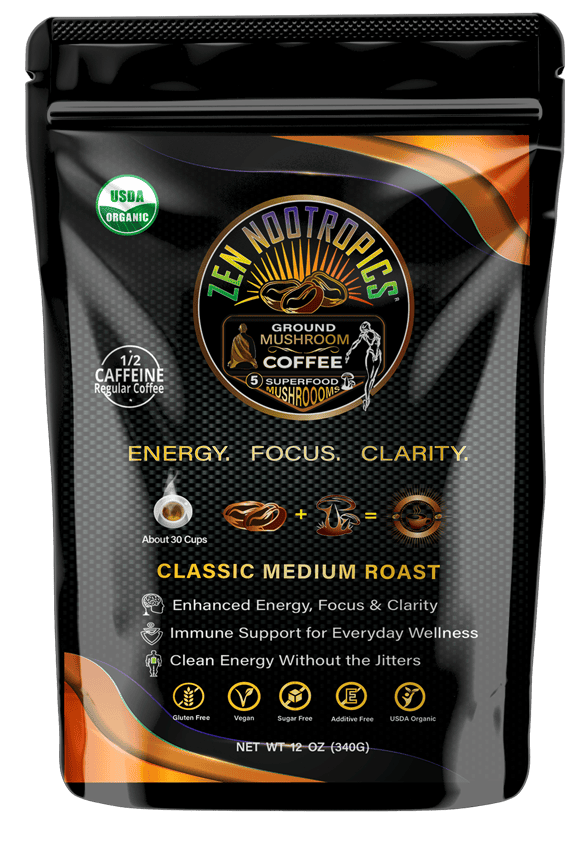
Prospective buyers can explore Zen Nootropics’ mushroom-coffee information and check the current product’s ingredient and caffeine label before buying.