Mushroom Coffee for Beginners: Choose and Brew Your First Cup
For beginners who already use a coffee maker, pre-ground mushroom coffee offers a fam...
Read Article →
Mushroom coffee combines coffee with functional mushroom powders or extracts, while regular coffee contains coffee alone; the biggest practical differences are the formula, caffeine per serving, flavor, and cost. A mushroom blend suits people who want to incorporate functional mushrooms into an established coffee routine. Regular coffee remains a straightforward choice for those who prioritize […]
Mushroom coffee combines coffee with functional mushroom powders or extracts, while regular coffee contains coffee alone; the biggest practical differences are the formula, caffeine per serving, flavor, and cost. A mushroom blend suits people who want to incorporate functional mushrooms into an established coffee routine. Regular coffee remains a straightforward choice for those who prioritize familiar flavor and a broad selection of beans.
The mushroom coffee vs regular coffee decision starts with the cup someone intends to drink. A ground coffee blend preserves the brewing ritual, while an instant formula offers a different preparation experience. A more balanced morning also requires attention to caffeine quantity and timing, since the mushroom label alone says little about either.
Regular coffee offers a simpler ingredient profile, while mushroom coffee adds mushroom ingredients and sometimes other supplements. Comparing equivalent servings reveals the practical pros and cons of mushroom coffee more clearly than package claims.
The following comparison separates category-level differences from details that require a product label. It also distinguishes brewed coffee from instant preparations.
| Criterion | Regular Coffee | Mushroom Coffee |
|---|---|---|
| Core ingredients | Coffee beans | Coffee plus mushroom ingredients |
| Caffeine | Bean- and brew-dependent | Formula- and brew-dependent |
| Flavor | Roast- and origin-driven | Coffee-forward to earthy |
| Preparation | Brewed or instant | Brewed or instant |
| Cost per serving | Broad price range | Often higher |
| Health evidence | Extensive coffee research | Limited finished-blend evidence |
A fair mushroom coffee vs. regular coffee comparison uses the same drink volume and preparation format. Comparing a concentrated instant serving with a large brewed coffee obscures both caffeine exposure and value.
Mushroom species, extract amounts, and added ingredients are product-specific. Some formulas retain a substantial coffee base; others combine smaller quantities of coffee with mushrooms and additional ingredients.
The word “mushroom” establishes neither a caffeine level nor a measurable health benefit. Useful comparisons begin with the actual ingredient list, recommended serving, and caffeine disclosure.
A mushroom coffee formula contains a coffee component plus mushroom material, with substantial differences in how manufacturers prepare and disclose those ingredients. Terms such as “functional mushrooms” and “medicinal mushrooms” describe their intended wellness use and traditional associations.
Regular coffee starts with roasted beans, sold whole, ground, or processed into instant coffee. Mushroom coffee uses those same formats as a base, then incorporates mushroom powders or extracts.
The beans contribute caffeine unless they have undergone decaffeination. Adding mushrooms to an unchanged portion of coffee leaves that coffee’s caffeine contribution in place, so the coffee quantity in each serving deserves close attention.
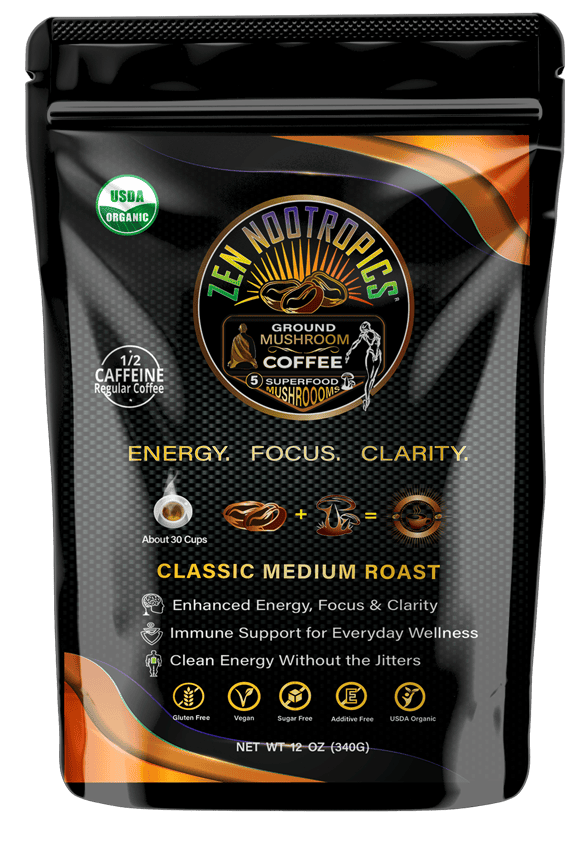
Zen Nootropics combines USDA organic Colombian coffee with five functional mushrooms. That five-mushroom formula belongs to this product; other mushroom coffees use different combinations.
These associations describe the reasons manufacturers include each ingredient. They do not establish that a serving of a particular coffee produces the same effects as a separately studied mushroom preparation.

The complete label provides a more useful comparison than the mushroom count. A formula containing lion’s mane extract differs from one containing unextracted mushroom powder, and a total blend weight does not reveal the amount of each species.
Relevant disclosures include mushroom species, ingredient amounts, extraction method, and any testing for contaminants. Beta-glucans are mushroom polysaccharides of interest, but a beta-glucan measurement alone does not establish a clinical benefit.
Some products also contain sweeteners, coconut ingredients, collagen, or additional botanicals. Those additions affect dietary suitability and deserve the same scrutiny as the mushrooms.
Caffeine content follows the coffee quantity and brewing method, so mushroom coffee does not automatically provide a lower dose. A stated amount per prepared serving is the most useful starting point for someone managing caffeine sensitivity.
Serving size determines how much of a formula reaches the cup. Extra scoops increase exposure to both caffeine and mushroom ingredients, while a larger mug filled with additional water changes concentration without adding caffeine.
Published product examples illustrate the variation: RYZE mushroom coffee contains about 48 milligrams per tablespoon, while Everyday Dose contains about 45 milligrams. Those amounts describe the listed formulations, not every product sold under either brand or across the category.
Ground coffee also introduces brewing variables. Coffee dose, bean selection, and extraction influence the amount delivered in the finished drink.
A smaller caffeine dose offers a practical way to reduce stimulant exposure. For someone whose shakiness follows a strong coffee, reducing the dose may ease symptoms.
Individual sensitivity, other caffeine intake, and sleep also influence the experience. Claims that mushroom ingredients reliably suppress caffeine-related cortisol responses require evidence for the specific formula and serving.
A “smooth energy” description gives no assurance about tolerance. Persistent palpitations or significant anxiety warrant medical attention.
Decaf coffee retains some caffeine after processing. A decaf mushroom coffee therefore requires a separate caffeine check, particularly for someone with strong sensitivity.
A caffeine-free mushroom drink uses a base without caffeine-containing ingredients. “Coffee-free” is a different label: tea or cacao ingredients still contribute caffeine, so the complete formula remains relevant.
Coffee-based mushroom blends preserve familiar roasted flavors, with texture and earthiness shaped by the formulation. Product format is especially useful for predicting the experience of making mushroom coffee at home.
Ground mushroom coffee requires brewing equipment and separation of the grounds from the drink. An instant mix disperses in water, although added powders sometimes leave sediment or change the mouthfeel.
A dissolvable mix belongs directly in the cup unless its manufacturer specifies another method. Placing an instant formula in a filter basket creates a different preparation from the one described on its label.
Specialty coffee enthusiasts also have different comparison points. Freshly ground single-origin coffee and an instant wellness mix represent distinct formats before mushroom ingredients enter the comparison.
Mushroom coffee taste ranges from familiar roasted coffee to a more pronounced earthy or bitter profile. The mushroom concentration and other ingredients influence where a blend falls within that range.
Zen Nootropics describes its pre-ground Colombian coffee as bold, complex, and smooth, with tasting notes of dark chocolate and cinnamon. Tasting notes describe flavor impressions; the ingredient list establishes whether flavorings are present.
The term “lion’s mane coffee” identifies an ingredient, with little information about the roast or finished flavor. A small initial purchase provides a practical way to assess preference before committing to recurring deliveries.
A ground blend fits an existing routine when its grind matches the equipment. Zen Nootropics states that its pre-ground coffee works with most coffee machines, pour overs, French presses, and some espresso machines.
Espresso compatibility deserves particular care because extraction depends heavily on grind size. A pre-ground product suitable for drip brewing will not necessarily perform well in every espresso setup.
Preparation also changes the drink itself: brewing methods affect caffeine concentration and sensory attributes. Following the product’s preparation directions gives a more consistent starting point for adjustments.
Caffeine’s effects on alertness have a stronger research foundation than broad claims about the health benefits of mushroom coffee. Research on individual mushroom ingredients provides useful context, but finished drinks require their own evidence.

Caffeine promotes wakefulness by blocking adenosine receptors. That mechanism applies to caffeine in regular coffee and in a coffee-based mushroom blend.
Long-term coffee research also includes associations with several health outcomes. Observational associations do not establish that coffee prevents disease, and individual medical circumstances still influence its suitability.
A familiar sense of improved focus after a caffeinated mushroom drink does not identify which ingredient produced the effect. Caffeine remains an important explanation for immediate alertness.
Mushroom coffee benefits are frequently discussed using findings from isolated mushroom preparations. Human research on lion’s mane and cognitive function remains preliminary, with differences in participant health, preparation, and dose.
A coffee containing lion’s mane extract needs its own supporting evidence for a cognitive support claim. Matching the mushroom species alone leaves important questions about ingredient amount and exposure.
Coffee and mushrooms also contain compounds with antioxidant activity. Laboratory antioxidant activity establishes a chemical property; demonstrating a meaningful health outcome requires additional evidence.
“Adaptogens” describes substances proposed to influence the body’s response to stress. Products marketed with adaptogenic mushrooms still require evidence for their particular stress-related claims.
Immune support is similarly broad. A change in an immune marker does not establish protection against everyday infections or a treatment benefit.
Traditional use helps explain why reishi and other mushrooms appear in wellness products. It provides historical context without establishing the effectiveness of a modern coffee formula.
Mushroom coffee side effects include digestive discomfort and allergic reactions, alongside the effects of any caffeine it contains. People with acid reflux should assess their response carefully because mushroom additions do not establish that a coffee is low-acid or reflux-friendly.
Chaga warrants particular attention for people with kidney concerns because it contains oxalates associated with kidney stone risk. Ingredient concentration and individual medical history influence that concern.
A clinician or pharmacist should assess formulas for anyone taking anticoagulants, immunosuppressants, or glucose-lowering medication. Pregnancy, breastfeeding, kidney disease, and planned surgery also justify professional advice before regular use of concentrated mushroom ingredients.
The useful measure of mushroom coffee cost is the delivered price divided by the number of servings prepared as directed. Package price alone hides differences in serving size and product format.
A consistent calculation uses:
Cost per serving = total product cost after discounts, plus applicable shipping and tax, divided by labeled servings.
For ground coffee, the comparison also needs the recommended coffee dose. A bag stretches further when less coffee is used, but the resulting drink differs in strength and ingredient exposure.
A grocery-store coffee, a specialty coffee, and a supplement-style instant mix occupy different price categories. Comparing equivalent formats keeps the calculation useful without inventing a universal price premium.
A search for the best mushroom coffee brands brings up names such as Four Sigmatic, RYZE mushroom coffee, MUDWTR, and Everyday Dose. Each specific product requires a separate comparison of its base ingredients and serving instructions.
Useful checks include caffeine per serving, disclosed mushroom amounts, and additional ingredients. A larger mushroom count provides little information about the quantity of each mushroom.
Quality claims also need a clear scope. Zen Nootropics identifies its coffee as USDA organic Colombian coffee and mentions single-source, fair-trade coffee beans; those descriptions should not be extended automatically to every component of the blend.
Recurring-order discounts change the calculation only when the delivery schedule matches consumption. The one-time purchase price and subscription price should be recorded separately.
Zen Nootropics advertises “Subscribe & Save $10+ with free shipping” and allows customers to cancel a subscription anytime. It also offers free shipping with the purchase of two or more items.
Customers can update delivery frequency, products, and shipping details through the customer portal. Reviewing those terms before enrollment helps prevent deliveries from accumulating faster than the coffee is consumed.
Regular coffee fits a coffee-centered routine, while a mushroom blend offers a convenient format for adding functional mushroom ingredients. The choice becomes more practical when it addresses a specific goal, such as exploring a new formula or reducing a verified caffeine dose.
Regular coffee suits someone who enjoys selecting beans and adjusting the brew. It also offers straightforward ingredient control when served without added supplements.
A person satisfied with their current coffee has several ways to adjust caffeine exposure, including a smaller portion or decaf. Those options preserve familiar flavor while addressing the stimulant dose directly.

A mushroom blend suits someone interested in functional mushroom ingredients within a familiar daily ritual. A ground formula preserves equipment-based brewing, while an instant version reduces preparation steps.
Someone with caffeine sensitivity should select by the stated caffeine amount. A lower-caffeine formula offers a measurable change; a mushroom ingredient list alone provides no such assurance.
Expectations should remain tied to documented product details. Flavor preference and preparation convenience are more immediate purchase considerations than anticipated changes in cognition or immunity.
A controlled comparison starts with the product’s recommended serving and familiar preparation equipment. Keeping milk, sweeteners, and drinking time consistent makes changes in flavor or tolerance easier to interpret.
A brief record of the product, serving amount, sleep, and symptoms provides useful context. Abrupt caffeine reductions also deserve attention because withdrawal headaches and fatigue complicate the comparison.
Anyone who develops an adverse reaction should stop the product and seek appropriate medical advice. Continuing through symptoms is unnecessary for assessing whether a blend fits the routine.
The pros and cons of mushroom coffee center on added ingredients, preparation preferences, and the price of each serving. Regular coffee offers a simpler formula and extensive coffee-specific research; mushroom blends provide another way to incorporate functional mushrooms.
A useful purchase decision starts with the caffeine disclosure, followed by the ingredient label and a realistic cost calculation. A small initial order allows someone to assess flavor and tolerance before choosing a subscription.
Caffeine and formulation differences explain many common questions about mushroom coffee. Product-specific details provide more reliable answers than category-wide promises.
Mushroom coffee does not always contain less caffeine than regular coffee. Its caffeine content follows the coffee quantity, formula, and preparation, so a per-serving disclosure is essential for someone managing caffeine sensitivity.
Coffee-based mushroom blends often retain a recognizable coffee flavor. Earthiness, bitterness, and texture change with the mushroom ingredients, roast, and any added creamers or flavorings.
Mushroom coffee has no established weight-loss benefit as a product category. Replacing a calorie-heavy drink with an unsweetened option reduces beverage calories, but that effect comes from the substitution.
Mushroom coffee provides no guarantee against caffeine jitters. A verified reduction in caffeine offers a practical adjustment, while individual sensitivity and total daily intake still influence symptoms.
A coffee-based mushroom blend works as a morning replacement when its flavor, preparation, and ingredients suit the person drinking it. Anyone moving to a substantially lower caffeine dose should account for possible withdrawal symptoms.
For those interested in a ground-coffee option, Zen Nootropics Mushroom Coffee offers Colombian coffee with a five-mushroom blend of Lion’s Mane, Cordyceps, Reishi, Chaga, and Turkey Tail. Its product details provide a helpful next step for comparing the blend with an existing morning brew.