Mushroom Coffee for Beginners: Choose and Brew Your First Cup
For beginners who already use a coffee maker, pre-ground mushroom coffee offers a fam...
Read Article →
For beginners who already use a coffee maker, pre-ground mushroom coffee offers a familiar starting point: it brews with compatible equipment, and the package directions establish the serving size. Instant blends suit people who prefer a stir-and-drink option. A clearly labeled product makes the first purchase easier to evaluate and the first cup easier to […]
For beginners who already use a coffee maker, pre-ground mushroom coffee offers a familiar starting point: it brews with compatible equipment, and the package directions establish the serving size. Instant blends suit people who prefer a stir-and-drink option. A clearly labeled product makes the first purchase easier to evaluate and the first cup easier to prepare.
Mushroom coffee combines a coffee base with functional mushrooms or their extracts. For someone exploring mushroom coffee for beginners, the practical goal is a pleasant morning drink with understandable ingredients and a caffeine level that fits their routine. Our mushroom coffee pillar guide explains the broader category; this article focuses on the first purchase and cup.
The first cup also establishes a useful baseline. Keeping other supplements and coffee habits unchanged makes it easier to notice differences in taste, digestion, or caffeine tolerance.
Ground mushroom coffee fits an existing brewing routine, while instant mushroom coffee reduces preparation to mixing. The distinction affects equipment and texture, so the package format deserves attention before purchase.
Instant mushroom coffee packets offer pre-portioned convenience, while jars require measuring according to the label. Ground mushroom coffee needs brewing equipment and separation of the grounds from the finished drink.
| Feature | Instant mushroom coffee | Ground mushroom coffee |
|---|---|---|
| Preparation | Stir into liquid | Brew and filter |
| Equipment | Mug and spoon | Compatible brewer |
| Portioning | Packet or label measure | Label-directed grounds |
| Texture consideration | Powder dispersion | Filtration and grind |
| Routine fit | Travel or quick preparation | Existing coffee setup |
“Mushroom coffee powder” is an ambiguous description. It might refer to soluble instant coffee, ground coffee, or a mushroom-only supplement, so preparation instructions provide the clearest distinction.
Mushroom coffee taste varies with the coffee roast and added ingredients. Earthy notes are possible, while coffee-forward blends retain familiar roasted flavors. An arabica coffee label identifies the coffee species; it says nothing about mushroom quantities or caffeine per serving.
Caffeinated mushroom coffee blends contain caffeine from their coffee base unless the formulation specifies otherwise. Adding mushrooms does not establish a particular reduction in caffeine, and comparing mushroom coffee vs regular coffee requires matching serving sizes and preparation methods.
Decaf provides a coffee-based option with less caffeine, although decaffeinated coffee still contains some caffeine. A coffee-free product uses another base and deserves a separate ingredient check, especially when it includes tea or other caffeine-containing ingredients.
Someone seeking a coffee replacement should decide whether the goal is less caffeine or eliminating coffee itself. A coffee-free label alone does not establish that a product is caffeine-free.
A useful purchasing check covers ingredient identity, serving-level quantities, testing documentation, allergens, and total cost. These details make a mushroom coffee blend easier to compare without relying on broad wellness promises. For more extensive commercial comparisons, see our best mushroom coffee buying guide; this beginner checklist focuses on choosing and preparing a first blend.
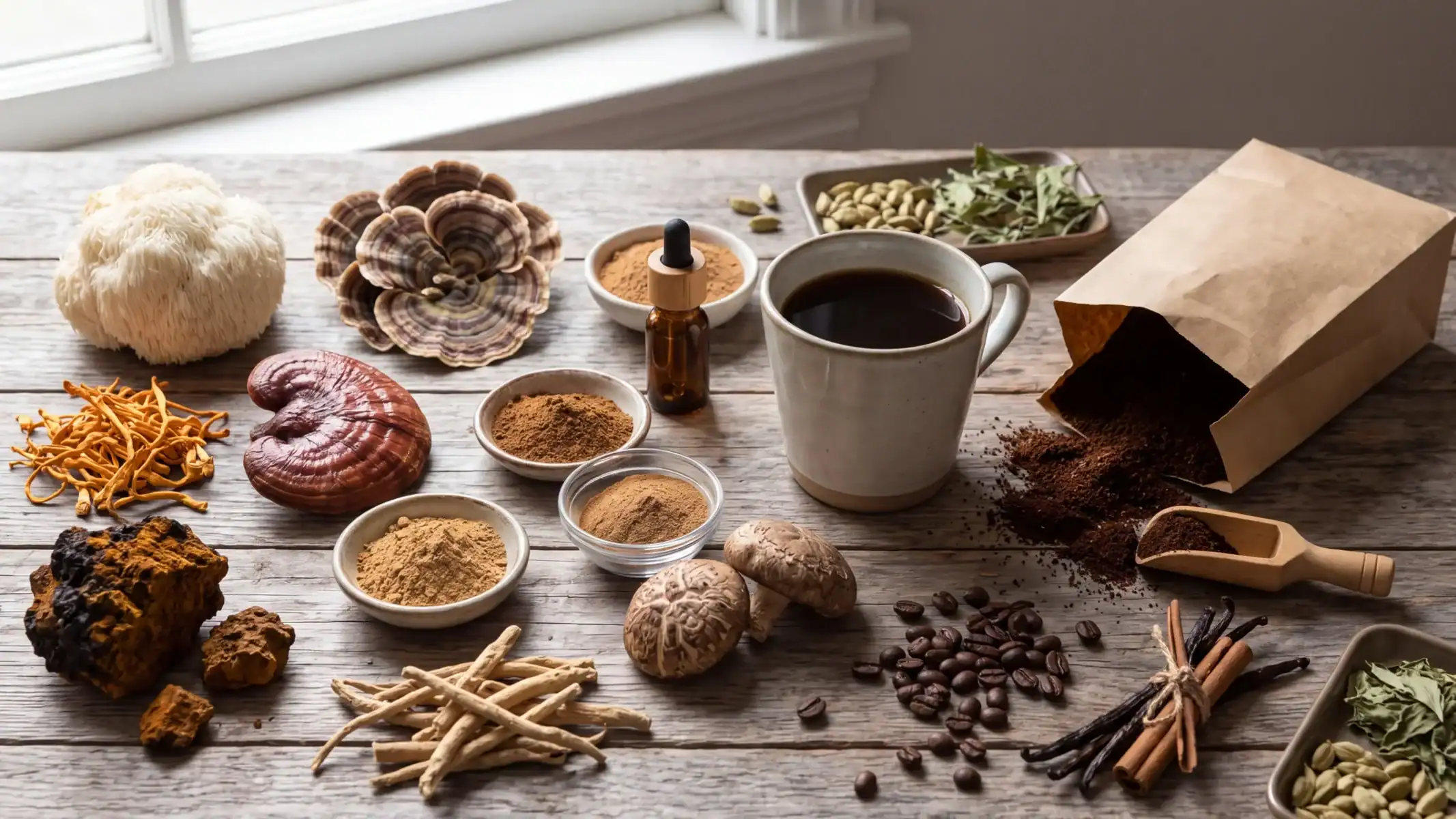
The ingredient list should name the mushrooms included in the blend. Common options include lion’s mane, cordyceps, reishi, chaga, turkey tail, and shiitake, with different products using different combinations.
Names alone provide limited information about the finished beverage. A shopper also needs to know whether the product contains mushroom powder or an extract and how much the stated serving provides.
Additional ingredients deserve equal attention. Ashwagandha is an herb with its own precautions; creamers, sweeteners, and flavorings also change the product’s suitability. The best mushroom coffee for beginners is a manageable first purchase with understandable labeling and preparation directions.
Caffeine information is most useful when expressed per prepared serving with the serving size identified. The FDA guide to Nutrition Facts labels explains how to interpret serving information on products that carry that label. Someone comparing products should check whether the listed amount applies to a packet, a scoop, or a specified brewed volume.
The same principle applies to mushrooms. A total blend quantity reveals the combined amount, while individual quantities show how much of each mushroom is included. Neither an ingredient list nor an extract ratio establishes a clinically effective dose.
Ground coffee introduces additional variation because brewing affects extraction. A brand’s published caffeine figure should be read alongside its brewing assumptions; the distinctions explained in mushroom coffee caffeine content help clarify comparisons across formats.
Fruiting body and mycelium disclosures identify the fungal material used. The fruiting body is the mushroom’s reproductive structure, while mycelium is its network of growing filaments.
Useful labeling also explains whether mycelium includes its growth substrate and whether an ingredient is extracted. The distinction between fruiting body and mycelium provides context for those terms, but neither term alone proves purity or beverage effectiveness.
A third-party testing claim deserves supporting documentation. A useful certificate of analysis identifies the tested product or batch, laboratory, test date, methods, and results. Heavy-metal and microbial testing address different questions from tests of ingredient identity or beta-glucan content; a testing badge alone leaves those details unresolved.
The complete ingredient statement and allergen declaration should be checked together. Some blends include milk ingredients or coconut-derived creamers, and anyone with a mushroom allergy should avoid mushroom-containing products.
Price per serving is calculated by dividing the actual purchase price by the labeled serving count. Shipping charges and subscription conditions affect the amount paid, while a larger scoop reduces how many servings the bag provides.
Before ordering from Zen Nootropics, check the shipping charge displayed at checkout rather than assuming shipping is free with multiple items or a subscription. Review the current return policy and subscription renewal terms, including any differences between the first shipment and renewals.
The package’s format-specific directions should determine the first preparation. A label-directed cup provides a useful starting point before changes to strength or flavor.

Instant products are mixed into the liquid specified by the manufacturer. Ground blends are brewed in compatible equipment, such as a drip machine, pour-over brewer, or French press.
The preparation sequence is straightforward:
The distinction is central to how to make mushroom coffee: ground coffee requires brewing and separation, while soluble instant coffee requires mixing. A French press leaves fine particles in the cup, so some sediment is expected.
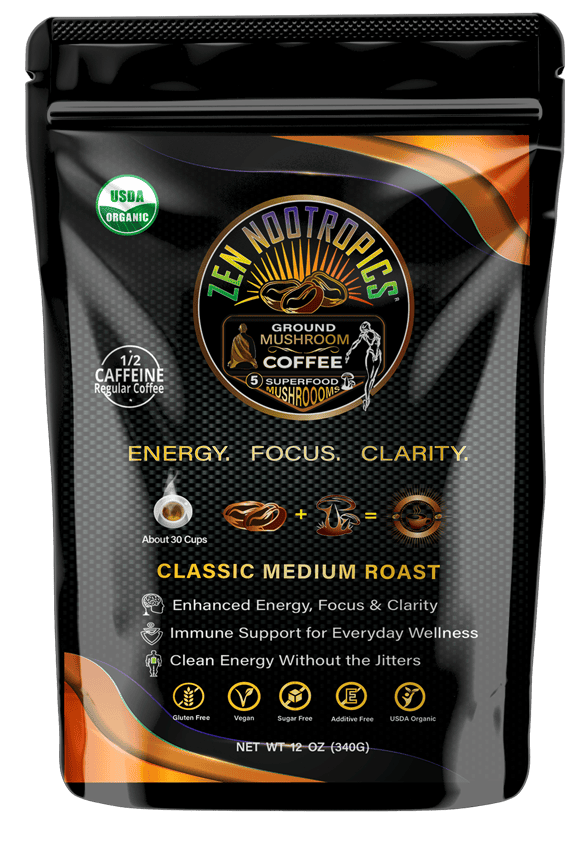
Zen Nootropics offers pre-ground coffee made with organic Colombian coffee and functional mushroom extracts. Its grind is intended for most coffee machines, pour overs, French presses, and some espresso machines; espresso users should check their machine’s requirements.
Iced mushroom coffee starts with a properly prepared drink and ice. For instant products, dissolving the labeled portion in a little warm liquid before adding the remaining liquid helps achieve an even mixture, provided the package permits that method.
For brewed grounds, the coffee should cool before it enters a suitable glass with ice. Ice dilutes the drink as it melts, so someone adjusting an iced cup should change the liquid balance while keeping the product quantity within the labeled serving.
Milk softens roasted bitterness, and sweetener changes flavor without correcting poor mixing. A simple mushroom coffee recipe becomes easier to refine when only one addition changes at a time. A milk frother helps disperse powders or mix milk into the drink; freshly brewed coffee poured over ice and cold-brewed coffee are different preparations.
Clumps are easier to manage when instant powder first meets a small amount of liquid. Stirring that mixture before adding the remaining liquid helps wet the powder evenly.
Overly strong coffee calls for a check of the product-to-water ratio. Adding extra scoops to compensate for melting ice also increases the ingredient dose, including caffeine when present.
DIY mushroom coffee introduces another variable because a separate mushroom powder adds to the blend’s existing ingredients. A first trial is easier to assess without extra extracts, gummies, or tinctures. For blender-made drinks, equipment should be rated for the liquid temperature, and sealed containers should never hold hot coffee.
Caffeine has established alertness effects, while mushroom-specific benefits require more cautious expectations. The FDA caffeine guidance notes that individual sensitivity varies and consumers should consider all sources of caffeine. Personal health and medication use also influence whether a blend is suitable.
Caffeinated mushroom coffee supports wakefulness through its caffeine content. A person switching to a lower-caffeine serving might experience fewer caffeine-related symptoms, although the mushroom ingredients do not guarantee freedom from jitters.
Claims about mushroom coffee benefits extend beyond energy and focus to stamina, mood, gut health, and immune support. The clinical evidence for the finished beverage remains limited: research has focused little on mushroom coffee itself.
An immediate feeling of alertness therefore cannot establish a mushroom-specific effect. Sleep, food intake, and the amount of caffeine consumed also influence the experience.
Research on a mushroom extract applies most directly to the material and dose investigated. A coffee containing several extracts differs from an isolated ingredient taken under controlled conditions.
Lion’s mane mushroom is investigated for cognitive effects, while reishi mushroom and chaga mushroom are discussed in connection with immune activity and antioxidant compounds. Laboratory findings described as anti-inflammatory properties do not establish that a daily coffee produces a meaningful clinical benefit.
Terms such as “medicinal mushrooms” and “adaptogens” describe traditional uses or proposed functions. They do not establish an effective beverage dose or guarantee improved health. Mushroom coffee’s health claims exceed the strength of its human evidence.

A cautious first trial follows the product’s directions and avoids simultaneous changes to other supplements. Stomach discomfort, loose stools, or caffeine-related symptoms are reasons to stop and reassess the product.
A clinician or pharmacist should review use for anyone taking prescription medicines, especially anticoagulants, immunosuppressants, or blood-sugar-lowering medicines. Pregnancy, breastfeeding, planned surgery, and significant medical conditions also warrant individualized guidance because safety information varies by ingredient.
People with kidney disease or a history of kidney stones should specifically discuss chaga-containing products with a clinician because chaga contains oxalates. Hives or swelling require prompt medical attention; breathing difficulty requires emergency care.
A suitable first purchase has identifiable ingredients, useful serving information, and directions that match the equipment already available. The first preparation should follow that label, with flavor adjustments made gradually and additional mushroom supplements left out of the trial.
Shoppers ready to explore Zen Nootropics products can use its mushroom coffee information alongside the package details. Anyone with questions about ingredients or preparation can contact the company through its website before placing an order.
A practical starting routine follows the label and takes account of personal tolerance. Questions about undisclosed quantities or medical suitability deserve answers before regular use.
The product’s labeled serving directions should set the daily limit, with total caffeine from other drinks and supplements considered alongside it. Drinking mushroom coffee every day is a personal choice, and persistent side effects warrant stopping and discussing the product with a clinician.
Someone who tolerates coffee on an empty stomach might also tolerate a mushroom coffee blend, although the added ingredients introduce separate digestive considerations. A first serving with food is a practical choice for someone prone to nausea or reflux.
Caffeinated mushroom coffee supports alertness through caffeine, while a reliable additional focus benefit from the mushroom blend remains unproven. Evidence involving a particular lion’s mane extract does not establish the same effect from a finished coffee.
The manufacturer should be asked for the caffeine content and mushroom quantities per serving before purchase. If those details remain unavailable, a product with clearer disclosures is easier to compare and incorporate into an existing routine.
Ground mushroom coffee is suitable when its label identifies compatibility with that type of coffee maker. Instant mushroom coffee belongs in a mug for mixing, and ground blends intended for drip brewing still require separate compatibility checks before espresso-machine use.