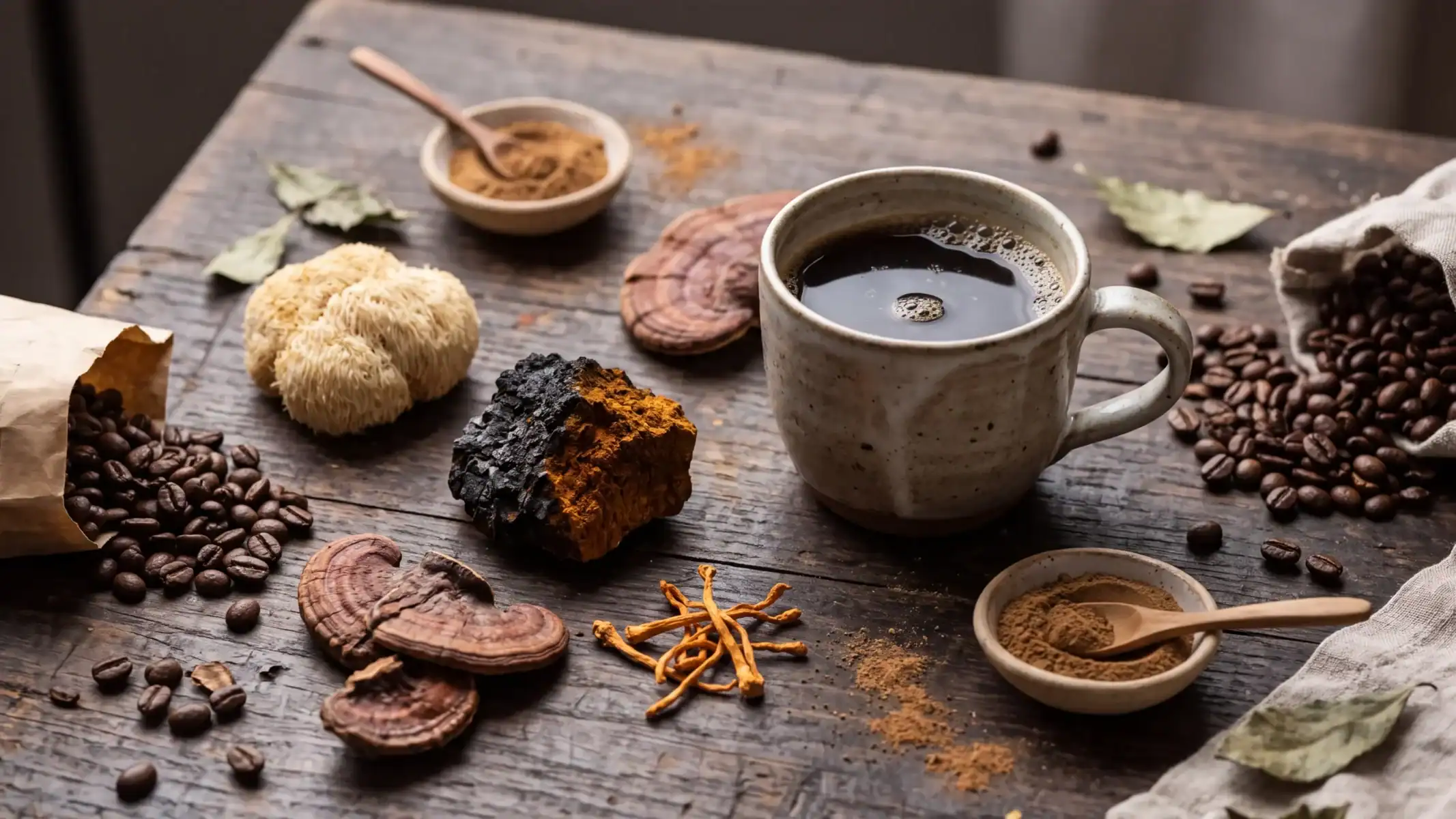
Does Mushroom Coffee Break a Fast? Rules by Fast Type
A morning coffee ritual fits more easily into fasting when the drink matches the plan...
Read Article →
When you compare fruiting body vs mycelium, you’re comparing a fungus’s spore-producing structure with its feeding network; either material needs clear labeling and species-specific evidence to support your purchase. If you choose functional mushrooms for focus or daily wellness, those terms help you identify what goes into your serving. Your label becomes more useful when […]
When you compare fruiting body vs mycelium, you’re comparing a fungus’s spore-producing structure with its feeding network; either material needs clear labeling and species-specific evidence to support your purchase. If you choose functional mushrooms for focus or daily wellness, those terms help you identify what goes into your serving.
Your label becomes more useful when it also names the growing substrate and gives the ingredient amount. Mushroom products made from harvested fruiting bodies, separated mycelium, and mycelium grown on retained grain contain different materials. You gain a clearer basis for comparing them when the manufacturer explains those differences.
See the mushroom coffee ingredients guide for context on how mushroom ingredients fit into coffee blends.

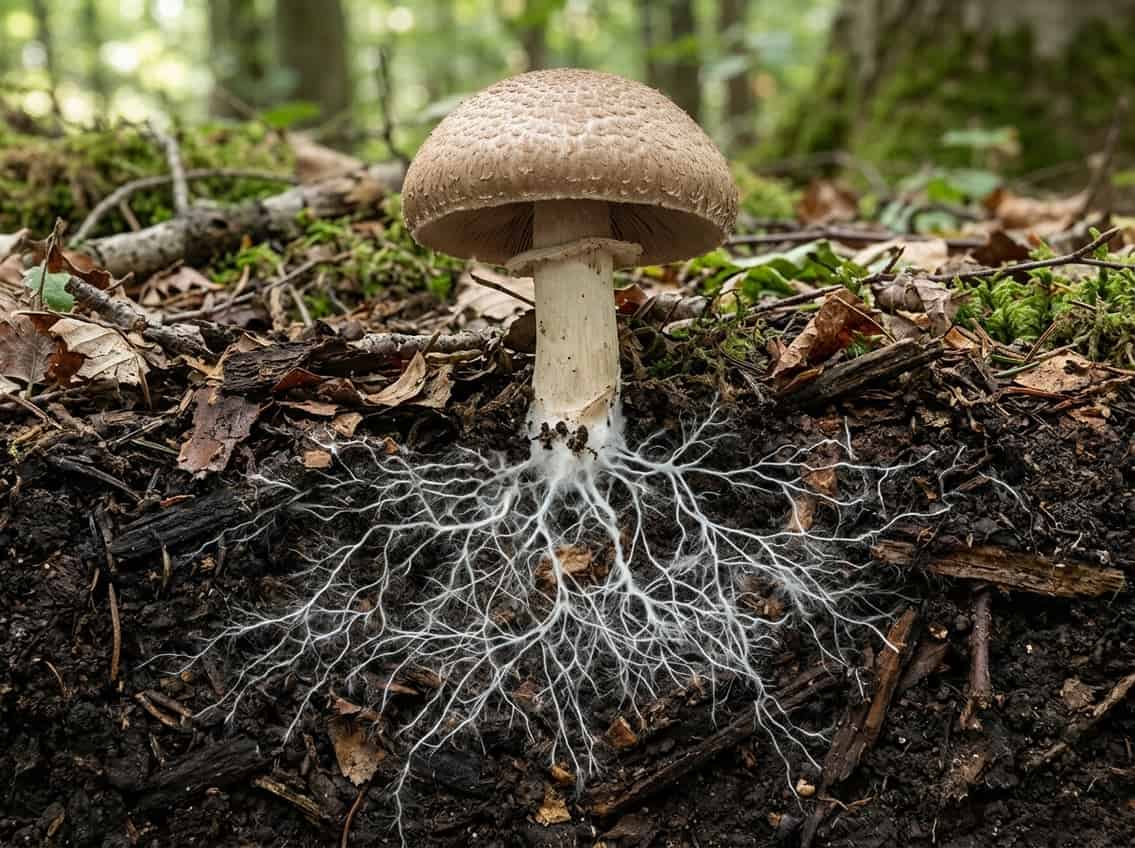
You’re looking at different structures of the same fungus when you compare mushroom fruiting bodies with mushroom mycelium. Their roles help explain their physical differences and some differences in chemical makeup.
You recognize many fruiting bodies as mushrooms with caps and stems, though other shapes include shelves and branching structures. A fruiting body develops from mycelium and produces spores that help the fungus reproduce. Depending on the species, you’ll find it growing from soil, wood, or another suitable material.
On a product label, “fruiting body” identifies the fungal structure used as an ingredient. You still need details about its species and processing to evaluate the finished product.
You can think of mycelium as a network of fine fungal threads called hyphae. These threads release enzymes that break down surrounding material, then absorb available nutrients. The network supports the fungus’s growth and the development of fruiting bodies.
The root-like appearance offers a useful visual comparison, but you’re looking at fungal tissue, not plant roots. When you see “mycelium” on a label, the next question is how that tissue was grown and harvested.
You can use this mycelium vs fruiting body comparison to separate anatomy from product claims. Both materials contain fungal compounds, and their finished composition changes with species and cultivation.
| Criterion | Fruiting Bodies | Mycelium |
|---|---|---|
| Biological role | Spore production | Feeding and growth |
| Physical form | Organized structures | Branching hyphae |
| Cultivation setting | Solid substrate | Solid or liquid medium |
| Harvested ingredient | Fruiting-body tissue | Separated tissue or substrate mixture |
| Label follow-up | Species and processing | Species, medium, and separation |
Your fruiting body vs. mycelium decision also requires checking what accompanies the fungal tissue. A product containing mycelium plus retained grain needs a different description from one containing separated mycelium.
In a fruiting body vs mycelium comparison, the growing medium matters because a mycelium-on-grain ingredient may include retained starch-rich substrate. Separated mycelium and harvested fruiting bodies should not be treated as interchangeable materials.

Your finished ingredient changes when the growing substrate remains in the harvested material. In mushroom cultivation, the substrate supplies nutrients, and the harvest process determines how much of it reaches your product.
When you see mycelium on grain, you’re seeing a cultivation description: fungal threads have grown through grain such as rice or oats. Myceliated grain describes grain colonized by that mycelium. If the whole material is dried and milled, your ingredient contains fungal tissue alongside the remaining grain.
The fungus consumes and changes some of that substrate during growth. You cannot determine the final proportion of fungal tissue from “mycelium-on-grain” wording alone.
With liquid fermentation, you get mycelium grown in a nutrient-containing liquid. The producer harvests the fungal biomass through steps such as filtration, with washing or further processing depending on the ingredient. Some products also use compounds released into the fermentation liquid.
You should ask whether the finished ingredient contains separated mycelium, dried fermentation broth, or both. “Liquid-grown” identifies the cultivation method, but you still need a description of the harvested material.
If retained grain contributes to the stated serving weight, your serving includes that grain as well as fungal material. Its starch affects the carbohydrate profile and the concentration of fungal compounds per gram. The amount depends on the substrate and how much the fungus consumed.
For mycelium-based supplements, ask whether the declared weight includes the growth substrate. If you have food allergies or follow a gluten-free diet, also check grain identity and the finished product’s allergen controls.
The fruiting body vs mycelium question has no single answer across all species. The identity of the fungus, the compounds measured, and the preparation used in human research matter more than a blanket claim of superiority.
You need species-specific information because fungal compounds differ across species, growth stages, and cultivation methods. A finding about one mushroom species offers limited guidance for a different species or ingredient.
You’ll find beta-glucans in fungal cell walls, including those of fruiting bodies and mycelium. These carbohydrates belong to the broader group called polysaccharides. Their structure and measured amount help describe an ingredient, but a percentage alone does not establish a health benefit.
You also encounter compounds such as ergosterol, a fungal sterol. Researchers have used ergosterol content to estimate changes in mycelial biomass, though interpreting that marker requires context about the species and growing conditions.
For lion’s mane (Hericium erinaceus), you should pay attention to the exact fungal material used. Hericenones are associated mainly with fruiting bodies, while erinacines are associated mainly with cultured mycelium. Their amounts depend on the strain and production conditions.
You’ll see these compounds discussed alongside nerve growth factor (NGF), a protein involved in nerve-cell growth and maintenance. Laboratory findings involving NGF do not establish improved cognitive function in people. When evaluating a focus claim, check whether human research used the same preparation and daily amount as your product.
When you assess reishi, look for the scientific name and any measured compounds. “Reishi” covers related Ganoderma species, and their chemistry varies. Its triterpenes, including ganoderic acids, belong to a broader class called triterpenoids.
Your ingredient’s fungal material and processing influence which compounds remain in the finished preparation. A claim about triterpenes needs a suitable test result, and you should evaluate that result separately from claims about stress adaptation or immune support.
You need a different reading of the label for each of these mushrooms:
You’ll encounter all four in products marketed as medicinal mushrooms. That shared category does not give them interchangeable chemistry or clinical evidence.
You can use traditional Chinese medicine and other historical practices as context for how mushrooms have been used. That history does not establish that a modern product delivers a particular result at its labeled serving.
Cell and animal experiments help explain possible biological actions. To judge a human benefit, you need human evidence that addresses the relevant population, preparation, and outcome. Claims about immune support or stress adaptation deserve that same level of scrutiny.
When reading a fruiting body vs mycelium label, check whether it identifies the fungal tissue, any retained substrate, and the amount per serving. A certificate of analysis may help verify composition, but does not by itself establish clinical benefits.
Your label and test reports establish specific facts about identity, composition, and contaminants within the limits of the methods used. They provide separate information from evidence that a product improves your health.
Start with the scientific name and the material description on your mushroom supplements. Useful wording distinguishes fruiting bodies from mycelium and identifies any retained growth substrate. For blends, check whether you receive individual ingredient amounts or only a combined weight.
You can ask the manufacturer:
For functional mushroom supplements, a detailed ingredient specification helps resolve wording that is too broad on the package.
You should read “total polysaccharides” as a broad measurement. It includes carbohydrate types beyond beta-glucans, potentially including starch from grain or added carriers. A high total-polysaccharide figure therefore gives you limited information about fungal beta-glucan content.
Ask for beta-glucan results from a method suited to the product. If substrate content concerns you, request separate starch or alpha-glucan information and ask how the laboratory interprets it. Fungi also contain alpha-glucans, so that result needs context.
You get the most useful testing information from certificates of analysis that match the ingredient or finished-product lot. Check the sample identity, laboratory name, test date, methods, units, and results. Contaminant testing should identify what was measured, such as specified heavy metals and microbes.
For identity, DNA barcoding has identified mushrooms in powdered consumer products. You still need a method suited to the material because extensive processing affects DNA recovery. DNA identification also leaves questions about compound amounts and retained substrate for other tests.
You’ll see “fruiting body extract,” “mushroom extract,” and “mushroom powder” used to describe different preparations. Hot water extraction targets water-soluble components, while alcohol extraction targets a different range. Dual extraction combines both approaches, with results shaped by the process.
An extraction ratio describes a relationship between starting material and extract under the manufacturer’s stated convention. You still need measured composition and a clear serving amount to compare mushroom extracts. Keep your main question focused on which fungal material entered that process.
When you encounter supplier names such as Nammex or commentary associated with Jeff Chilton, evaluate the specific claim being made. Ask whether the supporting comparison used matched species and comparable preparations. Also check who selected the samples and funded the work.
Commercial comparisons are most useful when you can inspect the methods and lot details. Treat a supplier’s finding as evidence about the tested materials, with any broader claim requiring broader support. Apply that standard equally to fruiting-body and mycelium suppliers.
For fruiting body vs mycelium comparisons in mushroom coffee, distinguish the ingredient used in the dry blend from what reaches a brewed cup. Evaluate each species and the actual serving rather than assuming that a particular source material works better.
You can apply the same ingredient checks to coffee, capsules, gummies, and tinctures. Your product format changes how you consume functional mushrooms, while its specifications explain what you receive.
For mushroom coffee, ask which fungal materials are included and whether retained substrate contributes to the ingredient weight. Check whether the product specifies mushroom amounts per serving. With brewed ground coffee, also distinguish the amount in the dry blend from the amount delivered to your cup.
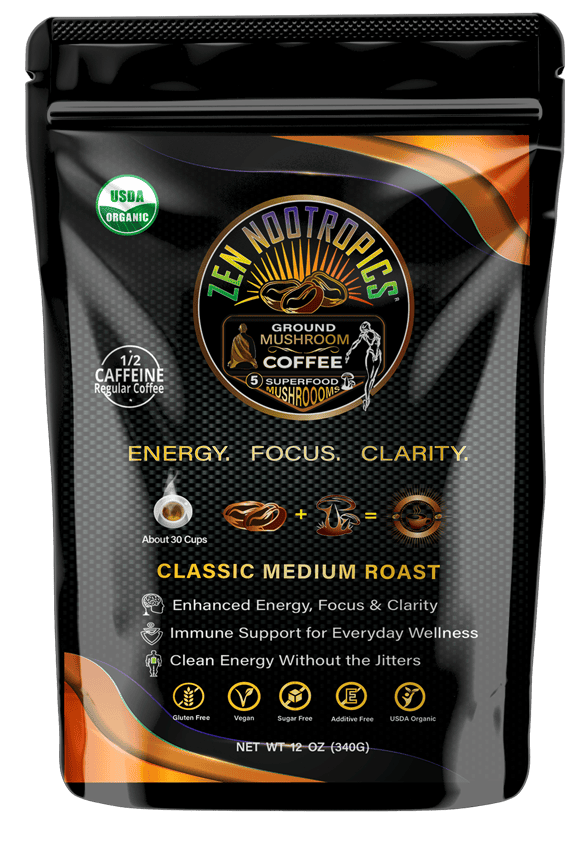
If you’re considering Zen Nootropics Mushroom Coffee, you’ll find USDA organic Colombian coffee blended with Lion’s Mane, Cordyceps, Reishi, Chaga, and Turkey Tail. You can contact Zen Nootropics through the website contact form with questions about those ingredients before choosing your routine.
You should match a health claim to the preparation used in human research. A standardized mycelium ingredient differs from a mixed mushroom powder, even when both carry the same species name. Serving amounts and duration of use also affect how closely that evidence fits your product.
For a blend, the combined mushroom weight does not tell you each species’ contribution. If your goal is focus or immune system support, ask which ingredient and amount support that claim. In caffeinated coffee, caffeine also affects alertness and your perception of energy.
You should treat mushroom products as an optional part of your wellness routine, alongside adequate sleep and a balanced diet. Functional mushrooms do not replace treatment for memory problems, immune disorders, or persistent fatigue. “Immune support” also does not mean protection against infection.
Check with your clinician before use if you take medication, have an autoimmune condition, are pregnant or breastfeeding, or have kidney disease. Chaga deserves particular caution with kidney concerns because of its oxalate content. Stop use and seek medical advice if you develop a concerning reaction.
You get a stronger basis for choosing when a manufacturer identifies the fungal material and explains what testing covers. Fruiting bodies and mycelium each require evaluation at the species and ingredient level.
Use your label to establish what you’re buying, then check the serving amount and relevant evidence. If third-party testing is offered, request a lot-matched report with named methods and clear results. Before purchasing, ask the manufacturer to clarify any retained substrate or unspecified blend amounts.
For further ingredient context, explore our functional mushrooms overview, Lion’s Mane mushroom coffee research guide, and organic mushroom coffee label guide. To review the actual blend, see our mushroom coffee product information.
You can use these answers to resolve common label questions before comparing individual functional mushroom supplements.
You should choose the material that matches the ingredient evidence and offers clear specifications. For either option, check the species, retained substrate, serving amount, and relevant test results before treating it as a better fit.
You should read “100% fruiting body” as a claim about the fungal material used in the ingredient. Check whether it describes the mushroom component or the entire finished formula, especially if the product includes coffee, capsule materials, or extract carriers.
You’re looking at different terms: mycelium is fungal tissue, while myceliated grain is grain colonized by that tissue. A harvested myceliated-grain ingredient includes the remaining grain, so ask whether the stated weight covers the whole mixture.
You cannot rank all lion’s mane fruiting-body products against all mycelium products from the form alone. Human research uses specific preparations from both categories, so look for evidence matching your product’s ingredient, measured compounds, and daily amount.
You can buy supplements that combine fruiting bodies and mycelium. Look for a label that identifies both materials and clarifies any retained substrate; terms such as “full spectrum” require the manufacturer’s definition.