Does Mushroom Coffee Break a Fast? Rules by Fast Type
A morning coffee ritual fits more easily into fasting when the drink matches the plan...
Read Article →
Learning how to make mushroom coffee is straightforward: To make mushroom coffee, brew and filter a ground blend with your usual coffee equipment, or stir a dissolvable instant blend into the liquid listed on its package. If you have a separate mushroom extract, add its labeled serving to coffee you have already brewed. Your first […]
Learning how to make mushroom coffee is straightforward: To make mushroom coffee, brew and filter a ground blend with your usual coffee equipment, or stir a dissolvable instant blend into the liquid listed on its package. If you have a separate mushroom extract, add its labeled serving to coffee you have already brewed.
Your first step is checking the package. A bag of pre-ground mushroom coffee needs brewing and filtering; an instant mix needs stirring. Matching your method to that format helps you get a smoother cup and avoid loose grounds or stubborn clumps.
You can identify your format by reading the ingredients and preparation directions together. Look for ground coffee, instant coffee, or a separate mushroom extract powder before choosing your equipment.
Look for “ground coffee” or “pre-ground” on your package. Directions that mention a drip machine, pour-over, or French press tell you that your pre-blended mushroom coffee needs brewing.
You should expect visible coffee particles in this format. Those grounds remain solid during brewing, so you need a filter or press screen to separate them from your drink.
Check for “instant coffee” and directions that tell you to add liquid and stir. Your instant mushroom coffee might come in a jar, pouch, or individual packet.
Treat “mushroom coffee powder” as an incomplete description until you read the label. You might have a dissolvable mix, a finely ground coffee blend, or a coffee-free powder. Follow the preparation directions to confirm which one you have.
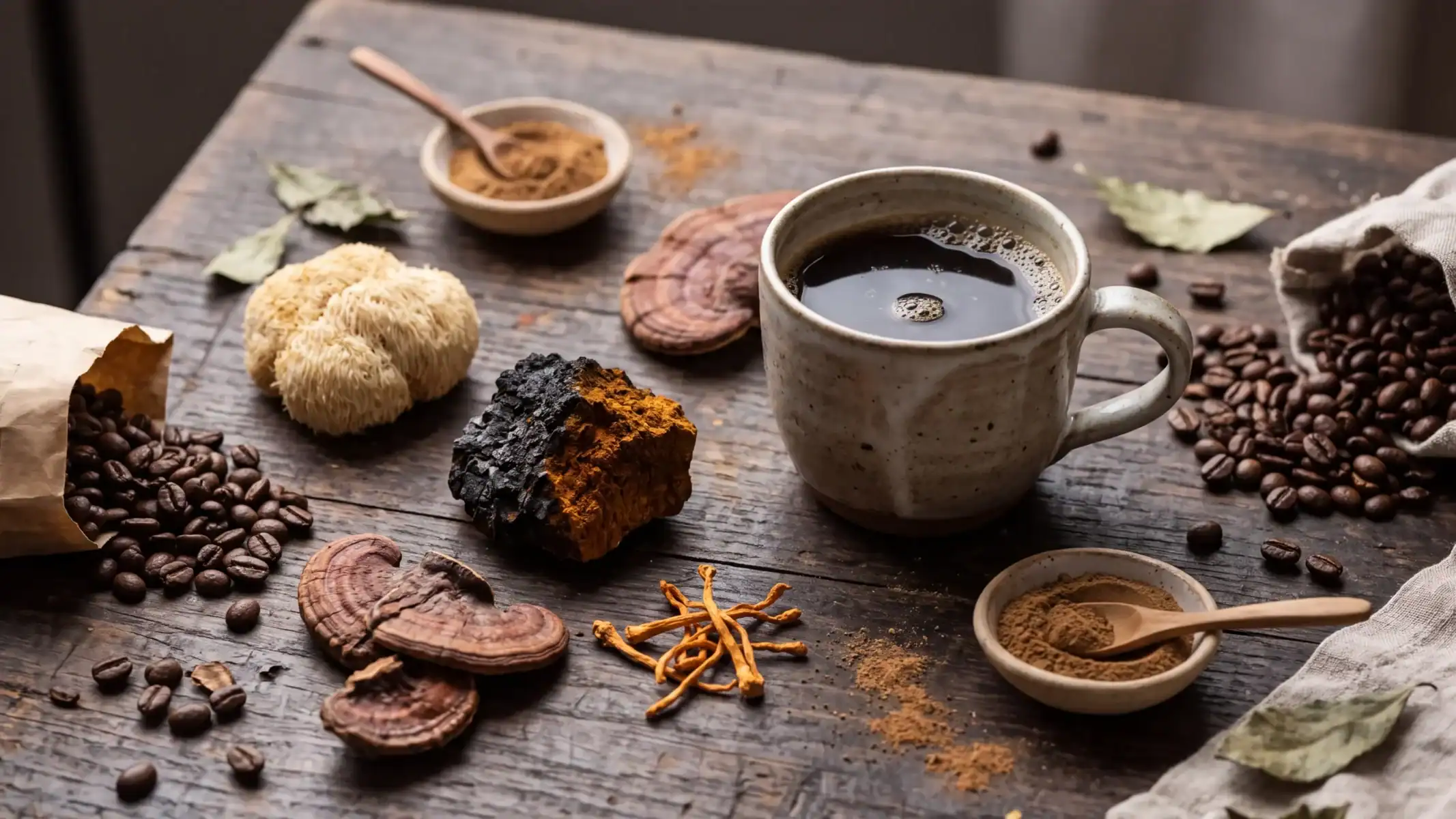
With a separate mushroom extract powder, you supply the coffee yourself. Check the ingredient list for functional mushrooms such as lion’s mane, cordyceps, reishi, chaga, and turkey tail.
You also need to distinguish an extract from plain mushroom powder. A dried extract has already gone through an extraction process; ground dried mushrooms require their own preparation directions. Choose a product labeled for beverage use and follow its serving instructions.
You need your chosen product, fresh drinking water, and tools suited to its format. Add milk or flavorings after you have prepared the coffee base.
For a ready-made mushroom coffee blend, your coffee and mushrooms are already combined. For homemade mushroom coffee with a separate extract, choose a familiar coffee so you can judge how the added powder changes its flavor.
Use this ingredient checklist, measuring each item as directed on its package:
You can use arabica coffee or organic arabica coffee for a DIY cup if you enjoy its flavor. Your roast preference and brewing method still shape the finished drink.
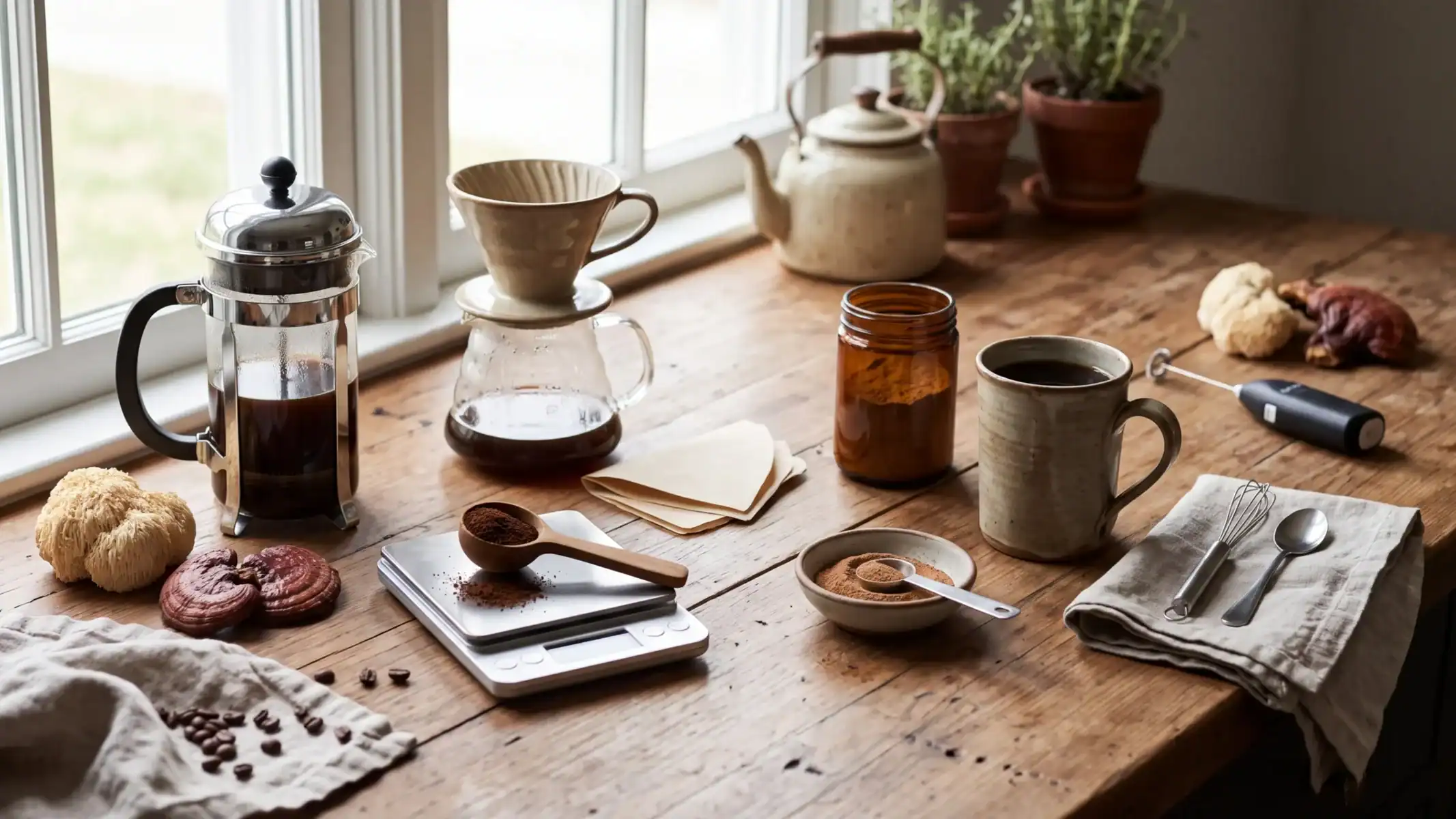
For a ground blend, use a compatible drip coffee maker, pour-over, or French press. Have the correct filter ready, along with a measuring scoop or scale that matches the package instructions.
For instant blends and extract add-ins, you need a mug and spoon. A small whisk or milk frother helps break up clumps. If you use a frother, choose a tall mug with room above the liquid to reduce splashing.
Prepare your ground mushroom coffee by measuring the blend, brewing it with water, and separating the grounds before drinking. Keep the product label and your brewer’s instructions handy for the amounts and settings.
Start with the serving amount printed on your package. If the directions use grams, use a kitchen scale; if they specify a supplied scoop, use that scoop as instructed.
Match your water amount to the measured blend. Check whether the package gives directions for a mug or a full pot, since your coffee maker’s cup markings might differ from your drinking cup.
Set up your equipment before adding the blend:
Keep milk and sweeteners out of a standard coffee maker’s water reservoir. Add them to your cup after brewing, following any special instructions for your equipment.
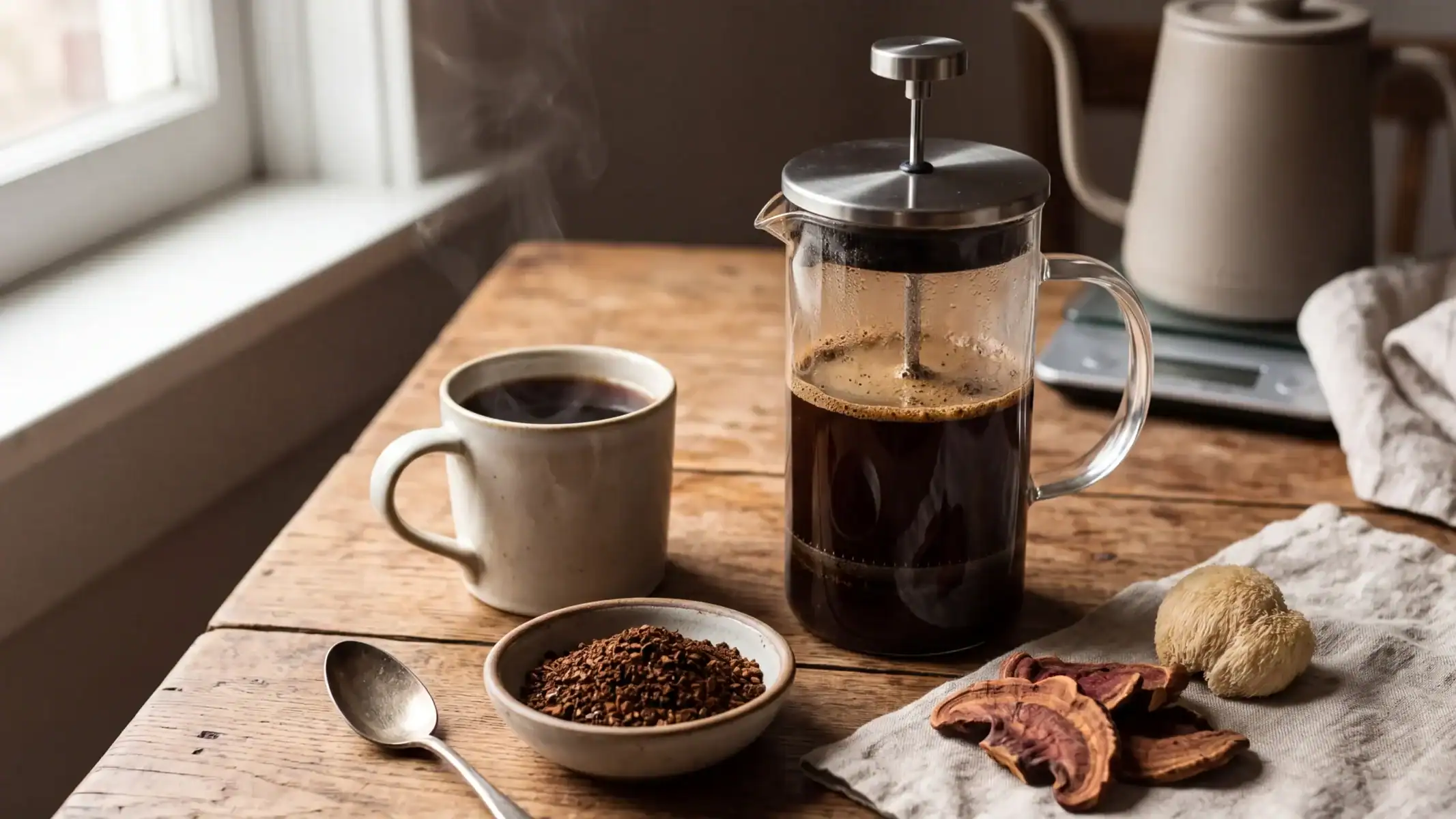
Run your drip machine on the recommended setting. For a pour-over, wet the grounds evenly and continue pouring within your brewer’s directions. With a French press, use the specified steeping time, then lower the plunger slowly.
Let a paper-filter brewer finish draining before removing it. Pour French press coffee gently into your mug, leaving the settled grounds behind. If you see loose grounds in the drink, check your filter placement or screen before brewing again.
Mix your instant blend directly in a mug, and add a separate extract after brewing your coffee. These methods give you control over mixing without putting extra powder through a coffee filter.
Read the directions before opening a packet or measuring a scoop. Check the recommended liquid, serving amount, and temperature.
If your package gives cold-mixing directions, follow those for a chilled drink. Otherwise, prepare the mix as directed before cooling it.
Brew your regular coffee and separate all grounds first. Then measure the mushroom extract powder using its own serving directions and stir it into your cup.
If you choose a fruiting body extract, check the full label for serving size and beverage instructions. That ingredient description alone does not tell you how much to use. For DIY mushroom coffee, keep track of extract servings across any other supplements you take.
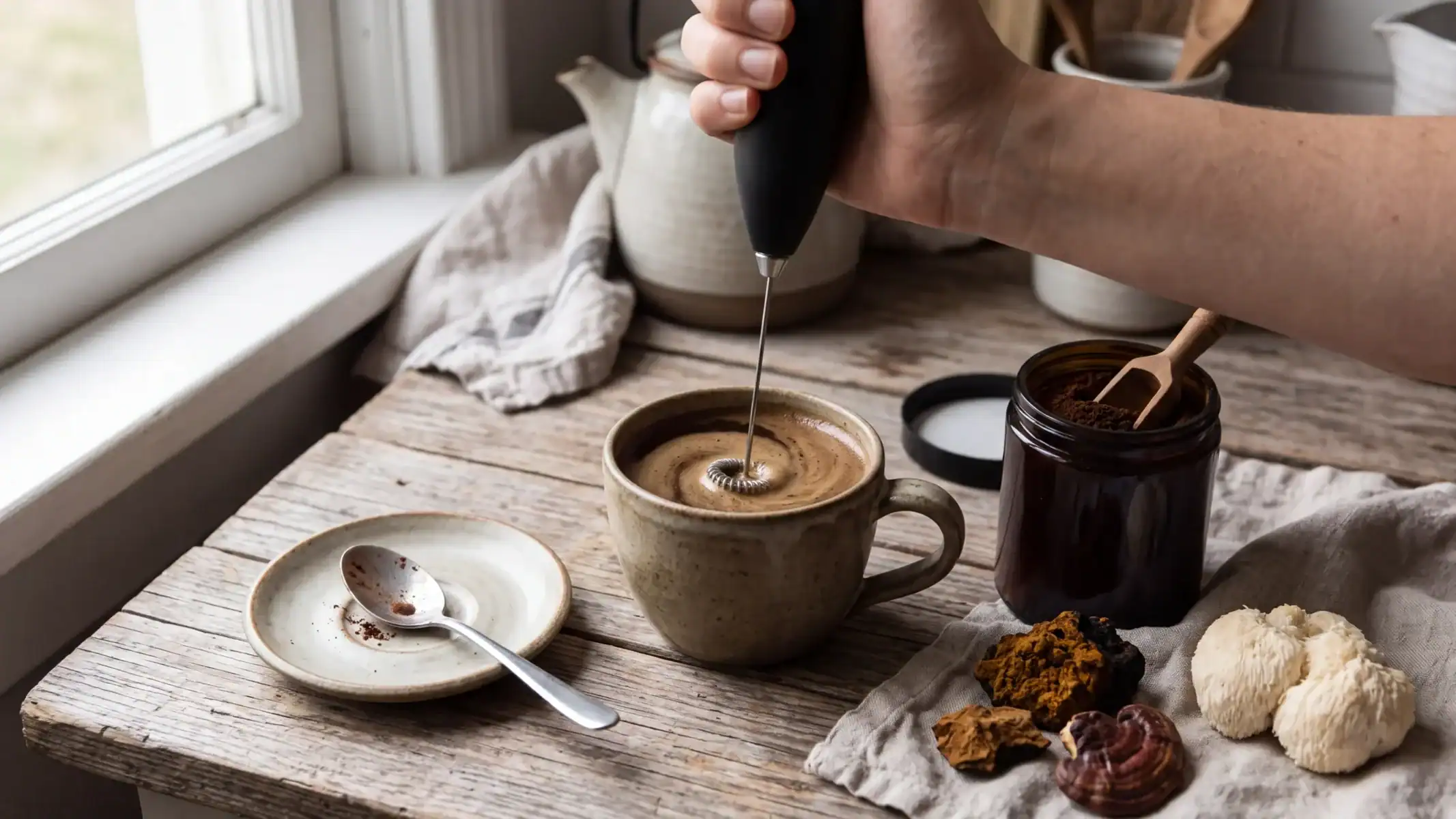
Start with a spoon so you can see how the powder behaves. If it collects in dry lumps, mix it with a small portion of the prepared liquid, then stir in the rest.
Use a milk frother with its head submerged to reduce splashes. Stop once the mixture looks evenly dispersed. If your powder contains insoluble particles, frothing distributes them through the drink while leaving some texture.
Use the product label for serving size and the product or brewer directions for water temperature. Treat any mushroom-specific temperature claim cautiously unless your manufacturer gives that instruction for your blend.
Check whether your package calls for hot, warm, or cold liquid. If it specifies a temperature, follow that setting with a suitable kettle or thermometer.
For ground blends without a printed temperature, use your brewer’s recommended coffee setting. For an instant mix or separate mushroom extract powder with unclear directions, ask the manufacturer about preparation. Avoid choosing a temperature based on claims that every mushroom coffee powder behaves the same way.
Use the scoop or weight measurement specified for the product in your hand. Equal-looking scoops of different powders can hold different weights, and extract concentrations vary between products.
Check each label separately when combining ingredients. If your coffee already includes mushrooms, adding another extract increases your intake. Keep the prepared serving within each product’s directions and ask a healthcare professional about combining supplements when needed.
Check filtering for grit, mixing technique for clumps, and your brewing setup for flavor problems. Change one thing at a time so you can identify what improves your cup.
If your cup contains recognizable coffee grounds, inspect the filter for tears or gaps. Check that your filter basket sits correctly and stays within its fill limit.
With a French press, fine particles pass through the metal screen more easily than through a paper coffee filter. Pour slowly and leave the final sediment in the press. For a separate mushroom powder, check whether the label describes it as soluble or warns about settling.
Break up dry lumps with a clean spoon before adding liquid. Next, stir the powder into a small amount of the liquid allowed by its directions to form a smooth mixture.
Add the remaining liquid gradually while stirring. If clumps remain, use a whisk or milk frother. Avoid adding extra powder to fix the texture, since that changes your serving size.
Begin by checking your measured blend and water amount. For bitterness, clean your equipment and confirm that your brewing time and settings match the directions. For a weak cup, check for excess water or uneven wetting of the grounds.
Adjust within the product’s recommended range. If you are preparing a separate extract add-in, change the coffee base independently while keeping the extract serving steady. Use milk or a small amount of sweetener to soften a strong mushroom coffee taste after correcting brewing problems.
Customize your prepared coffee with milk or flavorings, then store each ingredient according to its label. Keep your mushroom serving consistent as you try different mushroom coffee recipes.
Start your mushroom coffee latte with a brewed and filtered coffee base, or prepare your instant blend as directed. Warm your preferred milk separately, froth it if desired, and pour it into the prepared coffee.
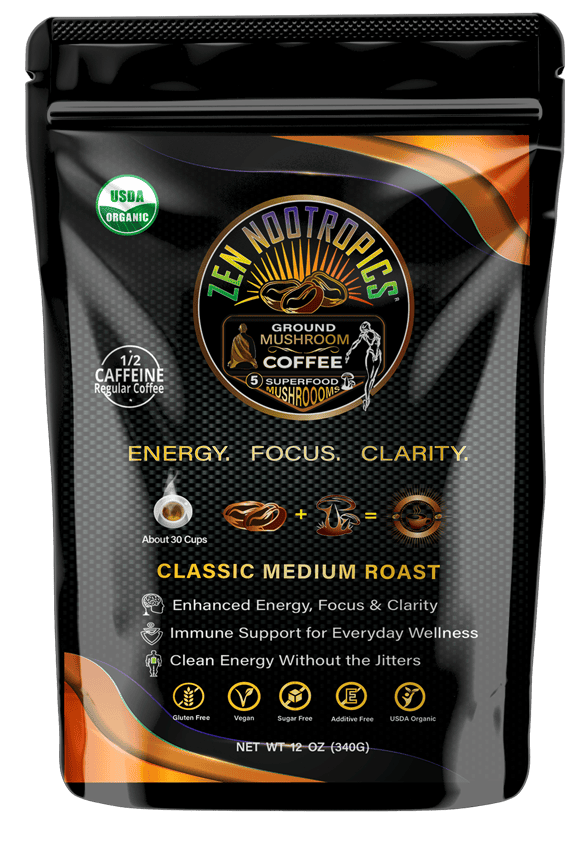
For a simple mushroom coffee recipe variation, stir in cocoa or cinnamon to taste. With Zen Nootropics Mushroom Coffee, you get dark chocolate and cinnamon tasting notes from a blend crafted with USDA organic Colombian coffee. Try your first cup plain so you can decide which additions suit it.
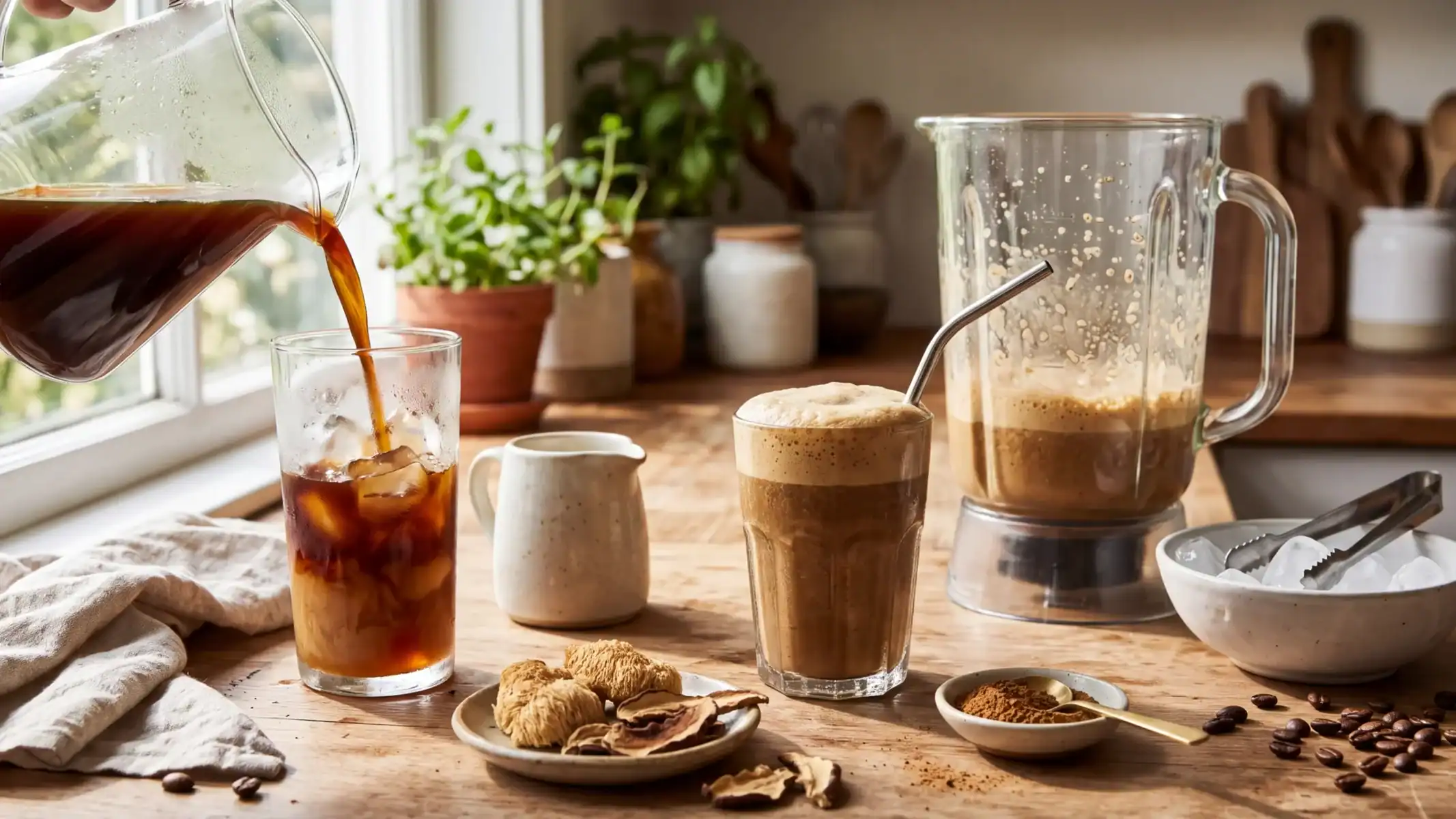
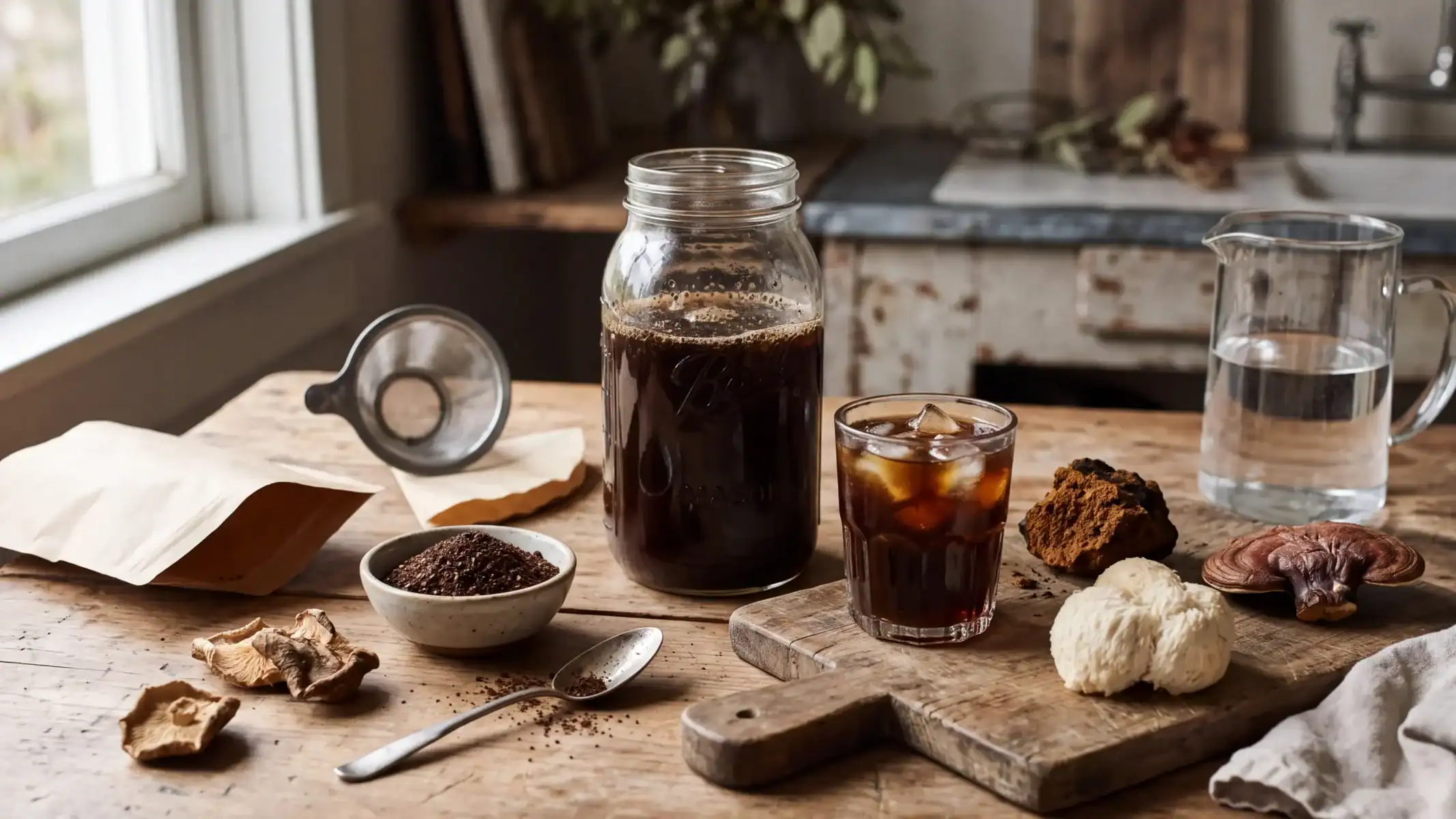
For iced mushroom coffee, prepare your base using its normal directions, then cool it before pouring over ice. If your instant product supports direct cold mixing, use the method printed on the package.
For blended mushroom coffee, add cooled prepared coffee, ice, and your preferred milk to a blender approved for those ingredients. Follow the blender’s fill limits and operating instructions. Avoid sealing hot coffee in a blender designed for cold drinks.
Reseal your dry coffee blend or extract after measuring it. Follow the storage label and use a clean, dry scoop to keep moisture out of the package.
Store homemade mushroom coffee with milk promptly in the refrigerator. Follow the milk’s handling guidance and any prepared-drink instructions from the mushroom product manufacturer. If you plan to prepare drinks ahead, confirm storage guidance before making a large batch.
You get a more consistent cup when you match preparation to the label: brew and filter a ground blend, dissolve an instant mix as directed, or stir a measured extract into finished coffee. Keep the serving amount steady while you adjust optional flavorings.
If you want a pre-ground option for your existing setup, consider Zen Nootropics. Its blend includes five functional mushrooms and is ground for use in most coffee machines, pour overs, French presses, and some espresso machines. Check your brewer’s compatibility before choosing your method.
You can mix an instant blend with milk if its package permits it. For ground mushroom coffee, brew with water and add milk afterward; use only the liquids approved for your coffee maker’s reservoir.
You can prepare DIY mushroom coffee by adding a beverage-ready mushroom extract to your brewed coffee at its labeled serving size. If you have plain ground dried mushrooms, follow their cooking or preparation directions before using them in a drink.
You can prepare a coffee-free mushroom drink with an extract labeled for use in water, milk, or another beverage. If you want a caffeine-free coffee replacement, check every ingredient, including added tea or cocoa.
Adding mushroom extract leaves the amount of caffeine in your brewed coffee unchanged. To lower your caffeine intake, choose decaf or use less caffeinated coffee while keeping the extract within its labeled serving.
You might be reacting to caffeine, a mushroom ingredient, or another ingredient in the blend. Stop drinking it and contact a healthcare professional if symptoms persist, especially if you take medication or have a medical condition. Seek urgent medical care for trouble breathing, throat swelling, chest pain, or fainting.
n
For general information on caffeine in brewed coffee, see the U.S. Food and Drug Administration’s caffeine guidance. The amount in mushroom coffee depends on the specific product and serving.