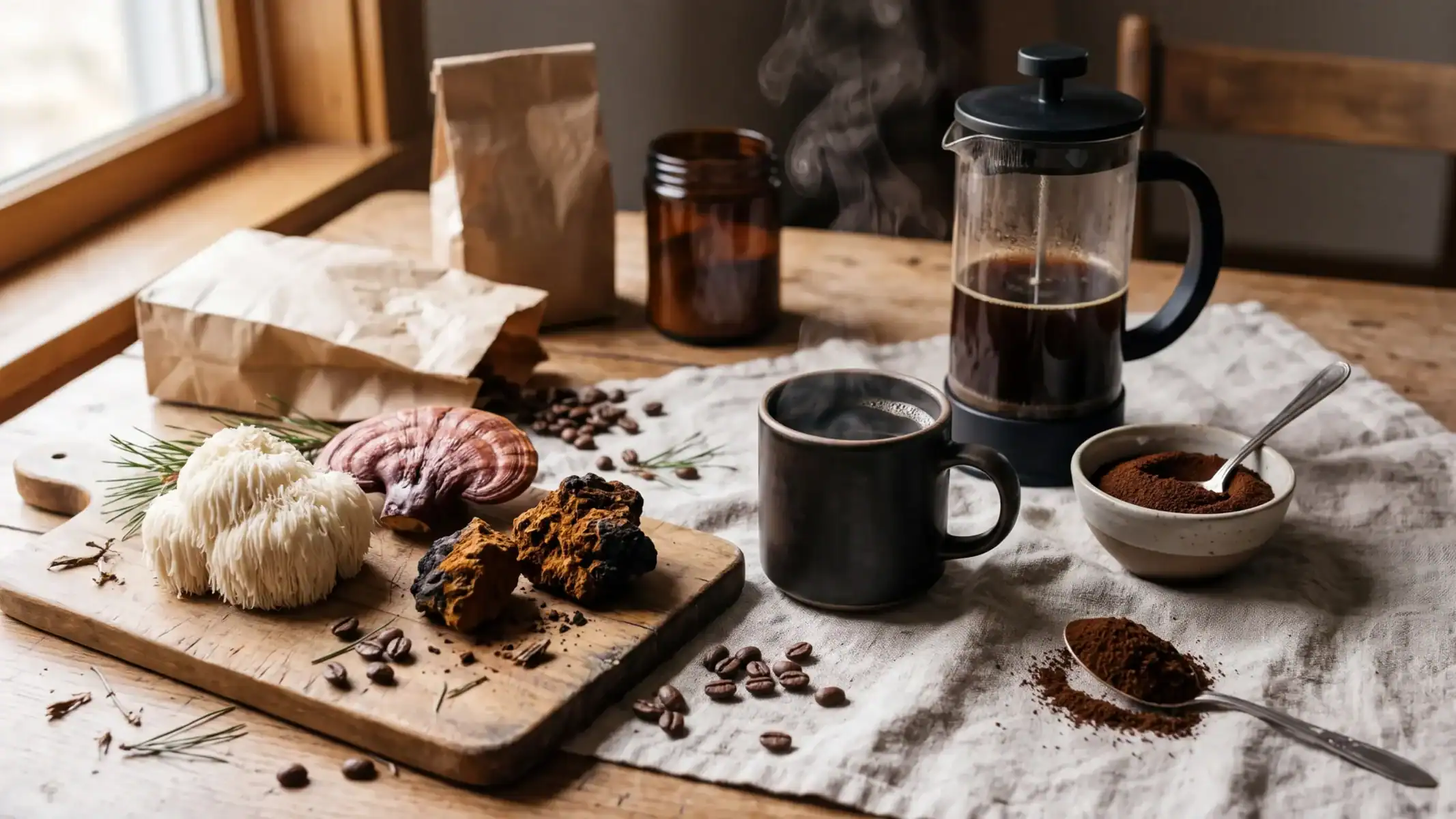
Mushroom Coffee for Beginners: Choose and Brew Your First Cup
For beginners who already use a coffee maker, pre-ground mushroom coffee offers a fam...
Read Article →
There’s no standard caffeine amount for mushroom coffee. It depends on the blend, serving size, and how you brew it. Compare milligrams of caffeine per prepared serving, not just per scoop or cup. A blend with mushrooms isn’t automatically low-caffeine. For more on what’s in a blend and how to brew it, see our complete […]
There’s no standard caffeine amount for mushroom coffee. It depends on the blend, serving size, and how you brew it. Compare milligrams of caffeine per prepared serving, not just per scoop or cup. A blend with mushrooms isn’t automatically low-caffeine.
For more on what’s in a blend and how to brew it, see our complete mushroom coffee guide.
A smaller caffeine amount per serving helps a coffee drinker plan intake, but serving size deserves equal attention. A large mug prepared with multiple servings contains the combined caffeine from those servings, even when the package describes the product as low-caffeine.
Mushroom coffee caffeine content describes the caffeine in a specified amount of product or prepared beverage. Functional mushrooms and mushroom extracts are separate ingredients whose presence does not establish the caffeine dose.
Regular coffee supplies caffeine in blends made with coffee beans or instant coffee. The functional mushrooms used in these products contain no caffeine of their own. Medicinal mushroom extracts also do not remove caffeine already present in the coffee.
For the question “does mushroom coffee have caffeine,” the ingredient list provides the starting point. Coffee, tea, cacao, guarana, and added caffeine each warrant attention. A coffee-free mushroom beverage still requires an ingredient check because some alternative bases contain caffeine.
Manufacturers use different coffee bases and serving weights. Some replace part of a coffee serving with mushroom ingredients; others add extracts to a conventional coffee base. Those approaches produce different caffeine amounts.
“Cup” also has several meanings on packaging. It might describe the recommended water volume, a brewer setting, or a finished serving. A useful comparison identifies both the amount of product used and the caffeine associated with that amount.
A useful caffeine label connects milligrams to a measurable serving and preparation instructions. The serving definition establishes how the listed amount applies to a scoop, packet, pod, or brewed portion.
The label’s serving size determines how many scoops correspond to the stated caffeine amount. A serving defined as multiple scoops assigns its caffeine figure to that full quantity. Treating the figure as a per-scoop amount would overestimate intake.
A practical label check follows this order:
Scoop shape introduces another source of variation. A heaped scoop holds more powder than a level scoop, so a gram weight provides a more consistent reference when the manufacturer supplies one.
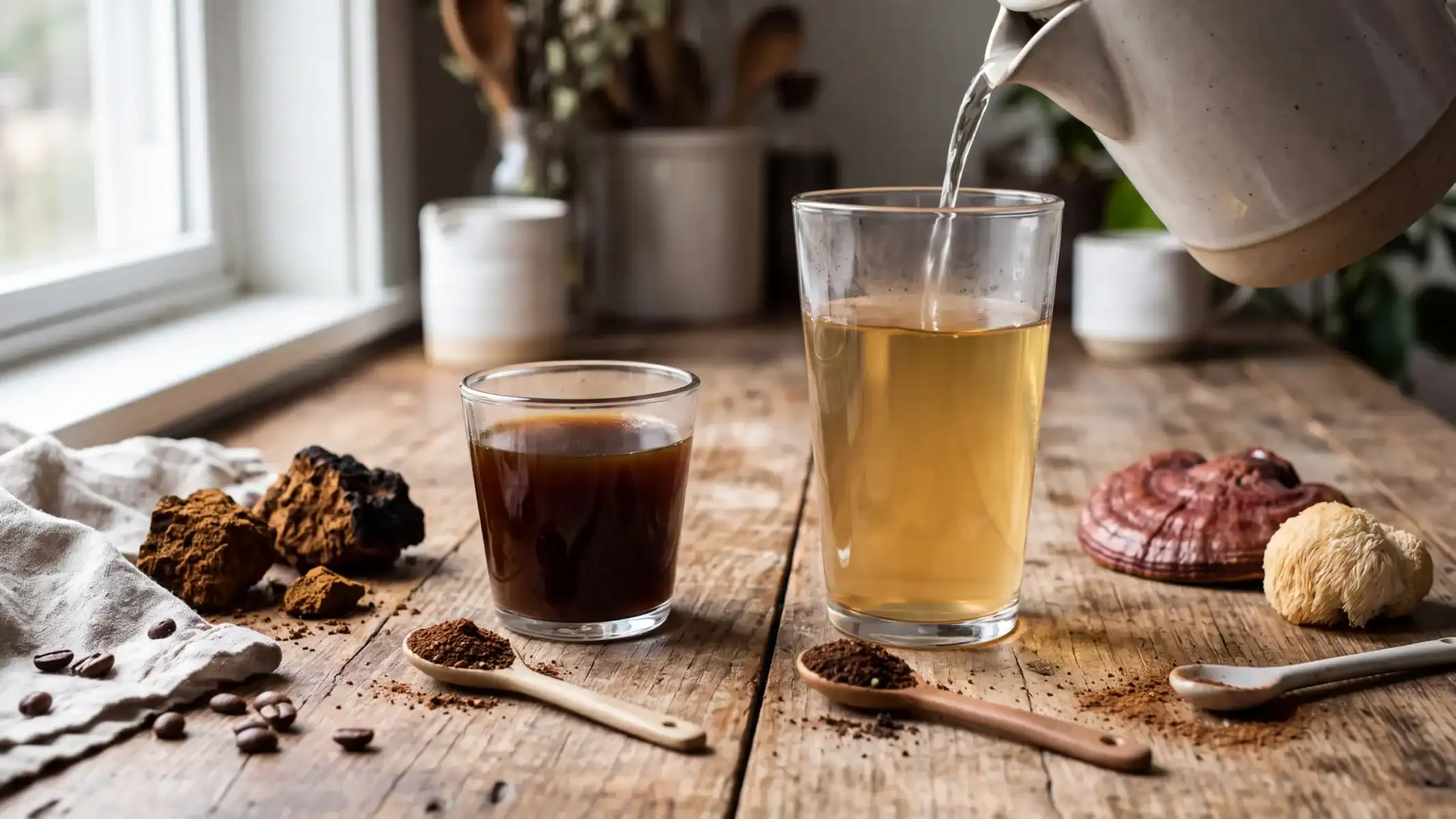
Prepared volume describes how much liquid the recipe produces. The caffeine dose describes how much caffeine that recipe contributes. Adding extra liquid changes concentration while leaving the caffeine from the original serving in the drink.
For instant coffee blends, the amount of powder establishes the starting dose. For ground coffee, preparation also affects extraction. A brewer’s larger cup setting therefore requires a different interpretation from adding water to an already prepared instant drink.
“Arabica coffee” identifies a coffee species, while “arabica instant coffee” also identifies the product format. Neither phrase supplies a milligram amount. Instant coffee still requires a serving-specific caffeine figure for accurate calculations.
Decaf wording indicates that the coffee has undergone decaffeination, with some residual caffeine remaining. “Low-caffeine mushroom coffee” provides a useful shopping category, but the numerical amount and comparison serving establish what the claim means for intake.
Caffeine comparisons become useful when every figure stays attached to its serving unit. Approximate reference amounts provide context; current product labels provide the strongest basis for choosing a specific blend.
The table separates general reference amounts from product-specific information. It deliberately leaves espresso and variable mushroom formats without a numerical estimate where a defined preparation is missing.
| Beverage or format | Reference serving | Caffeine amount | How to interpret it |
|---|---|---|---|
| Regular brewed coffee | 8 fl oz | About 95 mg | Approximate reference; individual brews differ |
| Espresso | A defined shot | Check the preparation or vendor figure | Shot volume and coffee dose must be specified |
| Decaf coffee | 8 fl oz | Roughly 2–15 mg | Approximate reference range; residual caffeine remains |
| Instant mushroom coffee | Label-defined serving | Product-specific | Confirm powder amount and current label |
| Brewed mushroom coffee | Specified grounds and brew recipe | Product-specific | Extraction and serving volume affect the result |
| Mushroom coffee K-Cups | One pod at a stated brewer setting | Product-specific | Check the exact pod and preparation |
| Caffeine-free mushroom alternative | Label-defined serving | 0 mg when verified | Confirm the complete formula contains no caffeine sources |
An older Four Sigmatic instant mushroom coffee listing gives 50 mg per 8 fl oz. That figure describes the listed preparation and should receive a current-label check before purchase. It should not be transferred to other products from the same brand.
Caffeine-free alternatives and decaf coffee belong in separate categories. Decaf starts with coffee and retains residual caffeine after processing. A caffeine-free alternative uses a formula without caffeine-containing ingredients.
Chicory-based mushroom beverages offer one possible coffee-free format. Cacao-based beverages require additional scrutiny because cacao contains caffeine. “Coffee-free” alone therefore leaves an important question unanswered.
A per-packet figure and a per-mug figure are comparable only after the preparation is clear. The mug might contain multiple packets or a larger quantity of grounds. Recording the serving weight alongside milligrams prevents this mismatch.
For mushroom coffee K-Cups, the pod and brewer instructions belong together. A larger water setting changes the brewed preparation, and extraction does not necessarily scale in direct proportion to volume. The exact product’s stated recipe provides the appropriate reference.
Caffeine per cup is calculated by multiplying caffeine per serving by the number of servings used. For ground coffee, the resulting figure remains an estimate unless it matches the manufacturer’s specified brewing conditions.
The following figures are hypothetical and describe no named product. Suppose an instant blend lists 50 mg per serving, with one level scoop per serving. A drink prepared with two level scoops contains 100 mg.
The calculation is:
50 mg per serving × 2 servings = 100 mg per cup
If the hypothetical label instead defines two scoops as one serving, those two scoops supply the listed 50 mg. The serving definition must be established before the multiplication.
Volume normalization helps compare beverage concentration. Using the same hypothetical example, a drink containing 50 mg in 8 fl oz has 6.25 mg per fl oz. This calculation divides caffeine by finished beverage volume.
A 12 fl oz drink at that same concentration would contain 75 mg. That result assumes the recipe scales proportionally, including the powder quantity. It does not describe a single 50 mg serving diluted into a larger mug.
Water dilutes a prepared beverage without removing its caffeine. If the hypothetical 50 mg serving receives additional water, the finished drink still contains 50 mg. Its caffeine concentration per fluid ounce decreases.
A smaller consumed portion reduces intake when the beverage is evenly mixed. Drinking half of that hypothetical serving supplies approximately 25 mg. Milk and ice follow the same dilution principle when they add no caffeine themselves.
The quantity and type of caffeinated ingredients drive differences between mushroom coffees. Mushroom species provide formula information, while the coffee base and preparation determine the caffeine contribution.
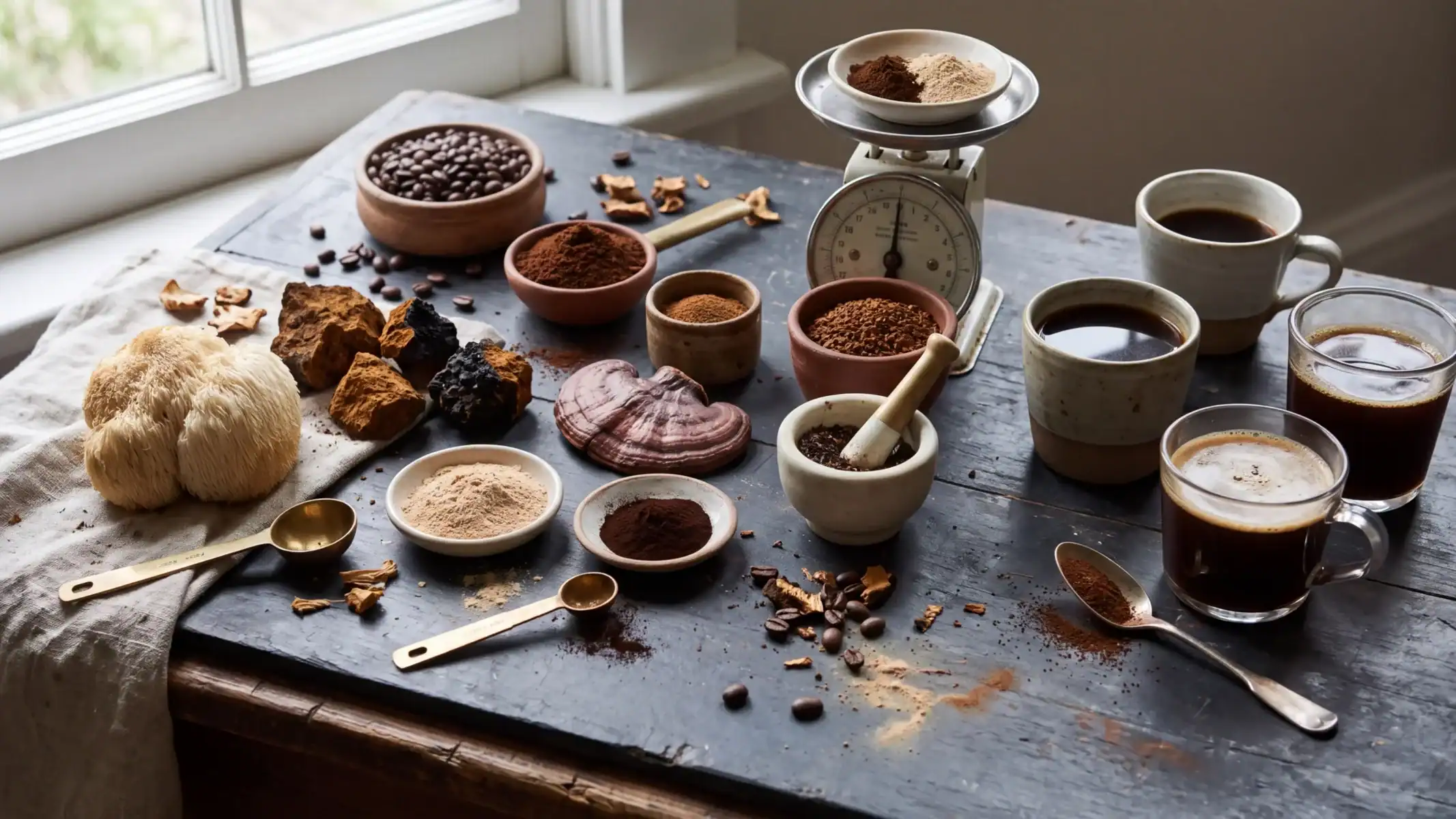
Replacing some coffee with caffeine-free mushroom material reduces the coffee contribution when serving weight and preparation remain equivalent. Adding mushroom extracts while keeping the original coffee amount preserves that coffee contribution. A blend ratio alone therefore provides incomplete information.
Regular coffee, decaf coffee, and instant coffee bases also differ in caffeine delivery. Ingredient order offers a broad view of composition, but it does not reveal the finished beverage’s milligram amount. A declared caffeine figure gives a more actionable measurement.
A heavier serving contains more product, including any coffee in the blend. For instant products, scaling a uniform powder provides a practical way to estimate dose. Consistent measuring remains important.
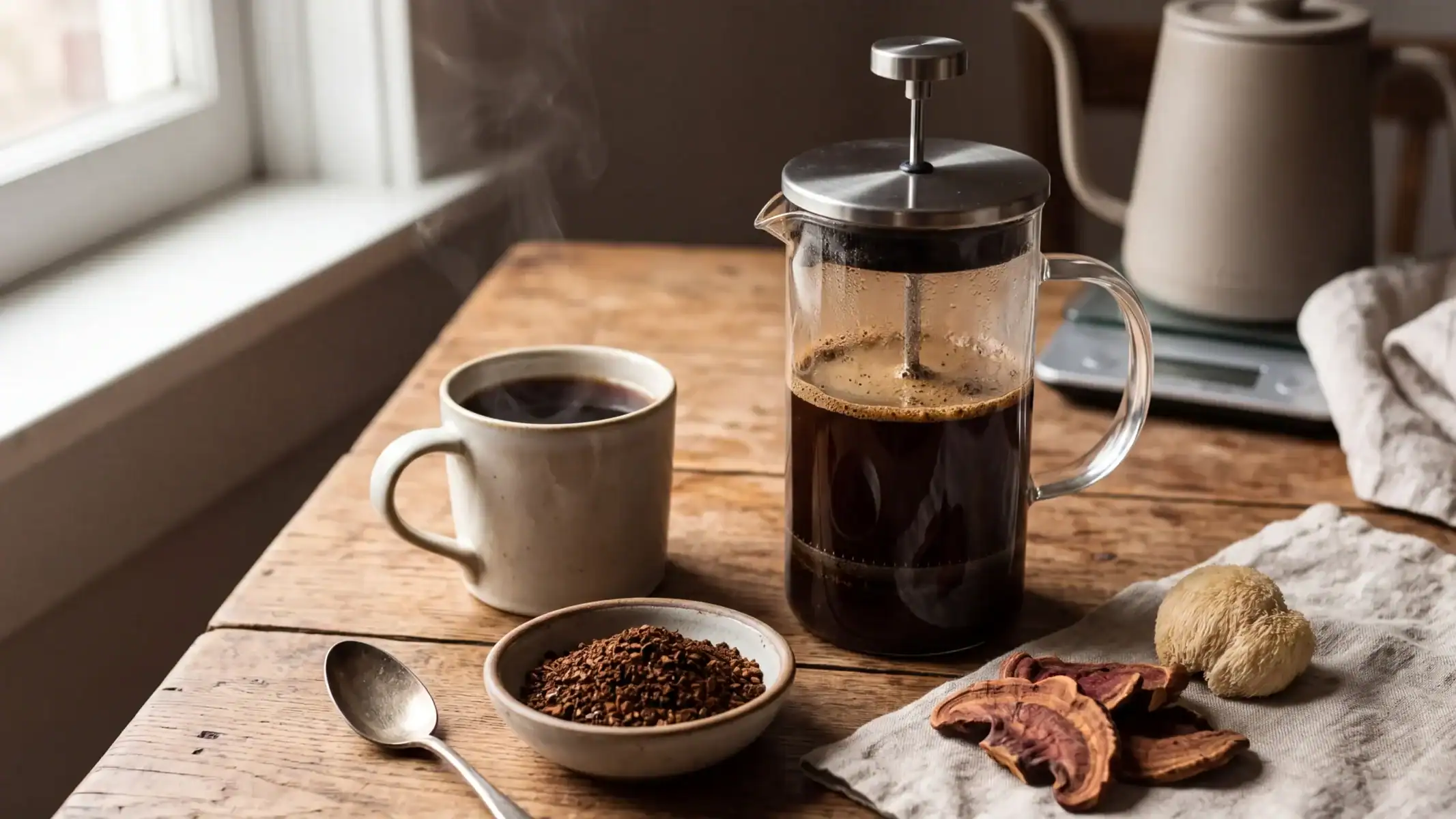
Ground blends introduce extraction variables. Grind size, contact time, water temperature, and the coffee-to-water ratio influence the prepared beverage. A French press recipe and an espresso preparation should each use caffeine information appropriate to that method.
Tea and cacao contribute caffeine independently of coffee. Matcha, yerba mate, guarana, and added caffeine also increase the total when included. A mushroom beverage with little coffee still deserves a complete formula check.
A manufacturer’s caffeine declaration should cover the finished formula. When a claim refers specifically to “caffeine from coffee,” the total from other ingredients needs clarification. That distinction is especially relevant to blends containing tea extracts.
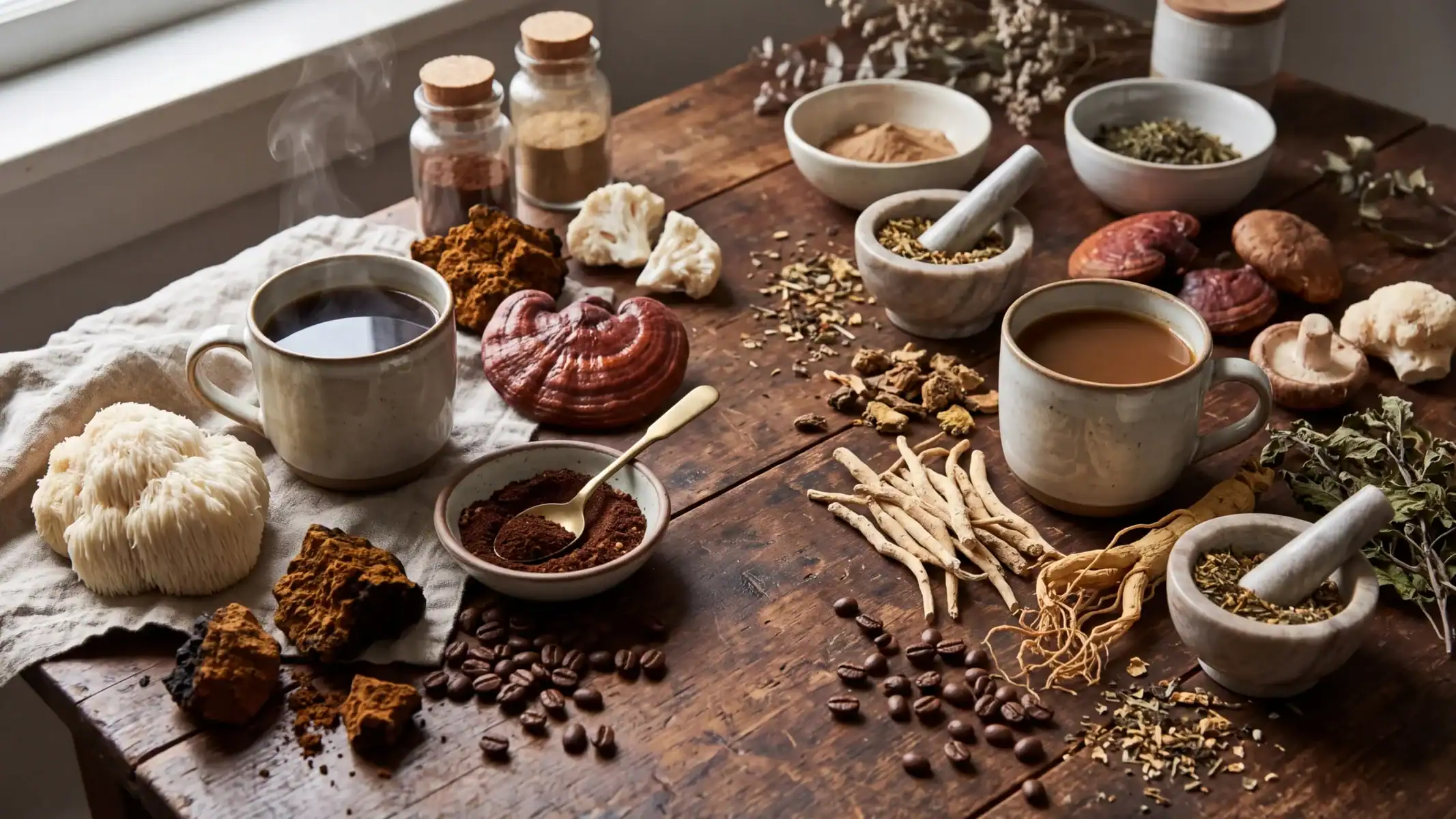
Lion’s mane, cordyceps, reishi, chaga, turkey tail, and shiitake contribute no caffeine of their own. Reishi also appears on labels as Ganoderma lucidum. The number of medicinal mushrooms in a blend therefore cannot establish its caffeine amount.
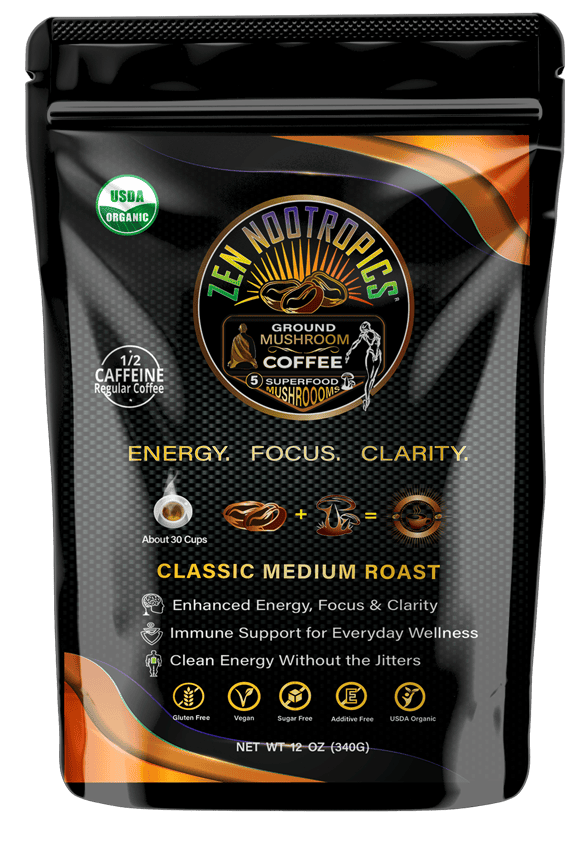
Zen Nootropics combines organic Colombian coffee with Lion’s Mane, Cordyceps, Reishi, Chaga, and Turkey Tail. Those five ingredients describe its mushroom blend; they do not establish a numerical caffeine dose. The applicable product label or manufacturer guidance is needed for that calculation.
A lower caffeine dose reduces stimulant exposure and may reduce jitters in someone whose symptoms are dose-related. Individual sensitivity and consumption timing still affect the experience.
Total intake includes caffeine from every beverage, food, and supplement consumed during the day. A lower-dose mushroom coffee added to an existing routine increases that total. Replacing a higher-dose beverage with it creates a different intake pattern.
Sensitivity also changes the practical significance of a serving. Some people experience restlessness or sleep disruption at amounts others tolerate. Later consumption extends exposure closer to bedtime, so a modest serving still deserves attention to timing.
Claims about mental focus, mental clarity, or cognitive function do not quantify caffeine. References to adaptogens and the stress response also provide no guarantee against stimulant-related discomfort. The label’s caffeine amount remains a separate measurement.
Language about immune support, immune health, gut health, or antioxidants concerns other proposed properties of the ingredients. Those claims do not demonstrate caffeine tolerance, and direct clinical evidence on finished mushroom-coffee blends remains limited. Research involving a particular extract applies to its studied preparation and dose.
Pregnancy, breastfeeding, prescription medication use, and existing health conditions warrant individualized advice before adding functional mushroom products. A clinician or pharmacist should review the complete ingredient list alongside caffeine intake. Mushroom-related considerations extend beyond stimulant exposure.
Persistent palpitations, worsening anxiety, or ongoing digestive symptoms deserve medical attention. Chest pain, fainting, or breathing difficulty call for urgent evaluation. Switching blends should not delay care for significant symptoms.
A useful purchase decision starts with a measurable serving and a clear caffeine amount. Mushroom ingredient details and product testing then help assess the rest of the formula.
A useful label states caffeine per serving alongside the product quantity that supplies it. Preparation instructions should identify whether the product dissolves or requires brewing. Ground coffee also benefits from a specified grounds-to-water recipe.
Before buying low-caffeine mushroom coffee, a shopper should record:
If the label uses a comparison such as “half the caffeine,” the reference beverage needs clarification. A direct milligram amount is easier to include in a daily total.
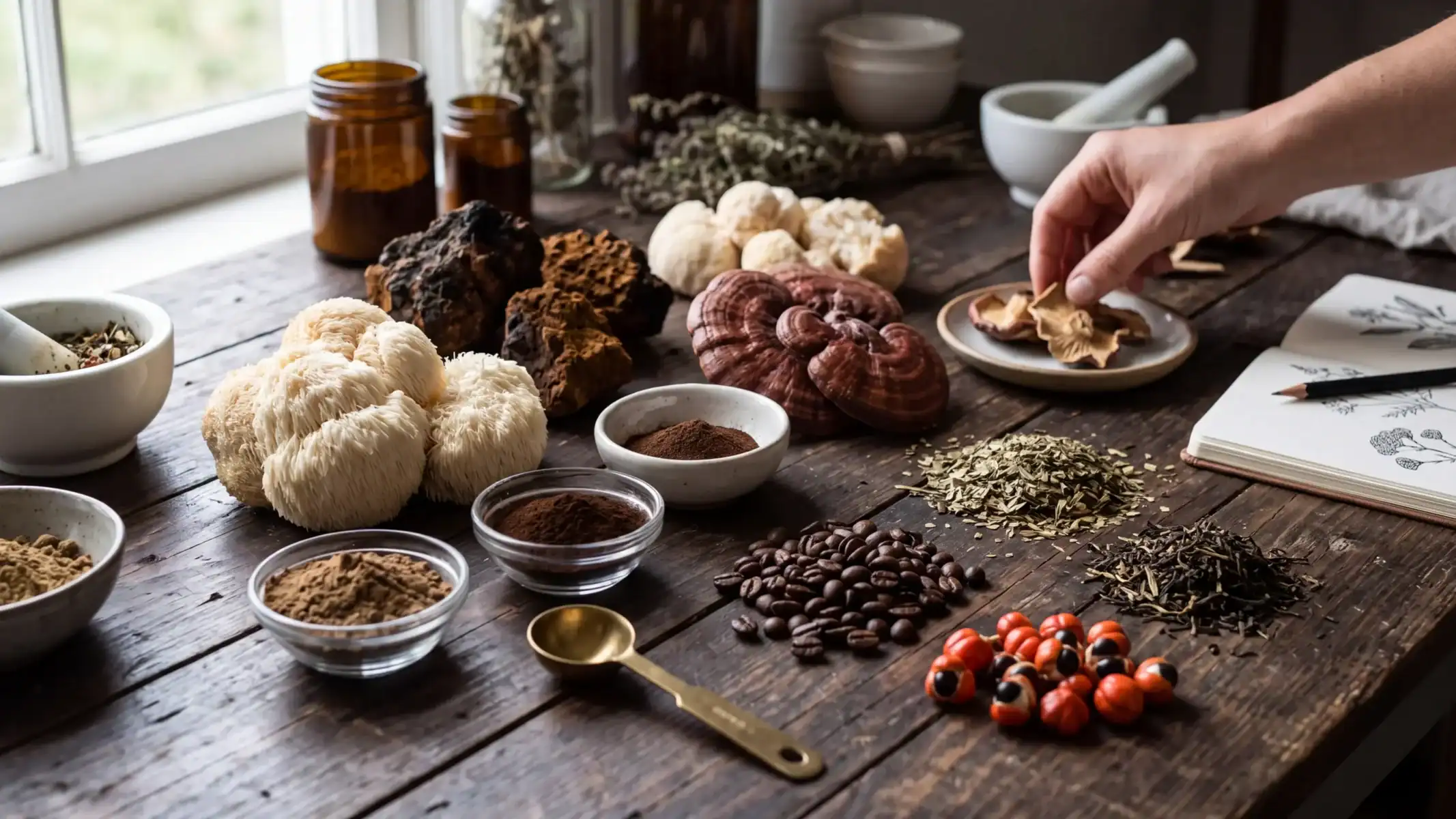
Functional mushrooms deserve their own dosage review. Labels that disclose individual mushroom amounts allow a clearer assessment than a combined blend weight alone. Extract descriptions also help distinguish mushroom extracts from unextracted powders.
The full ingredient list should receive a separate stimulant check. Tea extracts, guarana, yerba mate, and added caffeine all warrant attention. Increasing the serving to obtain more mushroom material also increases caffeine when the ingredients share one uniform blend.
Product testing answers specific questions defined by the tests performed. A contaminant screen, ingredient identity test, and caffeine assay measure different properties. A general “third-party tested” statement leaves those details open.
A shopper seeking caffeine verification should ask whether testing measured caffeine in the finished product and how the result relates to the stated serving. For brewed blends, the preparation used during testing is also relevant. A batch-matched certificate of analysis provides useful documentation when it includes the requested measurement.
The most useful mushroom coffee comparison pairs caffeine per serving with the quantity used and the preparation method. A larger mug, extra scoop, or different brew recipe changes how the label applies to the finished drink.
For shoppers considering a ground blend, Zen Nootropics Mushroom Coffee combines organic Colombian coffee with five functional mushrooms. Its product information offers a useful starting point for reviewing ingredients and brewing suitability; customer support can clarify the current serving-specific caffeine information before purchase.
Mushroom coffee caffeine questions are easiest to resolve with the exact serving definition. The answers below apply that principle to common label and preparation issues.
No, mushroom coffee includes blends with caffeine levels comparable to regular coffee. A lower-caffeine claim needs a defined serving and a stated comparison beverage.
The manufacturer’s customer support team is the appropriate contact for a missing caffeine amount. A useful request specifies the exact product and asks for milligrams per serving, serving weight, and applicable preparation instructions.
Two equal scoops approximately double the caffeine of one scoop in a uniform instant blend. If the label defines two scoops as one serving, the pair supplies the stated caffeine per serving.
Adding caffeine-free milk or water leaves the cup’s total caffeine unchanged. It lowers concentration, while consuming only part of the evenly mixed drink reduces the amount ingested.
Yes, low-caffeine mushroom coffee still causes stimulant-related symptoms in some sensitive people. Mushroom ingredients and other components also carry separate risks, including digestive discomfort or allergic reactions.
Decaf mushroom coffee retains some caffeine from its coffee base. A product intended for complete caffeine avoidance requires a verified caffeine-free formulation, including any tea, cacao, or other added ingredients.