Does Mushroom Coffee Break a Fast? Rules by Fast Type
A morning coffee ritual fits more easily into fasting when the drink matches the plan...
Read Article →
Does mushroom coffee affect sleep? Yes, if it contains caffeine, the amount you drink and how close you drink it to bedtime may affect sleep onset and quality. Mushroom ingredients do not cancel caffeine. A satisfying morning coffee ritual and restful nights are compatible when caffeine intake stays aligned with bedtime. Caffeine-containing mushroom coffee can […]
Does mushroom coffee affect sleep? Yes, if it contains caffeine, the amount you drink and how close you drink it to bedtime may affect sleep onset and quality. Mushroom ingredients do not cancel caffeine.
A satisfying morning coffee ritual and restful nights are compatible when caffeine intake stays aligned with bedtime. Caffeine-containing mushroom coffee can delay sleep and reduce sleep quality, especially when consumed late in the day or by someone sensitive to caffeine.
Zen Nootropics blends organic Colombian coffee with functional mushrooms for a wellness-focused morning routine. The connection between mushroom coffee and sleep starts with the coffee itself: caffeine dose and timing shape its effects, even when the drink feels smooth or produces few jitters.
Caffeine content determines a mushroom coffee blend’s stimulant exposure. Mushroom ingredients do not establish whether a serving is low-caffeine, and late caffeine intake can interfere with the circadian rhythm that helps regulate sleep timing.
Does mushroom coffee affect sleep even when it feels gentler than regular coffee? It can. The important variable is the caffeine consumed, not whether the drink causes noticeable jitters. A calm-feeling cup may still delay sleep for someone who is sensitive to caffeine.
Caffeine blocks adenosine receptors. Adenosine helps build sleep pressure during waking hours, so blocking its action increases alertness while the need for sleep continues to accumulate.
The effects extend beyond feeling awake. Caffeine can lengthen the time needed to fall asleep, shorten sleep duration, and reduce deep sleep. Someone who falls asleep easily after coffee still has reason to consider whether their sleep feels less restorative.
Does mushroom coffee affect sleep less when a blend contains less caffeine? A lower measured caffeine dose may reduce exposure, but the label must specify the amount per prepared serving. A mushroom ingredient list alone cannot establish that a product is low in caffeine.
Mushroom coffee has no standardized caffeine level. Some mushroom coffee blends contain less coffee per serving; others use a substantial coffee base with added extracts.
A lower-caffeine claim needs a defined serving and a meaningful comparison. A small instant serving and a large mug of brewed coffee represent different amounts of beverage, making category-wide comparisons unreliable.
The useful figure is milligrams of caffeine per prepared serving. A mushroom name on the package provides no substitute for that information.
Does mushroom coffee affect sleep differently when you use two scoops instead of one? A larger serving can increase total caffeine intake. Compare the prepared serving instructions and avoid assuming every scoop or brewing method delivers an identical dose.

The amount of ground coffee used affects the caffeine in the finished drink. A larger scoop or an additional serving increases exposure, even when the package and brewing equipment remain unchanged.
Brewing method also changes extraction. Grind size and contact time influence the result, while a large mug sometimes holds several labeled servings.
For ground blends, a practical approach is to measure the coffee by weight and keep the recipe consistent. Adding water to an already brewed drink dilutes its concentration without removing caffeine.
Functional mushrooms do not neutralize caffeine, and evidence about individual extracts does not establish sleep benefits for finished coffee blends. Medicinal mushrooms have distinct compounds and research histories, so their potential health benefits require ingredient-specific interpretation.
Does mushroom coffee affect sleep differently because it contains reishi? There is no good evidence that adding reishi to a caffeinated beverage neutralizes caffeine or guarantees better sleep. Research on specific extracts cannot be applied automatically to a finished coffee blend.
Reishi does not remove caffeine from a beverage or prevent caffeine from blocking adenosine receptors. A calming sensation after a drink also provides no measurement of how much caffeine remains active.
Claims about stress reduction describe a different outcome from caffeine clearance. A person might feel relaxed while still experiencing caffeine-related changes in sleep.
For that reason, the presence of reishi supplies no basis for extending a caffeinated drink into the evening. Its inclusion does not establish a sleep-protective dose or timing window.
Reishi mushroom research includes laboratory experiments and animal studies examining sleep-related pathways. Investigations into triterpenes and other constituents include effects involving GABA receptors, which participate in inhibitory signaling in the nervous system.
Those findings provide biological hypotheses. Animal sleep changes do not establish an effective human dose, and human evidence for reishi as an insomnia treatment remains limited.
Extract composition also varies with the preparation and extraction method. Results involving a particular concentrated extract cannot establish that a brewed coffee containing reishi improves relaxation and sleep quality.
Lion’s mane research includes cognitive function and mood, while cordyceps research includes exercise performance and fatigue. Chaga is studied for biological activities such as antioxidant effects, with much of that work occurring outside human clinical trials.
These research areas do not establish sleep benefits for caffeinated mushroom coffee. Neither ingredient marketing nor the word “adaptogens” demonstrates that a blend protects sleep.
Some human trials of ashwagandha extracts report improvements in stress and anxiety or sleep outcomes. Those findings concern specific preparations and doses; they do not transfer automatically to coffee containing added ashwagandha or other botanicals.
Morning consumption provides a longer interval for caffeine clearance before bedtime. Choosing a personal cutoff requires attention to dose and sleep response, since a single clock time cannot protect everyone’s sleep quality.
Genetics influence how quickly the body metabolizes caffeine. Pregnancy, certain medications, and liver conditions also affect clearance.
Caffeine’s half-life is roughly five hours in many adults, with substantial variation. As an illustration, a 100-milligram dose leaves about 50 milligrams after one five-hour half-life and about 25 milligrams after another.
Regular coffee drinkers also develop tolerance to some noticeable effects. Feeling accustomed to caffeine does not establish that sleep remains unaffected.
Does mushroom coffee affect sleep when you drink it several hours before bed? The answer depends on dose, bedtime, medication use, and individual caffeine metabolism. Track when you drink it and how you sleep rather than relying on a universal cutoff.

A useful starting point is to keep caffeinated mushroom coffee in the morning and record sleep for one to two weeks. The record should include the amount consumed and the time of the last serving.
Sleep notes should track bedtime, estimated time to fall asleep, overnight awakenings, and next-day sleepiness. Keeping the serving consistent helps separate a timing change from a dose change.
If sleep remains disrupted, an earlier last serving or a smaller amount provides a clearer next experiment. Someone reducing a heavy caffeine habit should taper gradually to limit withdrawal headaches and fatigue.
Does mushroom coffee affect sleep if the product is decaffeinated? Decaf may still contain some caffeine, whereas a truly caffeine-free beverage has no coffee-derived caffeine. Check the actual label and consider your sensitivity when choosing an evening drink.
Decaf and verified caffeine-free drinks reduce the caffeine exposure associated with an evening beverage. Decaffeinated coffee still contains a small amount of caffeine, which remains relevant for highly sensitive individuals.
A caffeine-free label deserves an ingredient check, particularly when a blend includes tea or cacao. A warm beverage also needs no active sleep ingredient to serve as a relaxing part of an evening routine.
Products marketed as mushroom coffee for sleep require the same scrutiny. Relaxation claims do not establish that the finished drink treats insomnia or reliably improves sleep quality.
Zen Nootropics fits a sleep-conscious routine as a morning coffee choice whose serving and timing deserve deliberate attention. Its functional mushrooms complement the coffee formulation, while product-specific caffeine information remains essential for planning intake.
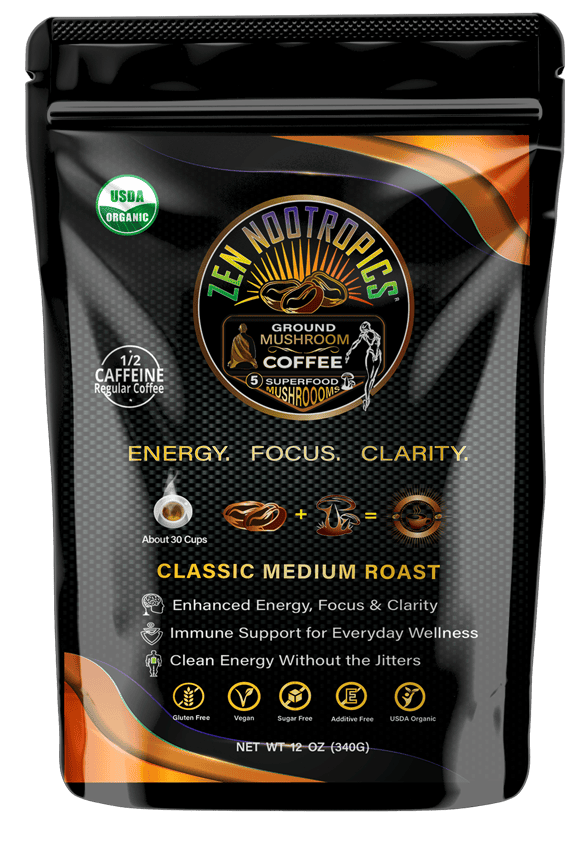
Zen Nootropics Mushroom Coffee combines USDA organic Colombian coffee with five functional mushrooms: Lion’s Mane, Cordyceps, Reishi, Chaga, and Turkey Tail. The brand describes its single-source Colombian beans as producing a bold, complex, smooth cup with dark chocolate and cinnamon tasting notes.
The product is offered as pre-ground coffee for most coffee machines, pour overs, French presses, and some espresso machines. These brewing options make a consistent recipe especially useful when tracking a daily serving.
The brand positions the blend for balanced energy and focus support. Those product goals remain separate from evidence that a finished beverage improves sleep.
Use the mushroom coffee ingredients guide for blend context, then verify the recommended serving and ask about caffeine content for the intended preparation. Mushroom count and flavor descriptions do not establish caffeine milligrams.
A repeatable routine starts with measuring the grounds and noting the finished drink volume. The daily caffeine tally should also include tea, energy drinks, pre-workout supplements, and caffeine-containing medications.
Claims about reduced jitters describe a different experience from sleep protection. Someone monitoring rest should judge the serving against their sleep record, even when the morning cup feels comfortable.
New side effects, medication concerns, and persistent insomnia warrant assessment beyond a change in coffee timing. Functional mushroom products contain biologically active ingredients, and individual medical circumstances influence their suitability.

Caffeine-related side effects include restlessness, palpitations, digestive discomfort, and anxiety. Mushroom ingredients introduce additional concerns, including allergic reactions or gastrointestinal symptoms.
A pharmacist or healthcare professional should review functional mushroom use alongside blood thinners, immunosuppressants, diabetes medicines, and blood-pressure treatments. Interaction concerns differ by mushroom and dose, and evidence for individual combinations varies.
Chaga warrants particular caution for people with kidney disease because high oxalate exposure has been associated with kidney injury. Concentrated preparations deserve special attention.
Pregnancy and breastfeeding also call for professional guidance on both caffeine intake and supplemental mushroom extracts. Breathing difficulty, facial swelling, chest pain, or fainting requires urgent medical attention.
Insomnia that continues despite an earlier caffeine cutoff deserves clinical attention, especially when daytime functioning suffers. Loud snoring, gasping during sleep, and severe daytime sleepiness also warrant assessment for other sleep disorders.
Chronic insomnia involves sleep difficulty at least three nights a week for at least three months, along with daytime consequences. Severe or worsening symptoms justify seeking help sooner.
A healthcare professional can assess medication effects and underlying conditions that disrupt sleep. Cognitive behavioral therapy for insomnia, known as CBT-I, is a first-line treatment for chronic insomnia and offers a structured approach beyond beverage changes.
Mushroom coffee belongs in a sleep-conscious routine with clear attention to caffeine exposure. Reishi and other functional mushrooms provide no established protection against caffeine-related sleep disruption, and extract research does not establish sleep benefits for a finished coffee blend.
A practical routine keeps the serving measured and the caffeinated cup early. Tracking sleep quality for one to two weeks gives a concrete basis for adjusting the amount or timing; persistent problems deserve professional advice.
For additional context, see the systematic review of caffeine and sleep and a randomized trial of caffeine dose and timing. These studies concern caffeine exposure, not clinical trials of Zen Nootropics coffee.