Does Mushroom Coffee Break a Fast? Rules by Fast Type
A morning coffee ritual fits more easily into fasting when the drink matches the plan...
Read Article →
Lion’s mane is the better-aligned option for cognitive support because small human trials have examined memory and cognitive function; cordyceps is the better-aligned option for physical endurance because its human research centers on exercise capacity. Both functional mushrooms attract interest for daily performance, but their evidence supports different goals. For people comparing lion’s mane vs […]
Lion’s mane is the better-aligned option for cognitive support because small human trials have examined memory and cognitive function; cordyceps is the better-aligned option for physical endurance because its human research centers on exercise capacity. Both functional mushrooms attract interest for daily performance, but their evidence supports different goals.
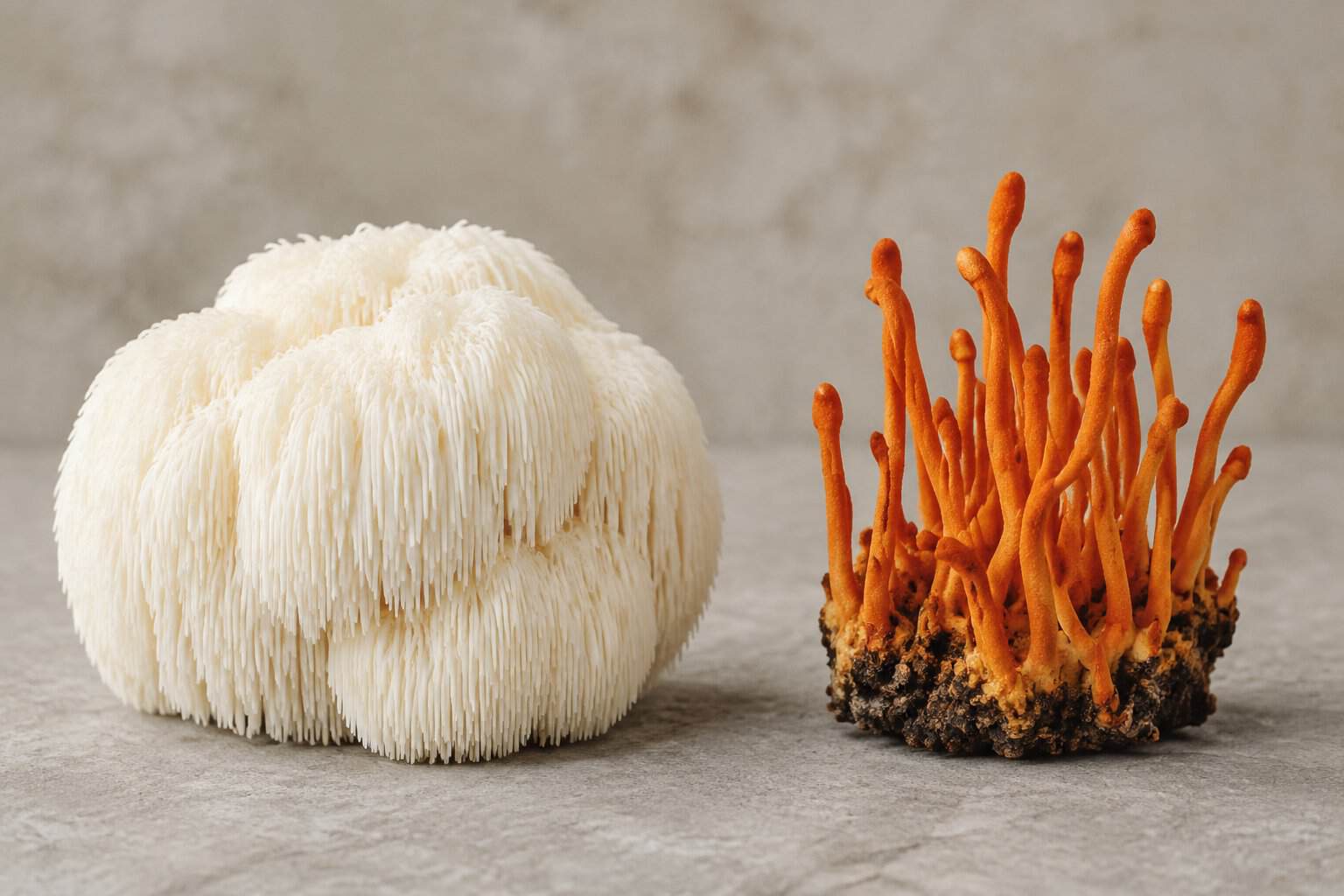
For people comparing lion’s mane vs cordyceps, the useful distinction is mental clarity versus physical energy. Someone seeking support for focus has a different starting point from someone interested in stamina during exercise.
The ingredient name is only part of the decision. Species, mushroom material, and preparation determine how closely a commercial product resembles the products examined in human trials.

Lion’s mane fits a cognitive-support goal, while cordyceps fits an energy-and-endurance goal. Evidence for both remains preliminary, and neither has established benefits across every product sold under its name.
For focus and memory, lion’s mane has the more relevant human evidence. Researchers have examined cognitive performance in older adults with mild cognitive impairment and explored effects in healthy adults. Those populations require separate interpretation: a benefit in adults with impairment does not establish the same benefit in healthy students or working professionals.
Cordyceps research is more closely connected to exercise performance. Trials have assessed aerobic capacity and time to exhaustion, with mixed findings across preparations and participant groups.
For someone choosing mushroom supplements, a clearly defined goal makes evaluation easier. Improved concentration during desk work and improved endurance during training require different outcome measures.
The comparison becomes clearer when intended use is separated from demonstrated outcomes. Marketing terms such as “brain health” and “athletic performance” cover much broader territory than individual trials establish.
| Criterion | Lion’s Mane | Cordyceps |
|---|---|---|
| Primary research focus | Cognitive function | Exercise capacity |
| Species identity | Hericium erinaceus | C. militaris; O. sinensis |
| Compounds of interest | Hericenones; erinacines | Cordycepin; adenosine |
| Human evidence | Small cognitive trials | Small, mixed exercise trials |
| Main translation gap | Lab mechanisms to human benefit | Preparation-specific performance results |
| Product detail to check | Fruiting body or mycelium | Species and cultured material |
Neither option has sufficient evidence to guarantee a noticeable daily effect. A product’s ingredient amounts and preparation provide more useful purchasing information than a broad promise of sharper thinking or greater stamina.

Lion’s mane has encouraging early human evidence for selected cognitive outcomes, alongside extensive laboratory research. Claims about nerve regeneration extend beyond what human trials have established.
Hericium erinaceus is the scientific name for lion’s mane mushroom, recognizable by its hanging white spines. Supplements use its fruiting body, its mycelium, or a combination.
Hericenones are associated mainly with the fruiting body; erinacines have been investigated particularly in cultured mycelium. Medicinal mushrooms contain different bioactive compounds across species and preparations, which limits comparisons based solely on total mushroom weight.
The mushroom part therefore deserves attention on the label. A fruiting-body powder and an erinacine-enriched mycelial preparation have different chemical profiles, even when both list Hericium erinaceus.
Human findings provide a reason for further investigation, with the clearest caution being the small size and specificity of existing trials. Cognitive function includes several separate abilities, so improvement on one assessment does not establish better performance across every aspect of thinking.
In a small trial involving adults with mild cognitive impairment, 3 grams per day of dried lion’s mane fruiting-body powder over 16 weeks improved cognitive assessment scores compared with placebo. Scores declined after supplementation stopped, leaving questions about persistence of benefit.
Small trials in healthy adults have also explored mental focus and cognitive performance. Results across tasks have been mixed, so claims of dependable memory enhancement or immediate mental clarity exceed the evidence.
Laboratory findings involving nerve growth factor (NGF) describe a biological mechanism. NGF helps maintain certain nerve cells, and some lion’s mane compounds influence NGF synthesis or related signaling in experimental models.
Those experiments differ substantially from taking a commercial supplement. Researchers must still establish absorption, effective exposure in relevant tissues, and meaningful clinical outcomes in people.
Human evidence has not established that lion’s mane repairs damaged nerves or reverses neurological disease. Descriptions of neuroprotective effects and nerve health should preserve the distinction between experimental findings and demonstrated treatment benefits.
Cordyceps has preliminary human evidence for selected exercise outcomes, with results that vary by preparation and training status. Claims about oxygen utilization or cellular energy require particular care because much of their mechanistic support comes from laboratory and animal work.
“Cordyceps mushroom” refers to products made from different fungi and cultivation systems. Ophiocordyceps sinensis, formerly called Cordyceps sinensis, has a long history in traditional Chinese medicine and is associated with the wild caterpillar-fungus complex.
Cordyceps militaris is a separate species cultivated commercially. Products also include cultured fungal preparations historically associated with C. sinensis, which require their own identification.
Cordycepin, adenosine, and polysaccharides are compounds of interest, but their concentrations vary. Findings from one species or cultured strain should remain attached to that specific preparation.
Some human trials have reported improvements in exercise capacity, while others have found limited benefit. Participant fitness and the supplement’s composition help explain why the findings resist a single performance claim.
One small trial examined 4 grams per day of a mushroom blend containing Cordyceps militaris. Improvements in VO2 max were reported after three weeks of supplementation, but the blend’s multiple ingredients prevent attribution of the result to cordyceps alone.
VO2 max measures maximal oxygen consumption during exercise. An improvement in that measure does not automatically establish better race times, faster recovery, or a noticeable increase in everyday energy.
Trained athletes should be especially cautious about generalizing findings from less-trained participants. Evidence for stamina remains preparation-specific.
ATP production is central to cellular energy, and cordyceps compounds have been investigated for effects on energy metabolism. Experimental findings involving ATP synthesis provide hypotheses for human testing.
A change in a laboratory marker does not establish improved physical endurance after oral supplementation. The same distinction applies to claims about oxygen use: a plausible mechanism requires confirmation through controlled human outcomes.
Credible performance claims should identify the preparation and the measured result. A broad promise to “increase cellular energy” leaves too much unresolved about the effect a person should expect.
Product transparency provides a stronger basis for choosing a form than the delivery format alone. Combining lion’s mane and cordyceps adds convenience, but evidence for an added benefit from the combination remains limited.
Capsules provide a defined serving without requiring preparation. Powders suit drinks or food, although labels must distinguish whole mushroom powder from a mushroom extract.
Gummies offer a convenient format, with serving size and added ingredients worth checking. Tinctures require attention to the amount of mushroom extract per serving; a dropper measurement alone does not establish compound content.
No format is inherently the most effective. Extraction conditions and verified composition determine what a serving contains, and claims of faster absorption from tinctures require product-specific evidence.
A useful label identifies what the product contains and how much is delivered. Species-level identification is especially important for cordyceps supplements because the common name covers different materials.
The most informative checks include:
Beta-glucans are a class of fungal polysaccharides, but a beta-glucan percentage does not establish cognitive or endurance benefits. An extraction ratio also fails to establish equivalence to a clinical preparation without supporting composition data.
Mycelium deserves a precise description. Some research uses specialized mycelial preparations, while mycelium grown on grain introduces the separate question of how much residual growth substrate remains.
Taking lion’s mane and cordyceps together combines ingredients with different research interests. Reliable human evidence has yet to establish that the pair produces greater benefits than either ingredient alone.
Mushroom blends containing reishi, turkey tail, or chaga introduce further variables. A result from a multi-ingredient product cannot establish the contribution of every mushroom included.
For someone starting supplementation, introducing one product at a time makes tolerability easier to assess. A brief record of the serving, timing, and any symptoms also helps during a discussion with a clinician.
Mushroom coffee offers a familiar way to incorporate functional mushrooms into an existing routine. Its caffeine content remains relevant when interpreting changes in alertness or physical energy.
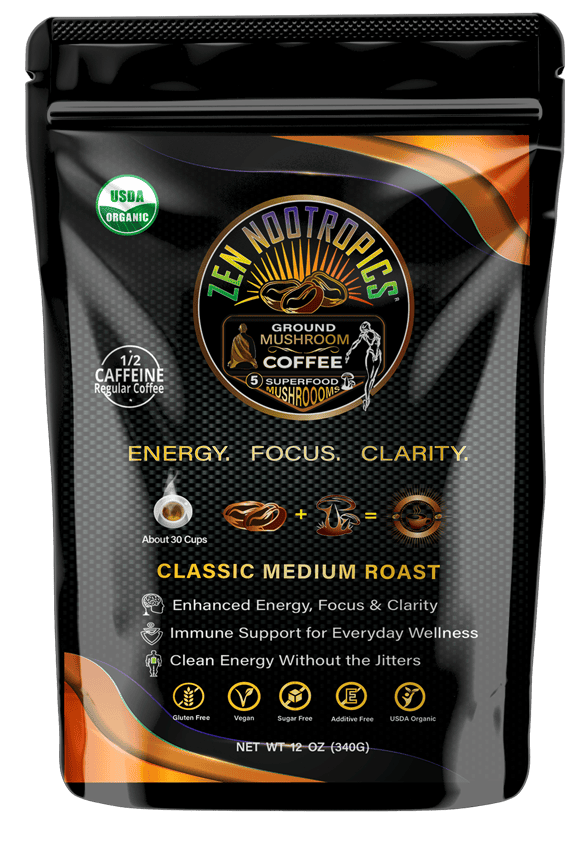
Zen Nootropics’ mushroom coffee combines USDA organic Colombian coffee with Lion’s Mane, Cordyceps, Reishi, Chaga, and Turkey Tail. It comes pre-ground for use in most coffee machines, pour overs, French presses, and some espresso machines, with tasting notes of dark chocolate and cinnamon.
That format suits a coffee-centered routine, while clinical comparisons still require attention to mushroom amounts and preparation. Prospective customers interested in that approach can explore the blend and ask Zen Nootropics about ingredient details before choosing a recurring order.
Dose selection should follow the specific product’s instructions and an individual’s medical circumstances. Published trial amounts describe particular preparations and should not be transferred automatically to every supplement.
Lion’s mane dosage and cordyceps dosage depend on the material being consumed. Whole dried powder, concentrated extract, and a liquid preparation represent different compositions.
The lion’s mane trial amount discussed earlier is a research example, not a general prescription. Increasing a concentrated extract to match the weight of whole mushroom powder creates an inappropriate comparison.
Claims involving immune support, gut health, or digestive health also require their own evidence. A dose examined for cognitive function does not establish an effective dose for immune system support or another wellness goal.
Reported side effects include gastrointestinal discomfort and allergic reactions. New itching or a rash warrants stopping the product and seeking medical advice; breathing difficulty or swelling requires urgent care.
Potential medication interactions deserve attention even where direct human interaction studies are limited. A clinician or pharmacist should assess use alongside anticoagulants, antiplatelet drugs, diabetes medications, or immunosuppressants.
Immune-active effects also raise questions for people receiving treatment that alters immune function. “Medicinal mushrooms” describes a category of interest, not a guarantee of safety with prescription treatment.
People who are pregnant or breastfeeding, children, and those with mushroom allergies should obtain professional advice before supplementation. Safety information is insufficient to establish routine use in these groups.
Medical review is also appropriate for people with autoimmune conditions, transplant recipients, and anyone preparing for surgery. Cancer treatment requires particular caution because supplement decisions belong within the treating team’s care plan.
Persistent fatigue, worsening memory, or new mental health symptoms warrant clinical assessment. Supplement use should not delay investigation of an underlying condition.
Lion’s mane is the more relevant starting point for cognitive support; cordyceps is more closely aligned with research on energy and stamina during exercise. Both functional mushrooms have promising findings alongside substantial limits in human evidence.
A practical purchasing decision starts with the intended outcome, followed by the species and preparation. A transparent label should identify the serving amount and provide meaningful testing information.
For either ingredient, medication review and realistic expectations belong in the decision. A product that resembles a studied preparation still carries no guarantee of the same result for an individual.
Lion’s mane and cordyceps raise different questions about daily use, timing, and suitability. The answers below address practical expectations beyond the ingredient comparison.
Lion’s mane has the more relevant research for everyday focus because human trials have examined cognitive outcomes. Evidence in healthy adults remains limited, and persistent concentration problems deserve assessment for factors such as sleep disruption or medication effects.
Human trials have assessed effects over weeks or months, without establishing a dependable onset time for an individual. A noticeable lift soon after mushroom coffee also has to be interpreted alongside caffeine’s effects.
Daily lion’s mane use carries risks of digestive discomfort and allergic reactions, while long-term safety information remains limited. New symptoms warrant stopping the supplement and discussing continued use with a healthcare professional.
People with a known allergy to cordyceps should avoid it. Those who are pregnant or breastfeeding, transplant recipients, and people taking immunosuppressants should obtain medical clearance before use because safety and interaction questions remain unresolved.
Reishi is marketed primarily for relaxation and stress management, while lion’s mane and cordyceps are associated with cognitive and exercise-related goals. Human evidence for improved sleep quality remains limited, and the term “adaptogens” does not establish a proven benefit or identify a standardized preparation.