Does Mushroom Coffee Break a Fast? Rules by Fast Type
A morning coffee ritual fits more easily into fasting when the drink matches the plan...
Read Article →
Choose coffee-based mushroom coffee if you want to keep your coffee flavor and caffeine while adding functional mushroom extracts; choose pure chicory coffee if you want a roasted, naturally caffeine-free drink. Your main decision is whether you want to keep real coffee in your routine. Both categories also include blends, so the ingredient label gives […]
Choose coffee-based mushroom coffee if you want to keep your coffee flavor and caffeine while adding functional mushroom extracts; choose pure chicory coffee if you want a roasted, naturally caffeine-free drink. Your main decision is whether you want to keep real coffee in your routine. Both categories also include blends, so the ingredient label gives you a clearer answer than the product name alone.
When you compare mushroom coffee vs chicory coffee, you’re choosing between different ingredients and drinking experiences. You can keep a familiar morning brew with a coffee-and-mushroom blend, or explore chicory’s nutty, bittersweet flavor. Your serving size and digestive tolerance help narrow the choice.
The mushroom coffee ingredients guide explains what to check in a coffee-based blend before comparing it with a chicory drink.
In a mushroom coffee vs chicory coffee comparison, the first distinction is whether the drink contains coffee beans or uses roasted roots instead.
You get mushroom coffee by combining a coffee base with functional mushroom extracts or powders. You’ll also find coffee-free mushroom drinks, so check which base your product uses.
With a coffee-based blend, you brew or dissolve regular coffee combined with mushroom ingredients. You keep the caffeine supplied by the coffee, along with much of its roasted flavor. Adding mushrooms does not remove that caffeine.
With coffee-free mushroom drinks, you get a different base, such as cacao, roasted roots, or spices. You should check every ingredient when avoiding stimulants because cacao and tea contribute caffeine. A clear caffeine statement helps you compare these products with regular coffee.
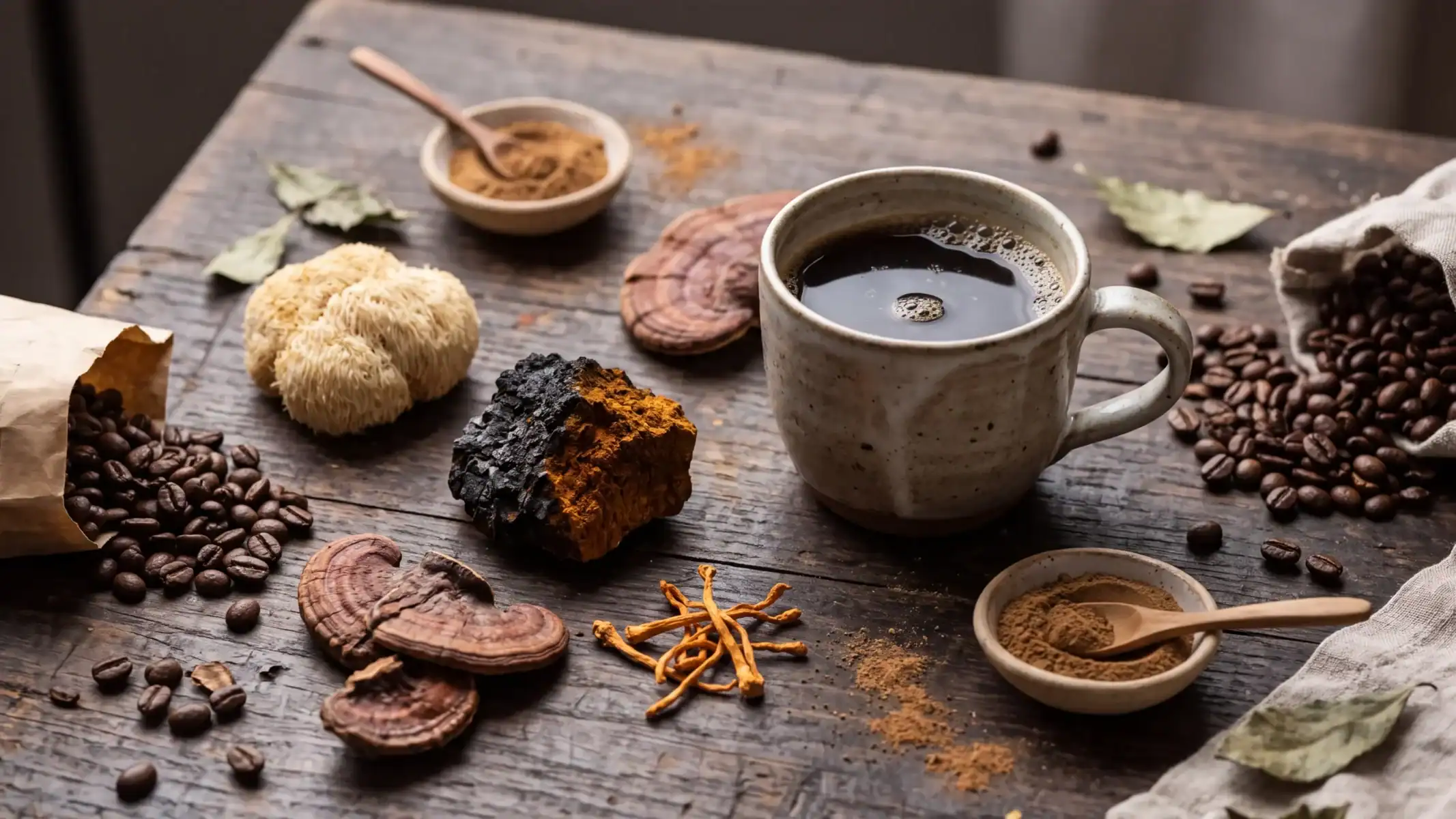
You’ll commonly see lion’s mane, cordyceps, reishi, chaga, and turkey tail on mushroom coffee labels. You might also see them called medicinal mushrooms, a term tied to traditional use that does not establish a medical benefit.
You’ll encounter lion’s mane in focus-oriented blends and cordyceps in energy-focused products. Reishi appears in relaxation formulas, while chaga and turkey tail feature in immune-support blends. Treat these descriptions as intended uses, then check the amounts and evidence behind the finished product.
For mushroom coffee vs chicory coffee, read the ingredients before assuming either drink is caffeine-free.
You get chicory coffee from roasted chicory root, brewed alone or mixed with coffee. Your cup’s caffeine and flavor change when coffee beans enter the blend.
To make a traditional chicory drink, you steep or brew dried, roasted, ground chicory root in water. Roasting develops the dark color and toasted flavors associated with the drink. You then separate the grounds from the liquid, much as you would with ground coffee.
You can also buy soluble chicory products that dissolve in water. These save you the filtering step. Check the preparation directions because ground root and instant chicory require different methods.

With pure chicory, you get a drink made without coffee beans. Its root base contains no caffeine of its own. Check for added ingredients if avoiding caffeine is your goal.
With a coffee-and-chicory blend, you get caffeine from the coffee portion. You’ll also taste a combination of coffee’s roast character and chicory’s bittersweet notes. Look for a disclosed blend ratio and caffeine amount when comparing products.
Caffeine in mushroom coffee vs chicory coffee depends on the actual coffee base, recipe, and serving size.
You get no naturally occurring caffeine from pure chicory, while coffee-based mushroom blends contain caffeine from their coffee base. For mixed products, compare the stated caffeine content per prepared serving.
You should compare equal serving sizes and follow each product’s brewing directions. A larger cup or a heavier scoop changes your caffeine intake. The coffee variety and brewing method also affect the amount you drink.
You cannot assume every mushroom coffee has less caffeine than regular coffee. That claim requires product-specific figures under comparable preparation conditions. You should also check coffee-and-chicory blends individually because the proportion of coffee varies.
If you have caffeine sensitivity, you might notice jitters or anxiety after a serving that feels comfortable to someone else. Your response also changes with timing and other caffeine you consume. Track your full day’s intake, including tea and energy drinks.
For sleep concerns, choose an earlier serving or a verified caffeine-free option. You should not expect mushroom extracts to cancel caffeine’s stimulating effects. If you reduce a regular caffeine habit, tapering your intake helps limit withdrawal headaches and fatigue.
Flavor in mushroom coffee vs chicory coffee is subjective, and added milk or sweeteners can change either cup.
You’ll get a more familiar coffee taste from a coffee-forward mushroom blend, while pure chicory gives you a distinct roasted-root flavor. Your roast level and brewing strength shape the bitterness of either cup.
With mushroom coffee, you’ll encounter descriptions ranging from coffee-forward to earthy or woody. The mushroom species, extract amount, and coffee roast influence that balance. You should use a product’s tasting notes as a starting point for choosing your first bag.
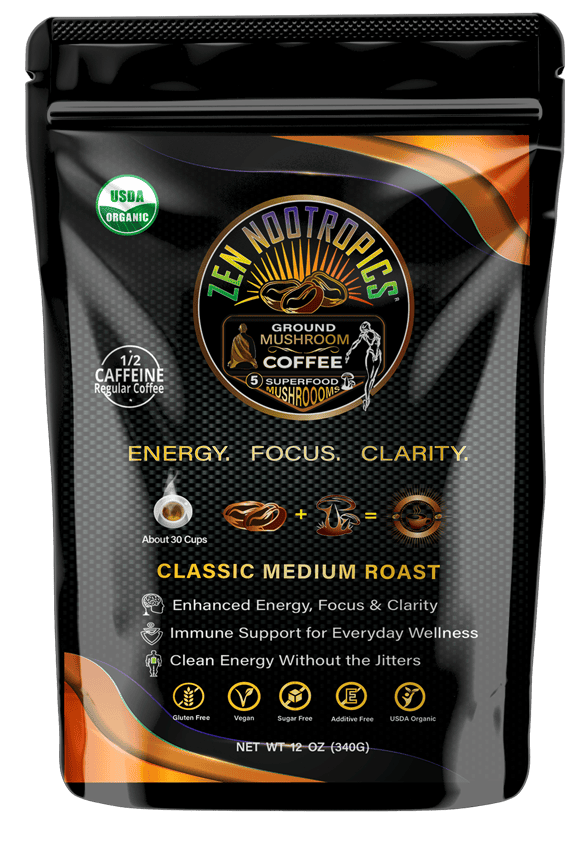
For example, Zen Nootropics describes its blend as bold, complex, and smooth, with tasting notes of dark chocolate and cinnamon. You get USDA organic Colombian coffee combined with five functional mushrooms. Those descriptions apply to that blend, not every mushroom coffee.
With roasted chicory root, you’ll commonly encounter nutty, toasted, and bittersweet flavor descriptions. You should expect a different aroma from coffee, even when the color looks familiar. A strong brew also brings a more pronounced bitter finish.
If your first cup tastes too intense, reduce the amount of chicory within the product’s directions. You can also dilute the prepared drink with water. Start with the maker’s recommended strength before deciding whether its flavor suits you.
You can soften the perceived bitterness of either drink with milk or an unsweetened plant-based alternative. Your choice also changes the body and nutrition of the cup. Sweetened creamers add sugar, so check their labels separately.
For extra flavor, try cinnamon for a warm aroma or ginger for a sharper, spicy note. Add a small amount and adjust to taste. You should assess your drink before adding sweeteners if you want a useful comparison between the bases.
You should check the base ingredients, serving amounts, and quality disclosures before relying on wellness claims. Your label should help you identify what you’re consuming and how much goes into each cup.
Look for named mushroom species and the amount of functional mushroom extracts per serving. If you see only a total blend weight, ask how much of each mushroom it contains. Also check whether the ingredients include fruiting bodies, mycelium, or mycelium grown with grain.
You can request testing information for identity, heavy metals, and microbial contamination. Disclosed beta-glucans give you more specific composition information than a broad “polysaccharides” claim. An extraction ratio alone does not tell you whether a serving provides a clinically useful amount.
You should keep composition claims separate from health outcomes. Adding cordyceps and lion’s mane to coffee changes its measured bioactive composition. That finding does not establish that your finished drink improves cognitive performance or prevents illness.
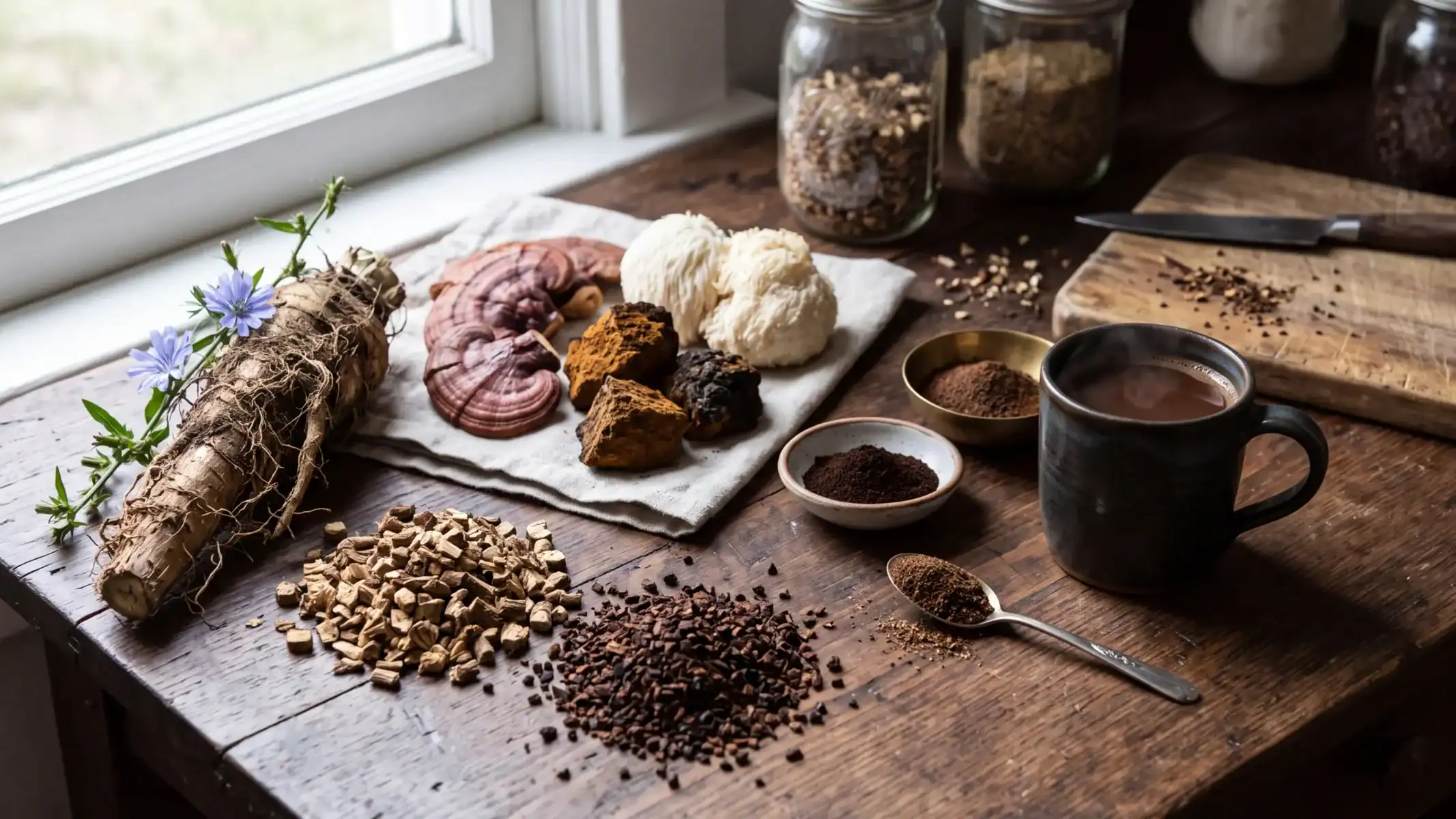
You should distinguish roasted chicory beverages from isolated chicory root fiber. Your brewed drink’s inulin content depends on processing and preparation. A cup of chicory coffee does not automatically provide the same amount used in research on prebiotic inulin.
If you want digestive support, look for a stated fiber amount per prepared serving. Chicory root contains inulin associated with prebiotic effects, but you should avoid carrying that claim over to an unspecified beverage dose. Your digestive health response also depends on how well you tolerate fermentable fiber.
Treat claims about focus, stress management, and immune support as claims that need product-specific evidence. You should look for human research using a comparable ingredient, preparation, and dose. Evidence about a concentrated extract does not establish the same result for a brewed blend.
You’ll also see terms such as adaptogens, adaptogenic mushrooms, and antioxidants. These terms alone do not tell you how strongly a product will affect your health. For mushroom coffee benefits, prioritize clear amounts and realistic expectations over promises of guaranteed results.
When choosing mushroom coffee vs chicory coffee for convenience, compare ground, instant, and concentrate formats rather than assuming one category is quicker.
You can prepare either drink with familiar equipment when you choose a compatible format. Ground blends require brewing and filtering; soluble powders require mixing.
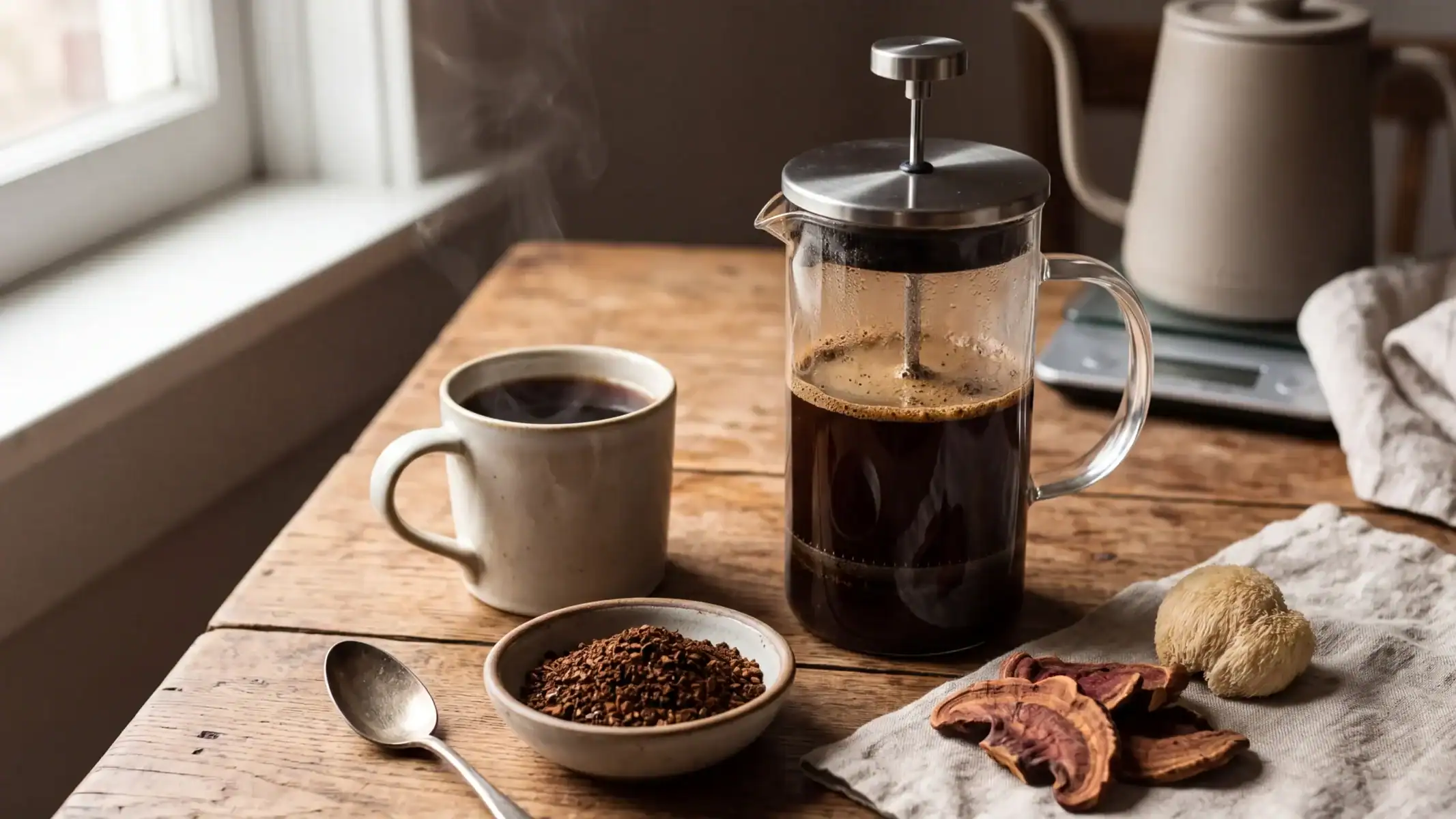
For a ground mushroom coffee blend, follow the package’s coffee-to-water directions and equipment guidance. You can use a drip machine or French press when the grind suits that method. Stirring ground coffee into water leaves grounds in your cup.
Zen Nootropics offers pre-ground coffee for most coffee machines, pour overs, French presses, and some espresso machines. You should check your machine’s requirements before using a pre-ground blend for espresso. For ground chicory, follow its own brewing directions because root particles behave differently from coffee grounds.
With instant mushroom drinks or soluble chicory, you mix the measured powder into water or milk. Follow the label’s temperature guidance and stir thoroughly. You can use a frother if the mixture clumps or you want a foamier texture.
With chicory concentrates, measure the recommended amount before diluting. Check whether the concentrate includes coffee, sweeteners, or other ingredients. A ready-to-mix format saves brewing time, but you still need to measure each serving.
To compare cost per cup, divide the package price by its stated servings. Include shipping and the cost of any additions you use each day. If you make stronger servings, your package will yield fewer cups.
You should also compare preparation time and cleanup. Instant powders suit a kettle-only setup, while ground products fit an existing coffee routine. For recurring orders, check delivery frequency and cancellation terms before choosing a subscription.
Choose a coffee-based mushroom blend for a familiar caffeinated brew, or pure chicory for a roasted drink without coffee-derived caffeine. Your digestive tolerance and ingredient preferences help refine that choice.
Use this table to narrow your choice by the drink you want each morning. The mushroom column describes coffee-based blends; coffee-free mushroom drinks need their own label check. The chicory column separates pure root from coffee-and-chicory blends where needed.
| Your priority | Mushroom coffee | Chicory coffee |
|---|---|---|
| Morning stimulation | Caffeine from coffee | None in pure chicory |
| Familiar coffee flavor | Coffee-forward options | Roasted, nutty root |
| Functional mushrooms | Species vary by blend | Only when added |
| Caffeine avoidance | Verify the formulation | Choose pure chicory |
| Prebiotic fiber | Check added ingredients | Check inulin per serving |
| Existing coffee equipment | Compatible ground blends | Compatible ground chicory |
If you enjoy regular coffee and want mushroom ingredients, start with a blend whose coffee and species are clearly named. If caffeine sensitivity drives your choice, start with verified caffeine-free chicory. You can then compare taste and comfort using the recommended serving.
If you have a sensitive gut, check for inulin and other fermentable ingredients in either category. With inulin sensitivity, you might experience gas, bloating, or loose stools. Begin with a small serving and stop if symptoms persist.
If you have acid reflux, assess your response to the finished drink. Coffee, serving size, and rich additions affect individual symptoms, and a “low-acid” label does not guarantee comfort. You should discuss recurring reflux with your clinician before using either drink as a daily substitute.

Ask your clinician before adding concentrated mushroom products if you take prescription medicines or have a chronic condition. This is especially important with blood thinners, immune-suppressing medicines, or medicines for blood sugar. Bring the ingredient list and serving directions to that conversation.
If you have kidney disease or a history of kidney stones, ask specifically about chaga because of oxalate concerns. With reishi, discuss potential interactions involving bleeding risk. You should also seek advice during pregnancy or breastfeeding, before surgery, or if you have mushroom or chicory-related allergies.
The best mushroom coffee vs chicory coffee choice comes down to the label, your caffeine preferences, taste, and how you prepare each drink.
Choose mushroom coffee when you want coffee in your morning routine with added functional mushrooms. Choose pure chicory coffee when your goal is a roasted, caffeine-free cup. For either choice, check the ingredients and follow the stated serving directions.
If a coffee-based blend fits your goals, explore Zen Nootropics Mushroom Coffee for its organic Colombian coffee and five-mushroom blend. You can compare its pre-ground format with your current brewing setup before placing an order.
You can narrow your choice further by checking common questions about blends, nutrition, and daily use.
You get a naturally caffeine-free drink when you choose pure chicory without caffeine-containing additions. If your chicory coffee includes coffee beans, tea, or cacao, check its stated caffeine content.
You can combine mushroom coffee and chicory if you tolerate both ingredients and follow their serving guidance. Start with a small amount of chicory so you can assess the added bitterness and digestive effects.
You should not expect proven weight loss from either drink as a category. Replacing a sugary beverage with an unsweetened cup reduces your calorie intake, but inulin research does not establish a weight-loss benefit for every chicory drink.
You’ll get the clearest nutrition comparison from each product’s label at the serving size you prepare. Milk, sugar, creamers, and added fats change your cup’s calories, while a brewed root drink has a different nutrition profile from eating the root itself.
You can consider daily chicory coffee if you tolerate it and have no relevant medical restriction or allergy. Reduce your serving or stop if you develop digestive symptoms, and seek advice during pregnancy or breastfeeding.
You face possible digestive discomfort, allergic reactions, and ingredient interactions, along with caffeine effects in coffee-based blends. If you have caffeine sensitivity, check the amount per serving and avoid assuming the mushrooms will prevent jitters or sleep disruption.