Does Mushroom Coffee Break a Fast? Rules by Fast Type
A morning coffee ritual fits more easily into fasting when the drink matches the plan...
Read Article →
Mushroom coffee suits people who want coffee with added functional mushroom ingredients; decaf coffee suits people whose main goal is caffeine reduction because its beans undergo a caffeine-removal process. For a more balanced daily ritual, the useful distinction is what each drink changes: mushroom coffee adds ingredients, while decaf reduces a stimulant. The mushroom coffee […]
Mushroom coffee suits people who want coffee with added functional mushroom ingredients; decaf coffee suits people whose main goal is caffeine reduction because its beans undergo a caffeine-removal process. For a more balanced daily ritual, the useful distinction is what each drink changes: mushroom coffee adds ingredients, while decaf reduces a stimulant.

The mushroom coffee vs decaf coffee decision starts with the desired morning experience. Both preserve a familiar coffee routine, but a mushroom blend’s caffeine content depends on its coffee base and serving size. A product labeled “decaf mushroom coffee” combines both approaches.
Among coffee alternatives, these options deserve separate consideration for flavor, preparation, and ingredient tolerance. Neither category inherently guarantees a caffeine-free cup.
The mushroom coffee ingredients and brewing guide explains what is added to mushroom coffee and how different blends are prepared.

Decaf is the more direct choice for substantial caffeine reduction, while mushroom coffee requires a product-specific caffeine check. The amount of coffee used and the prepared serving determine the comparison.
Mushroom coffee contains coffee blended with mushroom ingredients, including powders or extracts. Adding those ingredients does not remove caffeine already present in the coffee.
Decaf coffee starts with beans processed to remove most of their caffeine. These definitions overlap, allowing a blend to contain both decaffeinated coffee and functional mushrooms.
| Criterion | Mushroom coffee | Decaf coffee |
|---|---|---|
| Defining feature | Added mushroom ingredients | Caffeine removal |
| Caffeine level | Product-specific | Low, with residual caffeine |
| Mushroom ingredients | Included | Only when added |
| Flavor | Coffee with possible earthy notes | Roast-dependent coffee flavor |
| Preparation | Ground blends or instant mixes | Standard coffee formats |
| Main buying check | Extract details and caffeine | Decaf label and process |
A useful comparison requires the declared caffeine per serving and the serving instructions for each product. “Low-caffeine coffee” on a package provides less precision than a milligram amount tied to a defined portion.
For ground blends, the amount of grounds and brewing method affect the prepared cup. For instant mixes, adding more water to the same packet changes concentration while leaving the packet’s total caffeine unchanged.
When caffeine information is missing from the label, the manufacturer is the appropriate contact for a product-specific answer. A “smooth energy” claim does not establish a measurable caffeine reduction.
Decaffeination removes caffeine from green coffee beans before roasting. Commercial methods use water-based processing, carbon dioxide, or solvents such as ethyl acetate or methylene chloride to separate caffeine from the beans.
The Swiss Water Process uses water and filtration to remove caffeine without those extraction solvents. The process name describes how the coffee was treated; residual caffeine still requires attention for people with strict intake limits.
Roast quality and freshness also influence the finished cup. A decaffeination method alone does not establish how a particular coffee will taste.
Decaf mushroom coffee combines a decaffeinated coffee base with mushroom ingredients. It serves people who want added mushrooms while keeping their coffee-derived caffeine intake low.
The label should explicitly identify the coffee as decaffeinated. Words such as “calm,” “balance,” or “reishi” describe positioning or ingredients and provide no assurance about caffeine content.
A coffee-free mushroom drink belongs to a separate category. Its full ingredient list still needs checking for other caffeine-containing ingredients.

Functional mushrooms add compounds of scientific interest, while decaf retains coffee compounds beyond caffeine. Evidence for a specific commercial mushroom coffee blend requires more than findings about an isolated mushroom extract.
Functional mushrooms, also called medicinal mushrooms, supply compounds such as beta-glucans. Medicinal mushroom extracts differ in composition according to species and extraction method.
Common ingredient positioning includes:
These associations describe areas of interest, not guaranteed outcomes from a cup of coffee. Human evidence for finished mushroom coffee blends remains limited, and findings from laboratory work do not establish the same effects in everyday use.
The amount of each extract also affects whether a product resembles the preparation examined in research. A blend naming several mushrooms without individual quantities offers limited information for that comparison.
Decaf retains non-caffeine coffee compounds, including polyphenols such as chlorogenic acids. Caffeine removal leaves a beverage with non-caffeine compounds of potential health interest.
The amount in the cup varies with the beans and processing, including roasting and brewing. Antioxidant content alone does not establish that one category produces better health outcomes.
For buyers choosing between these drinks, decaf remains a coffee-based option with compounds beyond caffeine. Mushroom coffee adds another set of ingredients whose quantities and preparation deserve separate evaluation.
Mushroom coffee introduces additional ingredients that require attention to allergies, tolerance, and medication use. Concentrated extracts warrant particular care because their composition differs from an ordinary serving of culinary mushrooms.
People taking prescription medication should discuss the specific ingredients with a clinician or pharmacist, especially when treatment involves blood clotting, blood sugar, or immune function. Pregnancy, breastfeeding, and kidney disease also warrant individualized advice before regular use of mushroom supplements.
Decaf retains some caffeine, and coffee itself remains a possible digestive trigger for sensitive individuals. People reducing a substantial caffeine habit should also account for withdrawal symptoms, including headaches and fatigue, during the transition.
Coffee taste depends heavily on the beans and roast, with mushroom ingredients adding another influence. Both categories offer familiar brewing formats, so the preparation method should match the product’s instructions.
A mushroom blend with a substantial coffee base delivers a recognizable coffee-forward flavor. Mushroom extracts contribute earthy or bitter notes in some formulations, with their prominence depending on the ingredients and proportions.
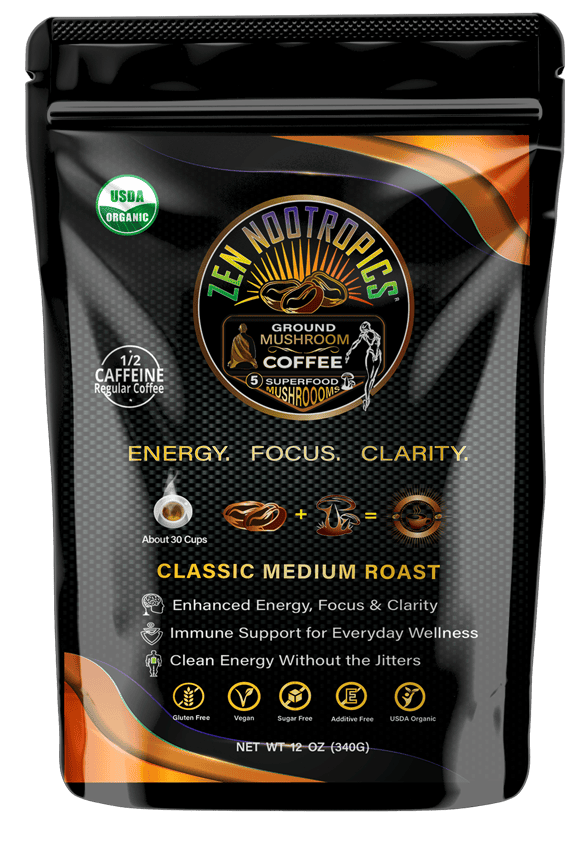
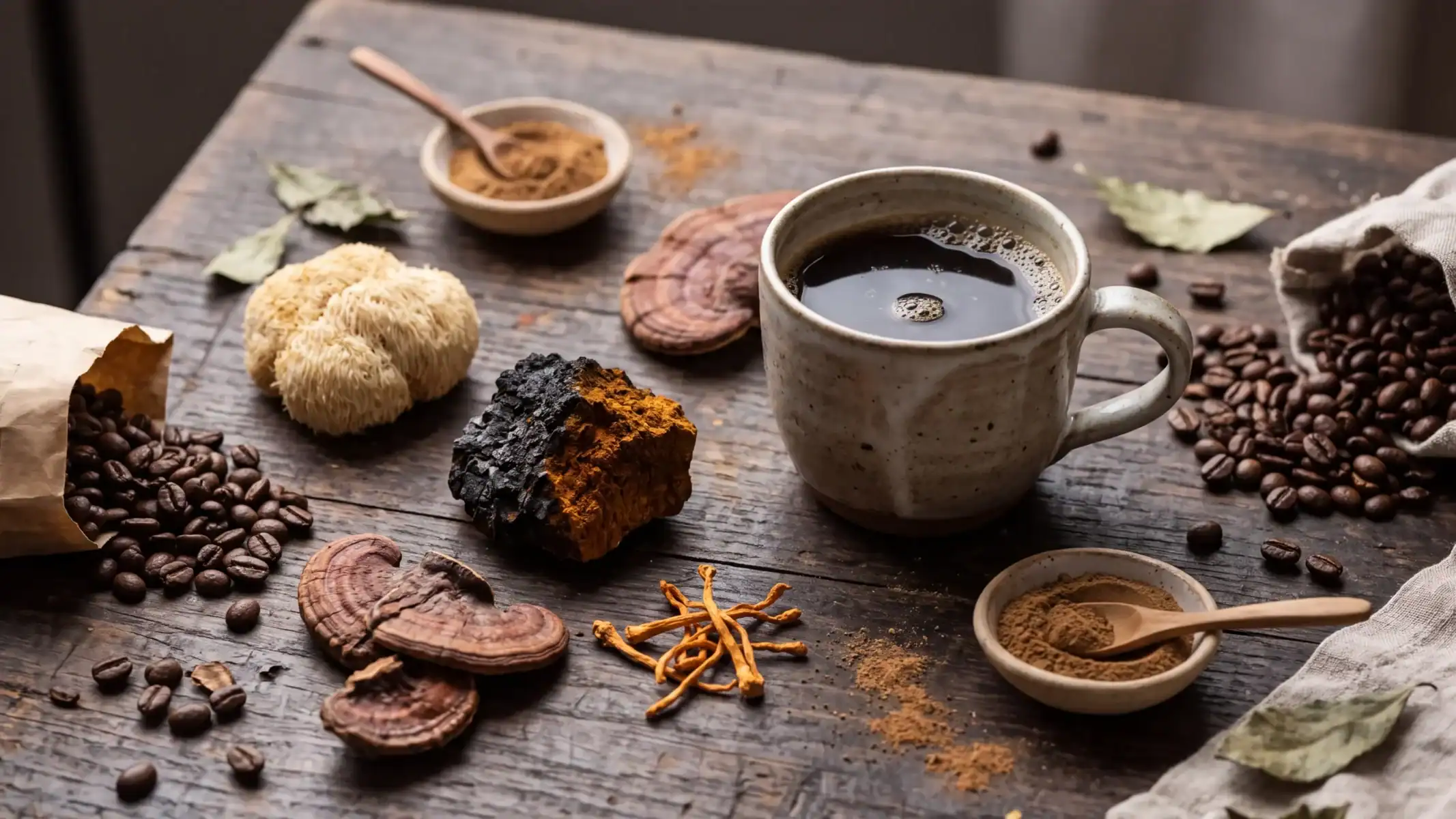
Zen Nootropics describes its blend as bold, complex, and smooth, with tasting notes of dark chocolate and cinnamon. It combines USDA organic Colombian coffee with Lion’s Mane, Cordyceps, Reishi, Chaga, and Turkey Tail.
Decaf flavor also spans a broad range, from lighter profiles to darker roasts. Comparing drinks with similar roast styles and the same milk or sweetener gives a clearer sense of the ingredient differences.
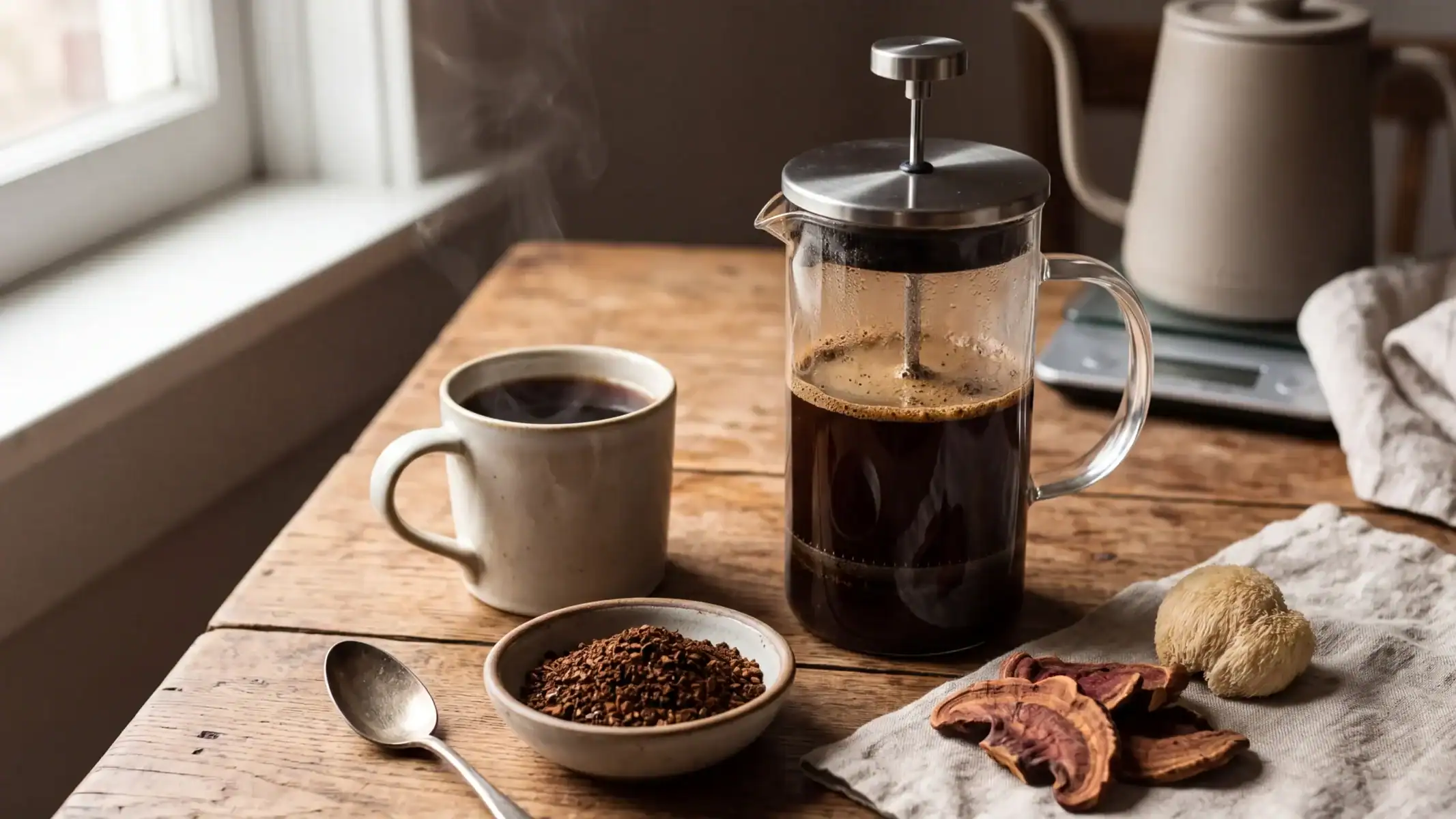
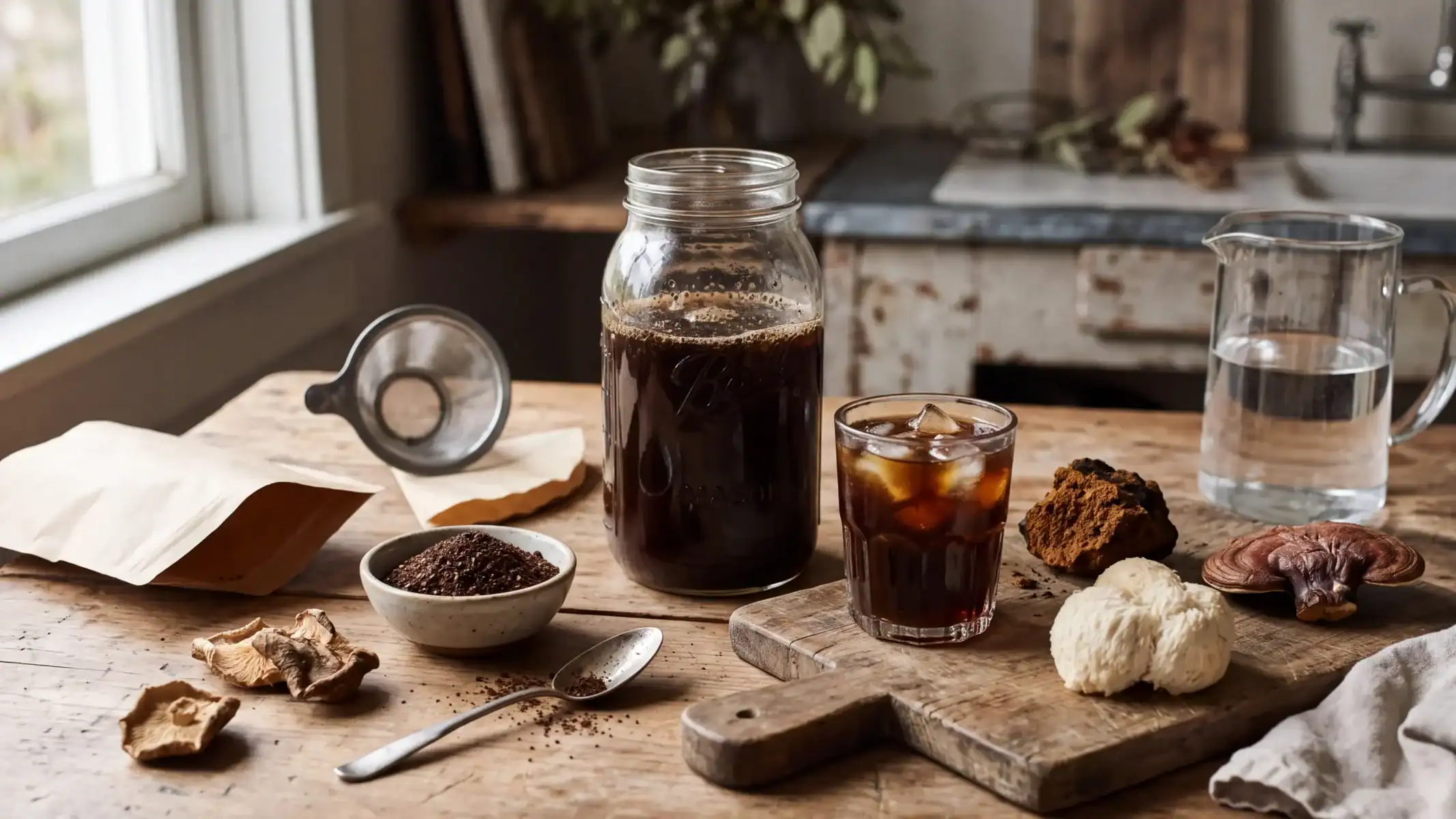
Ground mushroom coffee requires brewing and separation of the grounds. Instant mixes dissolve or disperse in water, although some mushroom ingredients leave sediment.
Zen Nootropics offers pre-ground coffee ground for use in most coffee machines, pour overs, French presses, and some espresso machines. Espresso users should check their machine’s requirements because grind compatibility affects extraction.
Decaf comes in familiar formats, including whole beans and ground coffee. For either category, following the labeled coffee-to-water ratio provides a sensible starting point before adjusting strength.
The most useful buying checks are ingredient transparency, serving instructions, and the total cost of the prepared drink. Product names alone leave important questions about caffeine and mushroom quantities unanswered.
The ingredient list should identify the coffee base and the mushrooms included. A decaf designation deserves explicit confirmation when caffeine reduction drives the purchase.
For mushroom ingredients, useful details include the species, quantity per serving, and whether the product uses powder or mushroom extracts. Clear testing information helps buyers assess identity and contaminant screening.
A proprietary blend’s total weight provides less detail than individual ingredient amounts. Extract ratios also require context: a ratio alone does not establish a clinically effective dose or a particular benefit.
Price per serving should come from the current purchase price divided by the labeled number of servings. Shipping charges and the quantity used for each prepared cup belong in the calculation.
A large mug prepared with extra scoops costs more than the label’s standard serving. Subscription pricing should also be assessed alongside renewal frequency and cancellation terms.
Zen Nootropics advertises Subscribe & Save $10+ with free shipping, with the option to cancel subscription anytime. It also offers free shipping with the purchase of two or more items. These terms help establish delivered cost without assuming a price per serving.
Decaf coffee contains coffee beans that have undergone caffeine removal. Chicory coffee uses roasted chicory root, either on its own or blended with coffee.
Pure chicory is naturally caffeine-free, while a chicory-and-coffee blend takes on caffeine from its coffee component. Mushroom drinks follow the same ingredient-level logic when they include coffee, tea, or cacao.
People exploring mushroom-containing options can consider Zen Nootropics’ mushroom coffee alongside their preferred brewing format. A caffeine-sensitive buyer should confirm the selected blend’s caffeine information before ordering.
Decaf coffee is the straightforward fit for a routine centered on reducing caffeine. Mushroom coffee fits a routine centered on adding functional mushroom ingredients while retaining a coffee-based drink.
Decaf mushroom coffee brings those preferences together when the product explicitly uses decaffeinated beans. Its suitability still rests on the ingredient quantities and the drinker’s tolerance.
A practical purchase starts with the caffeine declaration, then the coffee format and mushroom label. Current serving counts and delivery terms complete the cost comparison.
Mushroom coffee is not automatically lower in caffeine than decaf. A caffeinated coffee base retains caffeine after mushrooms are added, so the comparison requires the declared amount per prepared serving.
Decaf mushroom coffee retains the potential associated with its added mushroom ingredients when their formulation and quantities match those of the caffeinated version. The coffee’s decaf status does not establish the effectiveness of those ingredients, and finished-blend human evidence remains limited.
Mushroom coffee adds ingredient-specific allergy and interaction considerations, and its caffeine level requires a separate check. Buyers also need to assess extract quantities and price per serving, especially when choosing a blend for a particular wellness goal.
Decaffeinated coffee retains residual caffeine after processing. People who require strict caffeine avoidance should confirm product-specific information and discuss suitable drinks with their clinician.
RYZE Mushroom Coffee belongs to the mushroom-containing coffee category; that category name does not establish decaffeination. The specific product’s current coffee-base description and caffeine declaration determine whether it fits a low-caffeine routine.