Does Mushroom Coffee Break a Fast? Rules by Fast Type
A morning coffee ritual fits more easily into fasting when the drink matches the plan...
Read Article →
Reishi mushroom coffee is regular coffee blended with reishi mushroom powder or extract, sometimes alongside other functional mushrooms such as Lion’s Mane or Cordyceps. You brew it like any other ground coffee, and it fits into the same morning routine you already have. Many wellness-minded coffee drinkers choose it because it lets them add a […]
Reishi mushroom coffee is regular coffee blended with reishi mushroom powder or extract, sometimes alongside other functional mushrooms such as Lion’s Mane or Cordyceps. You brew it like any other ground coffee, and it fits into the same morning routine you already have. Many wellness-minded coffee drinkers choose it because it lets them add a traditional mushroom to a habit they enjoy every day.
Reishi mushroom coffee is a caffeinated coffee blend that adds reishi to your cup; it suits you if you want a flavorful morning ritual with a functional mushroom, as long as you treat reishi’s benefits as early research and still count the caffeine. Reishi has a long history in traditional Asian medicine, and human studies on specific reishi extracts exist. Those studies used measured doses, so they tell you what reishi preparations have done, not what a given cup will do.
Once you know how reishi gets into coffee, what the research covers, and how to read a label, you can pick a blend with clear eyes and enjoy it for what it is.
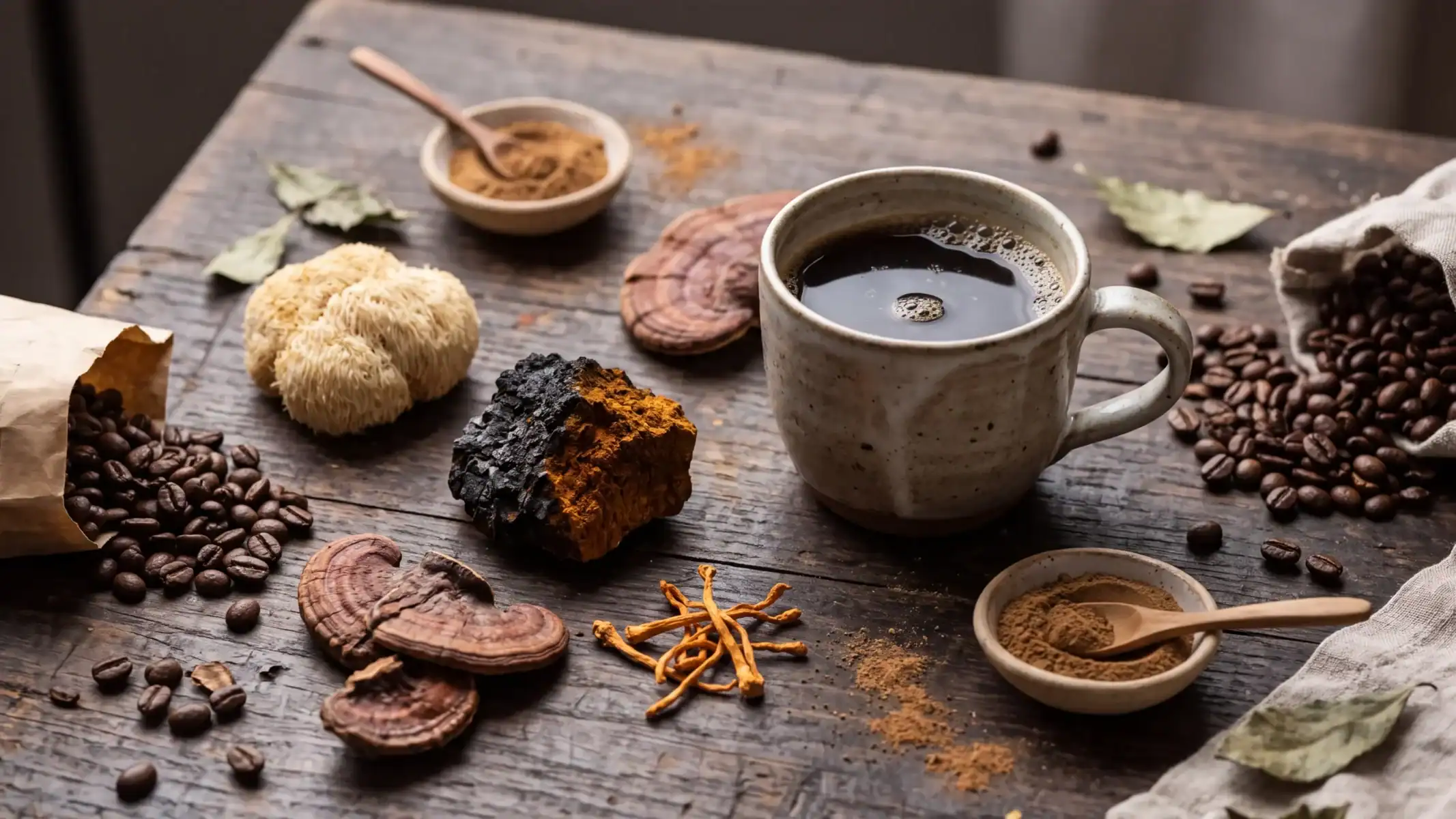
Reishi mushroom coffee is ground or instant coffee mixed with a reishi ingredient, usually a dried extract or powder. Some blends feature reishi alone, while many pair it with other mushrooms chosen for different traditional uses, such as immune support or focus.
Reishi is a woody, fan-shaped fungus with a shiny, varnished cap. Its scientific name is Ganoderma lucidum, and it is also called lingzhi. Reishi has been used in traditional Chinese medicine for more than 4,000 years for fatigue, cough, and longevity.
Researchers are most interested in two groups of compounds in reishi. Beta-glucans are complex carbohydrates linked to immune activity in lab studies. Triterpenes are bitter compounds that give reishi much of its sharp taste.
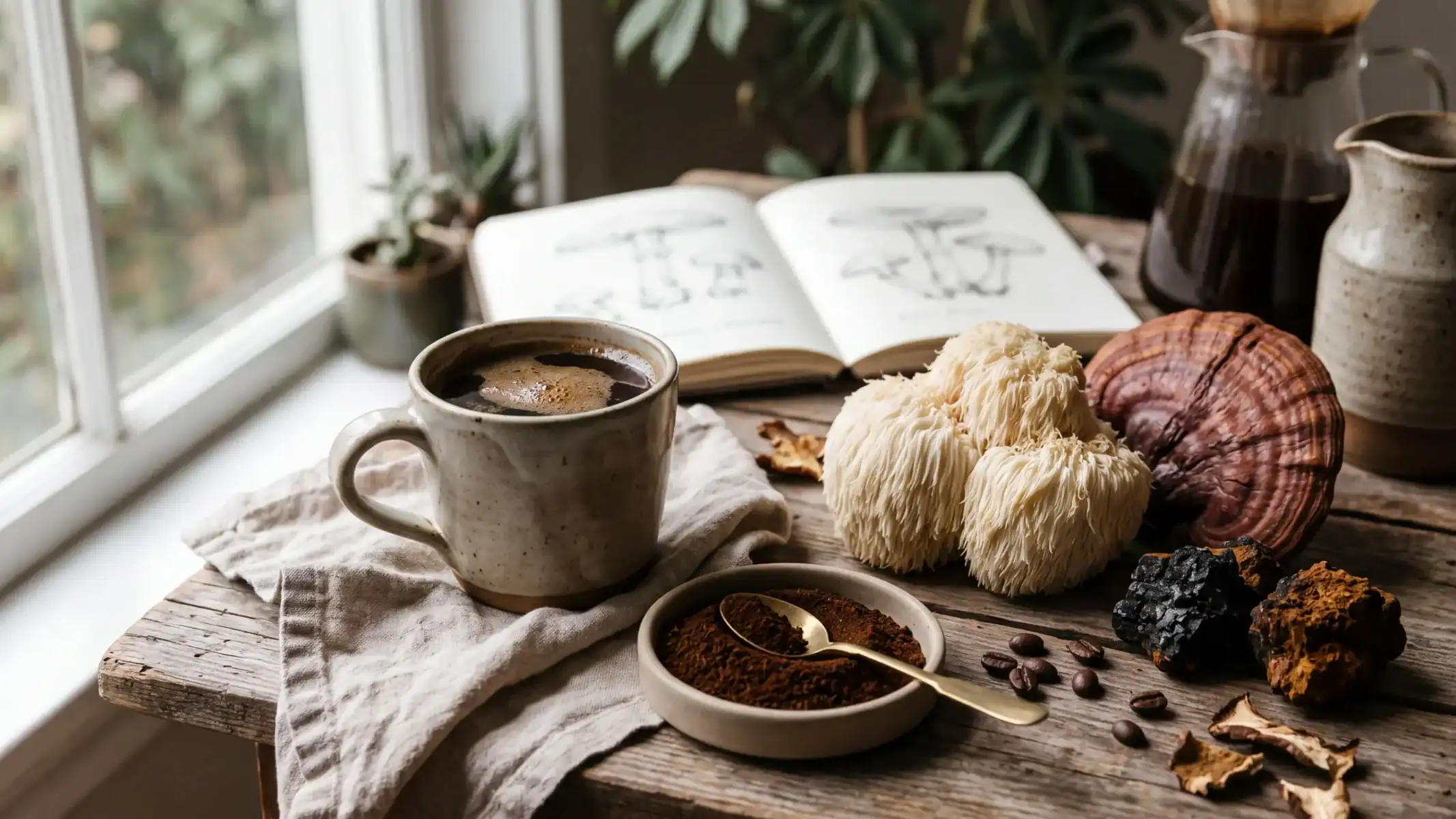
Reishi is too tough to eat like a cooking mushroom, so makers dry it and turn it into a fine powder. Many brands go a step further and use an extract, made by soaking the mushroom in hot water, alcohol, or both to pull out its compounds. The extract is then dried and mixed into ground coffee or instant coffee.
With pre-ground blends, the mushroom powder brews along with the coffee. With instant blends, everything dissolves in hot water.
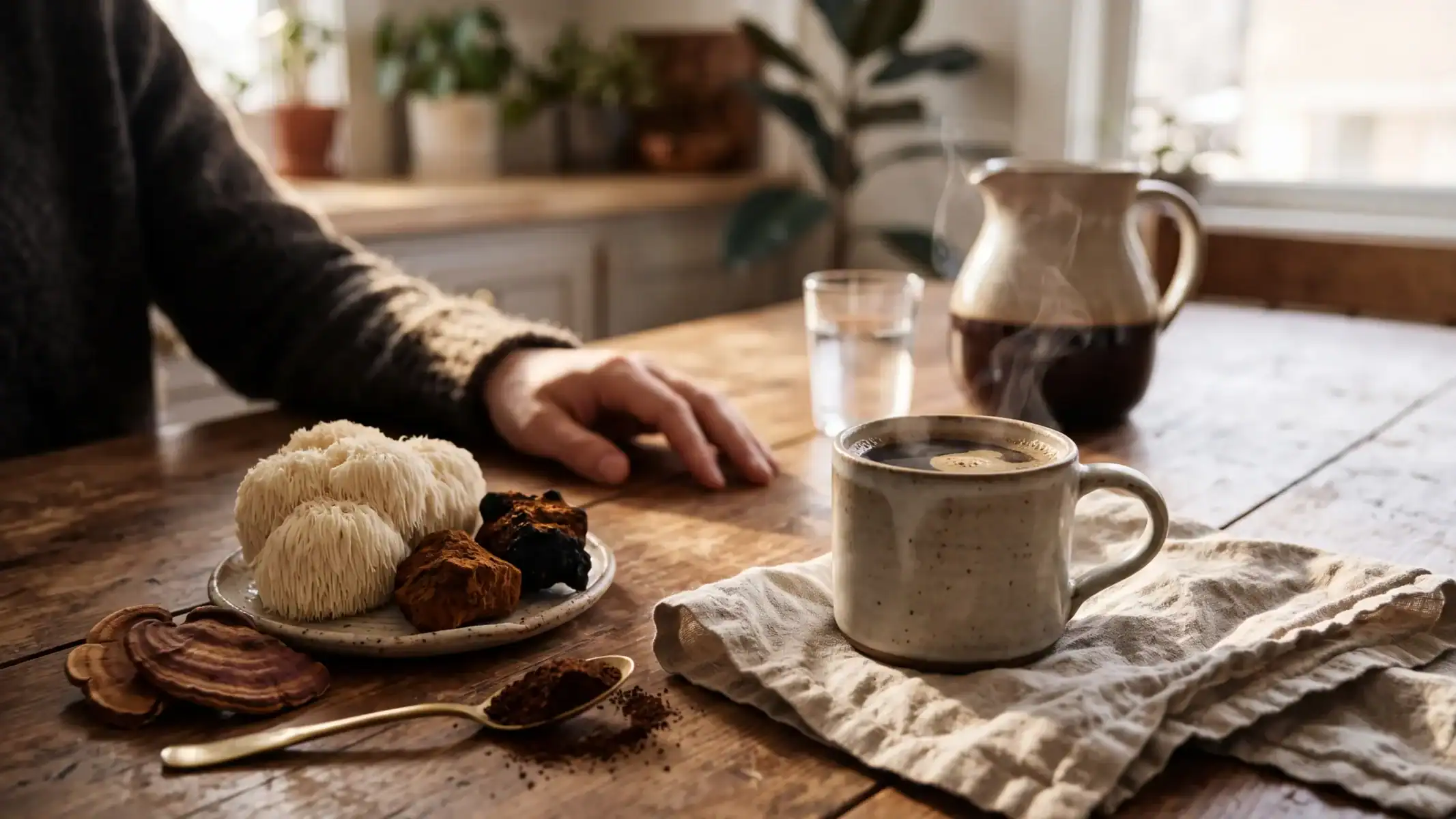
A reishi-forward coffee centers on the mushroom most linked to calm and balance in traditional use. Multi-mushroom blends spread the formula across several species. Lion’s Mane is tied to focus, Cordyceps to energy, Chaga to antioxidants, and Turkey Tail to gut and immune interest.
Blends give you variety in one cup. The trade-off is that each mushroom gets a smaller share of the formula, which makes disclosed amounts worth checking.
Human research on reishi shows some promising signals for specific extracts, mainly in small trials, and no trials have tested finished reishi coffee. The fair way to read reishi coffee claims is to match each claim to the type of reishi and dose that was studied.
Small clinical studies suggest reishi extracts may help with urinary symptoms in men, mild blood sugar and cholesterol changes, and anxiety. Memorial Sloan Kettering Cancer Center also notes that randomized trials did not support reishi for lowering cardiovascular risk in people with type 2 diabetes. Another trial in fibromyalgia found no effect on blood measurements.
Immune findings are mixed. In one six-week trial of young football players, 20 grams a day of reishi raised one immune cell marker at day 21, yet changes over time were not significant. That is a large daily amount compared with what any coffee blend carries.
Most studies use standardized extracts at grams per day. Clinical trials have used a reishi polysaccharide extract at up to 5.4 grams daily, equal to about 81 grams of the whole mushroom. A coffee blend usually includes far less, spread across one or more servings.
Brewing changes things too. Hot water pulls some compounds out of the grounds while others stay in the filter. Unless a product’s form and amount match a studied preparation, you can’t carry study results straight into your mug.
Words like “supports relaxation” or “immune support” describe traditional uses and early research, not proven outcomes. Reishi does not treat insomnia or anxiety, and it does not prevent disease. It is also paired here with caffeine, which works against calm for many people.
A helpful habit is to enjoy reishi coffee as a ritual you like, and to judge any change you notice by how you feel over time, not by a label promise.
Reishi mushroom coffee and regular coffee share the same base, so the main differences are the added mushroom, a slightly different flavor, and the price. Caffeine, brewing, and daily limits stay much closer than marketing suggests.
| Factor | Reishi Mushroom Coffee | Regular Coffee |
|---|---|---|
| Ingredients | Coffee plus reishi powder or extract, often with other mushrooms | Coffee only |
| Caffeine | Present; varies by coffee amount, bean, and brew | Present; regular brewed coffee ranges widely |
| Taste | Coffee-forward with possible earthy or bitter notes | Depends on bean and roast |
| Preparation | Same methods for ground blends; instant versions dissolve | Drip, pour-over, French press, espresso |
| Evidence limits | No trials on finished reishi coffee; extract studies use set doses | Large body of research on coffee itself |
Brewed coffee runs 113 to 247 milligrams of caffeine per typical serving, and a reishi blend with a full coffee base sits in that same territory. The FDA cites 400 milligrams a day as an amount not generally tied to negative effects for most adults.
Reishi has no ability to cancel caffeine. Some blends contain a bit less caffeine per scoop because mushroom powder takes up part of the space, yet that depends on the recipe. Jitters come from your caffeine total and your sensitivity, so a reishi blend with a full coffee dose can still leave you shaky.
Roast level is another common mix-up. A dark roast tastes bolder, but roast alone does not tell you how much caffeine is in your cup. Serving size and brewing method count for more.
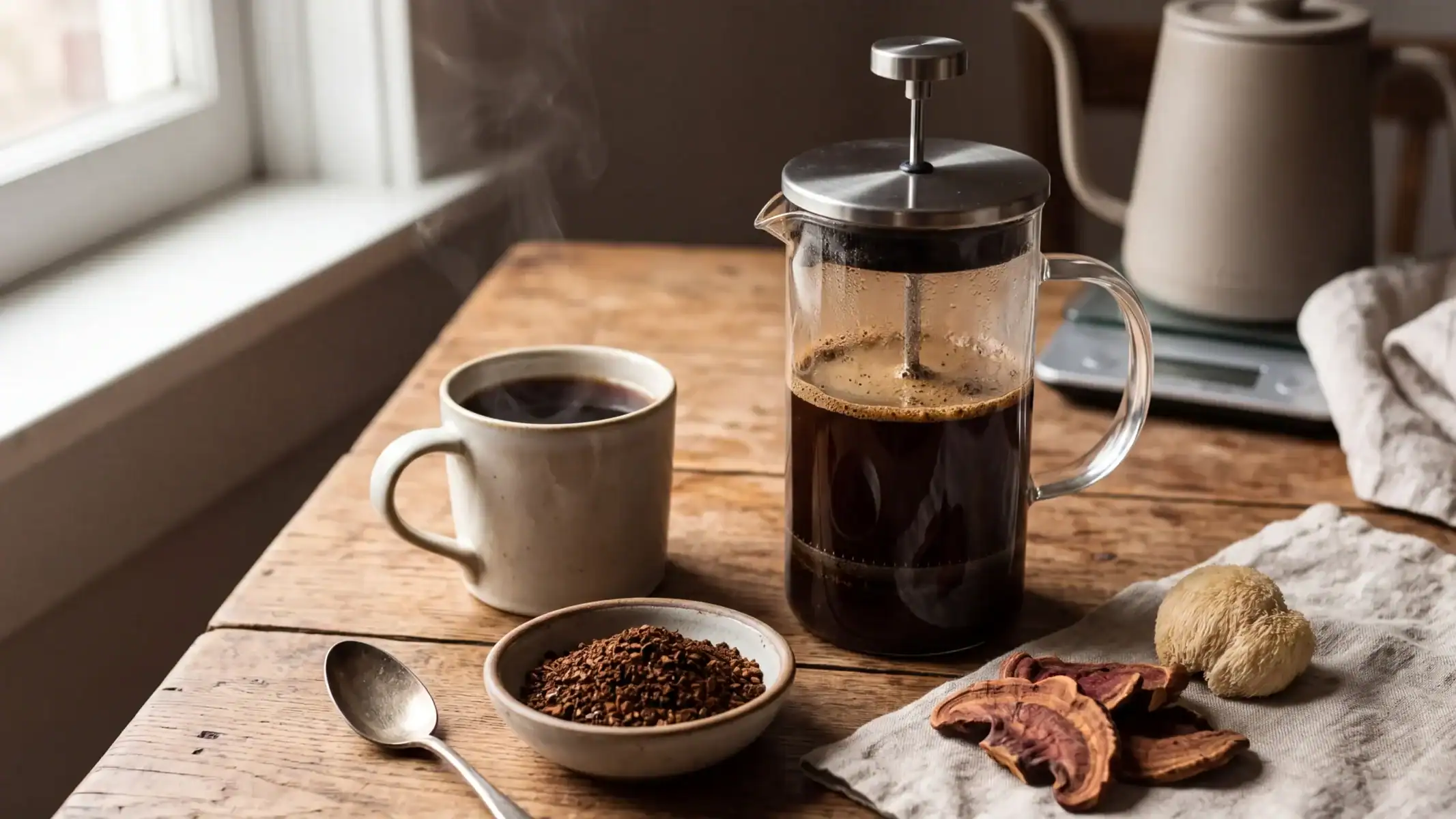
Most reishi coffee tastes like coffee first. Reishi is bitter, so a blend may have a slightly earthier or sharper edge, which some roasters balance with chocolatey beans. Pre-ground blends brew in the machine you already own, and you can adjust the scoop to taste.
A good reishi coffee label names the mushroom species, says whether it uses an extract or powder, and shows how much is in each serving. The more of that you can see, the easier it is to compare products fairly.
Look for Ganoderma lucidum or a named related species, such as Ganoderma tsugae or Ganoderma sinense. Reishi is sold under several names, including lingzhi and red reishi. A label that only says “mushroom blend” makes it hard to know what you are drinking.
Botanical supplement labels are expected to list the scientific name and the plant part used. For mushrooms, the part matters: fruiting body (the visible mushroom), mycelium (the root-like growth), or spores.
Powders are dried, ground mushroom. Extracts are concentrated, often listed with a ratio like 8:1 or a beta-glucan percentage. Extracts pack more compounds per gram, so a small amount of extract can match a larger amount of powder.
Check whether the brand lists milligrams per serving. A proprietary blend only has to show the blend’s total weight with ingredients in order by weight, so you may not learn how much reishi each cup holds.
Single-mushroom reishi formulas give reishi the full share. Multi-mushroom blends add other species with their own traditional roles. Lion’s Mane is linked to focus, Cordyceps to stamina, and Turkey Tail to interest in gut health, though gut benefits are not established for reishi coffee. Some blends on the market include shiitake mushroom as well.
Neither style is better by default. Pick based on whether you want variety or a reishi focus, and check that each mushroom is named.
The coffee deserves as much attention as the mushroom. A USDA organic seal is a government-backed claim enforced through yearly inspections by accredited certifiers. Single-origin or single-source labels tell you where the beans grew.
Third-party testing adds another layer. Programs such as NSF/ANSI 173 verify that label contents match the product and screen for contaminants. If a brand shares testing results, that is a strong sign of transparency.
Most healthy adults who tolerate coffee can try reishi coffee, but you should talk to a health care provider first if you take blood thinners or immune-suppressing drugs, have a liver condition, or are pregnant or breastfeeding. The caffeine and the reishi each bring their own cautions.
Reported reishi side effects include nausea, dry mouth, upset stomach, dizziness, and skin irritation. One small trial gave healthy adults 4 grams of extract daily for 10 days and found no differences compared with placebo. Rare case reports have linked powdered reishi to liver injury.
Caffeine adds its own list: fast heartbeat, jitters, headache, and trouble sleeping. If you have a mushroom allergy, skip mushroom coffee altogether.
Reishi may raise bleeding risk, so check with your doctor if you take warfarin, antiplatelet drugs, NSAIDs, or aspirin. It may also boost immune activity, which matters if you take immunosuppressants or have an autoimmune condition. People in cancer treatment should ask their care team, since reishi spore powder can affect a tumor marker test.
Lab studies also show reishi may affect liver enzymes that process some drugs, though the real-world effect is unclear.
Safety data on reishi during pregnancy and breastfeeding is lacking, so the cautious choice is to ask your provider before drinking it. Caffeine limits during pregnancy also apply. Children and teens should not drink mushroom coffee because of the caffeine.
The best reishi mushroom coffee for you is one with a coffee you enjoy, clearly named mushrooms, and a caffeine level that fits your day. Start with how you brew. Pre-ground suits drip machines and French presses, while instant suits travel.
Next, decide between a reishi-only formula or a blend. Then read the label for species, extract or powder, and amounts per serving. Favor brands that share sourcing details, such as USDA organic or single-source beans, and any third-party testing.
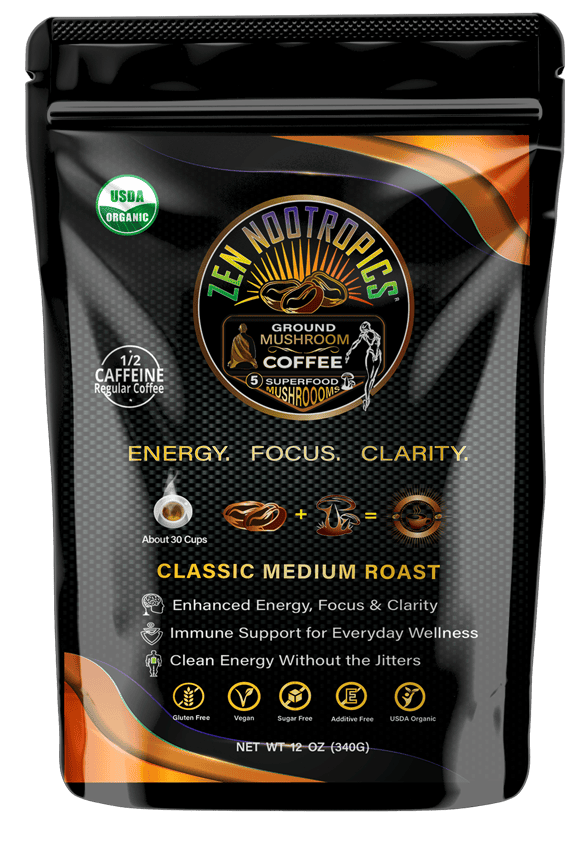
As one example, Zen Nootropics Mushroom Coffee is a pre-ground blend of USDA organic, single-source Colombian coffee with reishi, Lion’s Mane, Cordyceps, Chaga, and Turkey Tail. The brand describes dark chocolate and cinnamon notes, and it brews in most coffee machines, pour-overs, and French presses. You can review the ingredient details and preparation tips on the product page.
Keep your total caffeine in mind, and start with one cup to see how you feel.
Reishi mushroom coffee pairs a familiar morning cup with a mushroom that has deep traditional roots and early human research behind specific extracts. It still contains caffeine, and study results on extracts do not transfer directly to coffee blends. Read labels for species names, extract type, and amounts, look for transparent sourcing, and check with your doctor if you take blood thinners, immune drugs, or are pregnant. Then brew a cup you enjoy and judge it by how it fits your routine.
Yes, any reishi coffee made with regular coffee contains caffeine. The amount depends on how much coffee is in each serving and how you brew it. Reishi itself does not add or remove caffeine.
Treat it like regular coffee at night, because the caffeine can still disrupt sleep. Adding reishi does not make a caffeinated drink sleep-friendly. If you want an evening cup, look for a decaf base and remember that decaf still has a small amount of caffeine.
It tastes mostly like coffee, with a possible earthy or slightly bitter edge from reishi. The bean and roast shape most of the flavor. Some brands use chocolatey coffees to round out the mushroom’s bitterness.
Small human studies link specific reishi extracts to effects on urinary symptoms, cholesterol, and anxiety, and reishi is traditionally used for immune support. The main limitation is that no trials have tested finished reishi coffee, and studied doses are often much larger than what a cup provides. Enjoy it as part of your routine without expecting treatment of any condition.
Look for the species name, such as Ganoderma lucidum, and the part used, such as fruiting body or mycelium. Check whether it is an extract or powder and whether milligrams per serving are listed. Sourcing details and third-party testing add confidence.
You can buy reishi mushroom coffee online from brand websites and in some health food and grocery stores. Buying direct from the brand often gives you full ingredient details and options like subscriptions. Compare labels before you buy so you know what each blend contains.