Does Mushroom Coffee Affect Sleep? Caffeine and Timing
Does mushroom coffee affect sleep? Yes, if it contains caffeine, the amount you drink...
Read Article →
Turkey tail mushroom coffee combines coffee with Trametes versicolor ingredients, adding mushroom polysaccharides to a familiar drink for a daily wellness routine. Prepared blends and ready-to-use extracts make it possible to include this functional mushroom without preparing a separate mushroom tea. The appeal is a practical morning ritual: recognizable coffee flavor with an ingredient associated […]
Turkey tail mushroom coffee combines coffee with Trametes versicolor ingredients, adding mushroom polysaccharides to a familiar drink for a daily wellness routine. Prepared blends and ready-to-use extracts make it possible to include this functional mushroom without preparing a separate mushroom tea.
The appeal is a practical morning ritual: recognizable coffee flavor with an ingredient associated with immune and gut-health research. Functional mushroom coffee fits that routine, while its health effects require careful interpretation because mushroom extracts and finished coffee blends have different compositions.
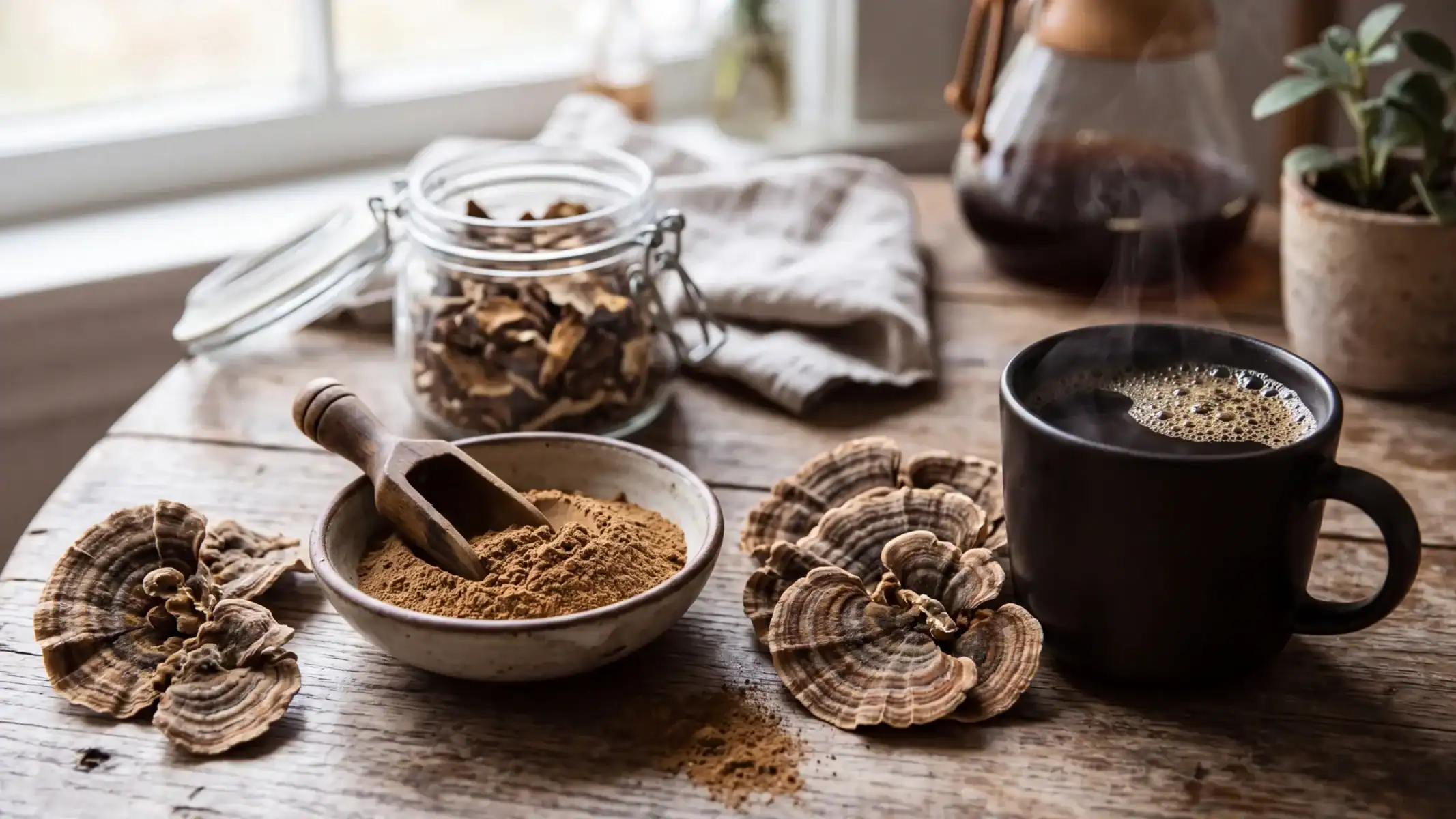
Turkey tail adds fungal polysaccharides and other compounds whose amounts depend on the mushroom material and processing method. A product’s ingredient form determines how closely it resembles preparations used in research.
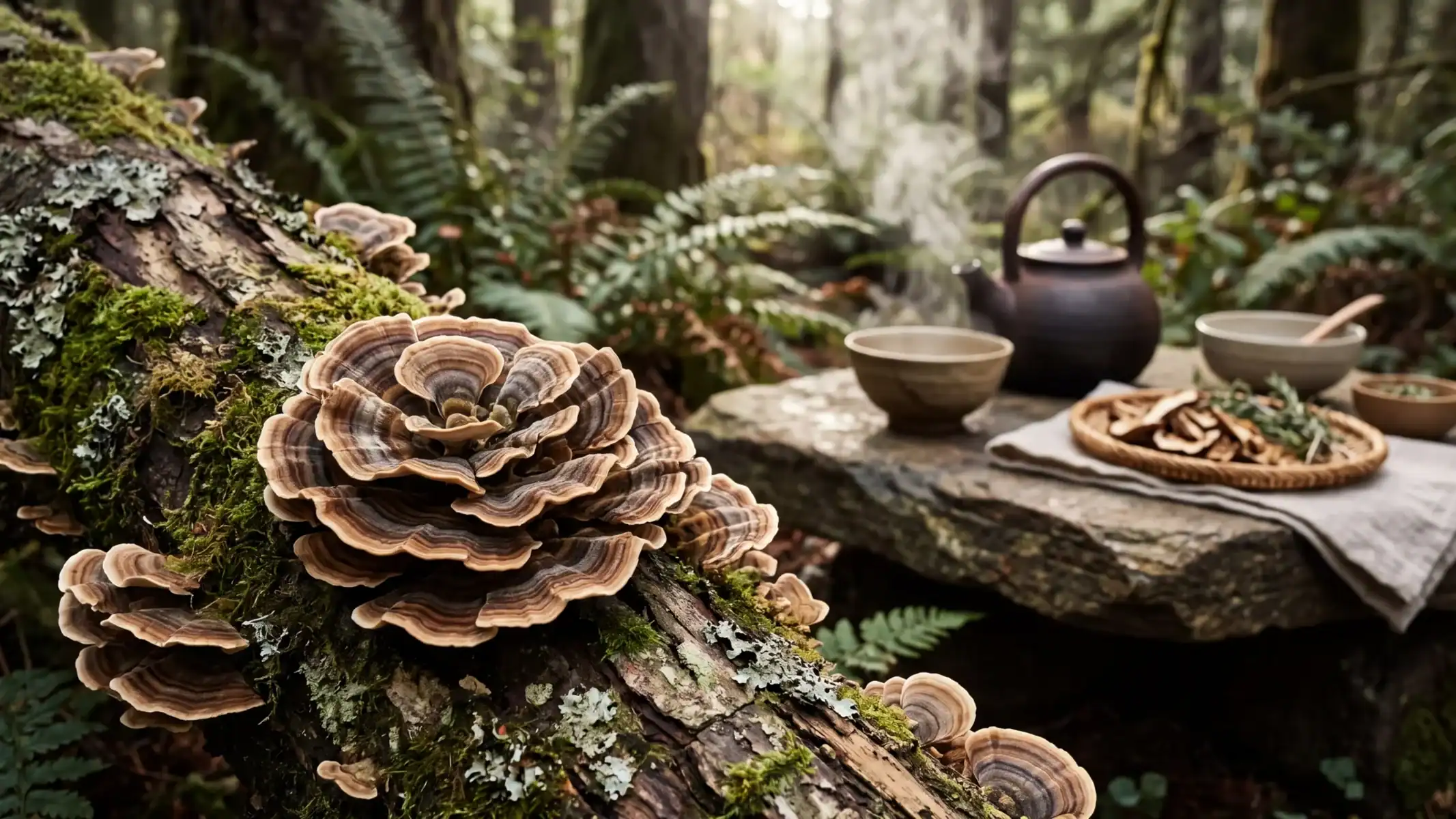
The turkey tail mushroom is a thin, fan-shaped fungus with bands of color resembling a turkey’s tail. It grows on dead wood and appears under the scientific names Trametes versicolor and Coriolus versicolor.
Turkey tail mushrooms have a history of use in Chinese and Japanese traditional medicine, including preparations made as teas or decoctions. Their classification among medicinal mushrooms reflects that history and subsequent research; it does not establish a health benefit for every turkey tail coffee product.

Polysaccharides are complex carbohydrates, and beta-glucans are one group found in fungal cell walls. Turkey tail also contains protein-bound polysaccharides called polysaccharopeptides, which have attracted attention for their biological activity.
A label stating “polysaccharides” gives less specific information than a verified beta-glucan measurement. Total polysaccharide measurements include multiple carbohydrate types, so the terms are not interchangeable measures of mushroom composition.
PSK (polysaccharide-K, also called Krestin) and PSP (polysaccharopeptide) refer to particular protein-bound polysaccharide preparations associated with turkey tail. Their manufacturing processes and chemical characteristics distinguish them from ground mushroom material.
Whole mushroom powder contains a broader mixture of fungal components. A turkey tail ingredient listing, an extract ratio, or a beta-glucan percentage alone does not establish that a coffee contains a preparation equivalent to PSK or PSP used in clinical research.
Research supports scientific interest in turkey tail compounds, while evidence for health benefits from finished coffee blends remains limited. Immune-cell findings, microbiome changes, and clinical outcomes each answer different questions.
Immune support is the main reason turkey tail attracts attention in functional foods. Laboratory experiments examine how particular preparations interact with immune cells, including changes in cell activity and signaling.
Turkey tail compounds have demonstrated immune-modulating activity. Those findings do not establish that drinking a commercial blend reduces infections or produces a measurable improvement in immune function.
Human evidence also requires attention to the population studied. Results from people receiving medical care have limited relevance to healthy adults drinking a morning beverage.
Turkey tail’s complex carbohydrates are of interest because gut microbes interact with dietary polysaccharides. Prebiotics selectively support beneficial microorganisms, but establishing a prebiotic effect requires evidence for the specific ingredient and amount consumed.
Certain turkey tail preparations have changed gut bacterial composition in experimental settings. Changes in bacterial populations alone do not demonstrate improved digestion or symptom relief from coffee.
Turkey tail also contains compounds with antioxidant activity in laboratory testing. An antioxidant assay measures chemical activity under defined conditions; it does not establish a clinical benefit from a serving of mushroom coffee.
Purified PSK belongs to a distinct clinical research context. Its preparation, administered amount, and use alongside medical care separate it from consumer coffee ingredients.
PSK has been used as an adjunct to conventional cancer care in Japan. That medical context provides no basis for presenting turkey tail coffee as cancer care or implying FDA approval for a beverage.
Anyone receiving cancer treatment should discuss mushroom products with the oncology team before adding them. The complete formula deserves review, including every mushroom and any additional supplement ingredients.
Evidence transfers most directly when the tested preparation matches the product being consumed. Mushroom species alone provides an incomplete match.
Extraction method, chemical composition, and serving amount affect that comparison. For pre-ground blends, brewing and filtration introduce further questions about how much of each compound reaches the cup.
Commercial coffee benefits require evidence on the finished formula at its intended serving. Citing research on an isolated compound does not establish equivalent effects from a multi-ingredient beverage.
Turkey tail coffee is prepared either by brewing a formulated ground blend or mixing a prepared ingredient into brewed coffee. The coffee base supplies most of the familiar aroma, while the mushroom ingredient contributes varying degrees of earthy flavor.
Pre-ground mushroom coffee contains grounds that require brewing equipment. The package directions should identify suitable methods and the amount of blend to use.
Instant coffee products are designed to mix into water, although some mushroom ingredients leave sediment. The word “powder” alone does not establish whether a product is instant coffee, ground coffee, or a mushroom-only ingredient.
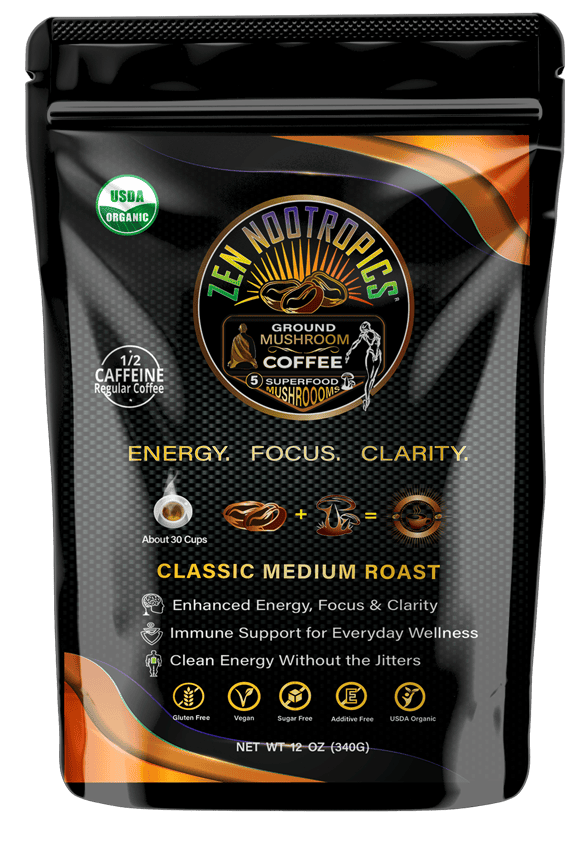
As one example, Zen Nootropics offers pre-ground coffee for most coffee machines, pour overs, French presses, and some espresso machines. Grind compatibility remains important, particularly with espresso equipment.
A prepared turkey tail mushroom extract offers a straightforward option for someone researching how to make turkey tail coffee with an existing coffee routine. The extract should be intended for oral use and suitable for mixing into beverages.
For liquid extracts, the label should specify the measured serving. Household spoons provide poor precision, and additional extract should never be added to imitate a research dose.
Turkey tail mushroom powder sometimes means dried mushroom material ground into fine particles. Extract powder has undergone a separate process that removes selected compounds from the starting material.
A brief coffee brew does not reproduce controlled commercial extraction. Raw material also contributes insoluble particles, creating a different texture and chemical profile.
Turkey tail is tough and woody, so it has little appeal as an ordinary culinary mushroom. A clearly identified, prepared ingredient provides more useful handling information than an unspecified bag of mushroom powder.
The bean and roast strongly influence the finished drink. An arabica coffee base with a medium roast offers a different balance of acidity and roasted flavor from a darker coffee.
Earthy mushroom notes become more noticeable as the mushroom ingredient’s flavor contribution increases. Milk softens perceived bitterness, while cinnamon or cocoa complements roasted flavors.
Zen Nootropics describes its single-source Colombian coffee as bold, complex, and smooth, with tasting notes of dark chocolate and cinnamon. Those tasting notes describe the coffee’s sensory profile; they do not establish that either ingredient has been added.
Turkey tail contains no caffeine, and stirring it into an existing cup leaves that coffee’s caffeine amount unchanged. A formulated blend’s caffeine depends on its coffee content and preparation.
Replacing some coffee with mushroom material changes the proportions, but the final caffeine amount still requires product-specific information. Claims such as “half the caffeine” require a disclosed serving and a defined comparison.
Decaffeinated coffee also contains residual caffeine. Anyone selecting a blend for caffeine sensitivity should check the stated amount per prepared serving.
A useful label identifies the turkey tail ingredient, explains its preparation, and states the serving clearly. Supporting documentation adds detail about composition and contaminant testing.
The label should identify Trametes versicolor or its synonym Coriolus versicolor. “Mushroom complex” without individual species provides limited information about what the product contains.
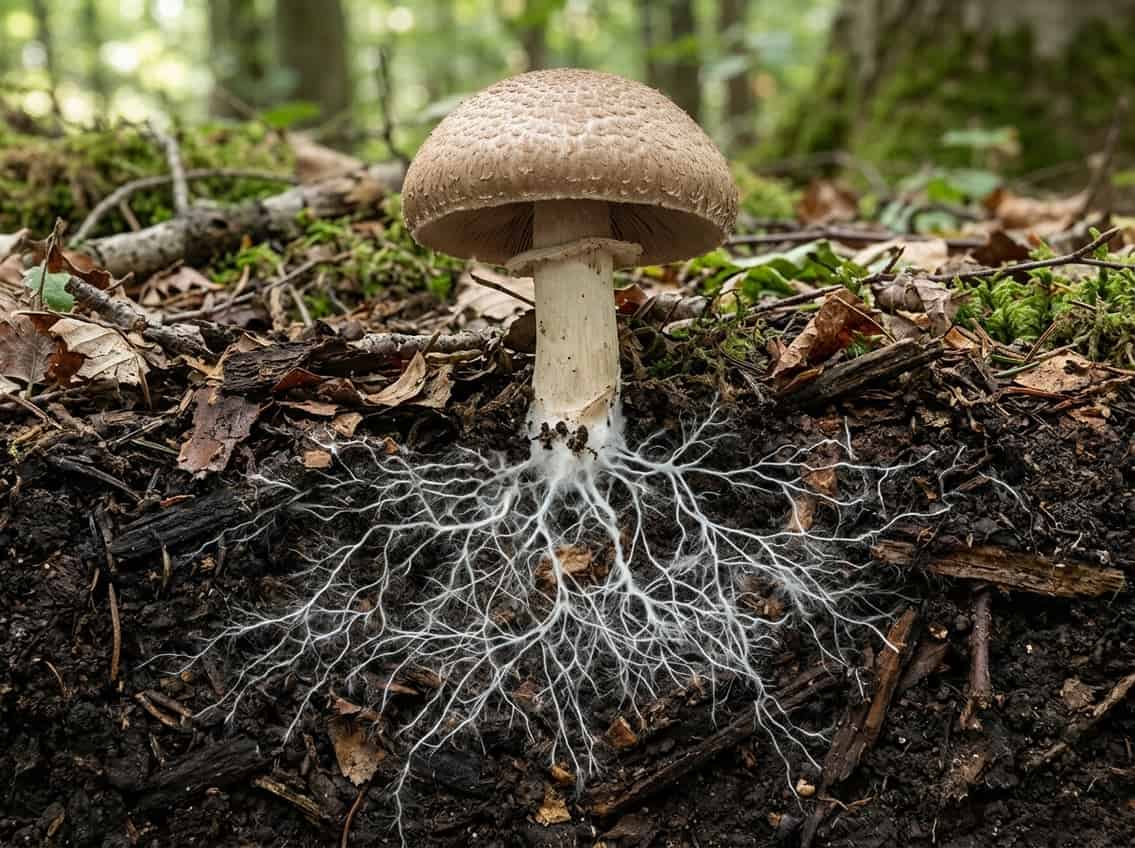
Fruiting body means the recognizable mushroom structure. Mycelium is the fungus’s network of threadlike growth, and myceliated grain includes the growing substrate when it remains in the finished ingredient.
These materials have different compositions. Fruiting body wording alone does not establish clinical effectiveness, and mycelium should be evaluated through its preparation and testing details.
“Hot-water extract” indicates processing with water, while “dual extraction” indicates the use of two extraction approaches, commonly water and alcohol. The appropriate process depends on the compounds the manufacturer intends to obtain.
A turkey tail mushroom extract label is more informative when it states the amount per serving and identifies carriers or other added ingredients. For turkey tail mushroom powder, the label should clarify whether the powder is extracted or ground whole material.
A total blend amount leaves the contribution of each mushroom unclear. An extraction ratio also requires context because it does not establish a particular beta-glucan amount or a proven effective dose.
A beta-glucan claim is most useful when its measurement basis is clear. A percentage referring to an extract has a different meaning from a percentage referring to the complete coffee blend.
Independent testing should address the stated composition and relevant contaminants. Useful documentation includes:
“Third-party tested” describes a process claim. The accompanying report establishes what was tested and what the results mean.
Coffee sourcing claims apply to the ingredient or product identified by the manufacturer. “USDA organic coffee” does not automatically establish organic certification for every mushroom ingredient or the finished blend.
Zen Nootropics specifies USDA organic Colombian coffee and describes its beans as single-source and fair-trade. Those statements should retain their stated scope.
Country of origin and certification provide purchasing information, while contaminant testing addresses separate questions. An organic claim alone does not establish beta-glucan content or extract strength.
Turkey tail’s research profile centers on polysaccharides and immune-related activity, while other functional mushrooms attract attention for different applications. Each ingredient still requires preparation-specific evidence.
The familiar associations below help distinguish ingredient selection. They describe research interests and common positioning, with no guarantee of effects from coffee.
| Comparison point | Turkey tail | Lion’s mane | Cordyceps | Reishi | Chaga |
|---|---|---|---|---|---|
| Main research interest | Immune activity | Cognitive function | Exercise performance | Immune activity | Antioxidant activity |
| Common wellness positioning | Gut and immune support | Focus and clarity | Energy and endurance | Relaxation | Antioxidant support |
| Ingredient detail to check | Polysaccharide preparation | Mushroom part | Species identity | Extract composition | Harvested material |
| Coffee evidence requirement | Finished-formula testing | Finished-formula testing | Finished-formula testing | Finished-formula testing | Finished-formula testing |
Lion’s mane has attracted human cognitive research, while cordyceps preparations have been investigated for exercise-related outcomes. Reishi and chaga have their own chemical profiles and safety considerations.
These distinctions do not establish a ranking for morning coffee. A product’s actual composition provides more relevant purchasing information than a mushroom’s broad reputation.
A multi-mushroom ingredient list establishes which species the manufacturer includes. Disclosed amounts provide the next level of information about the formula.
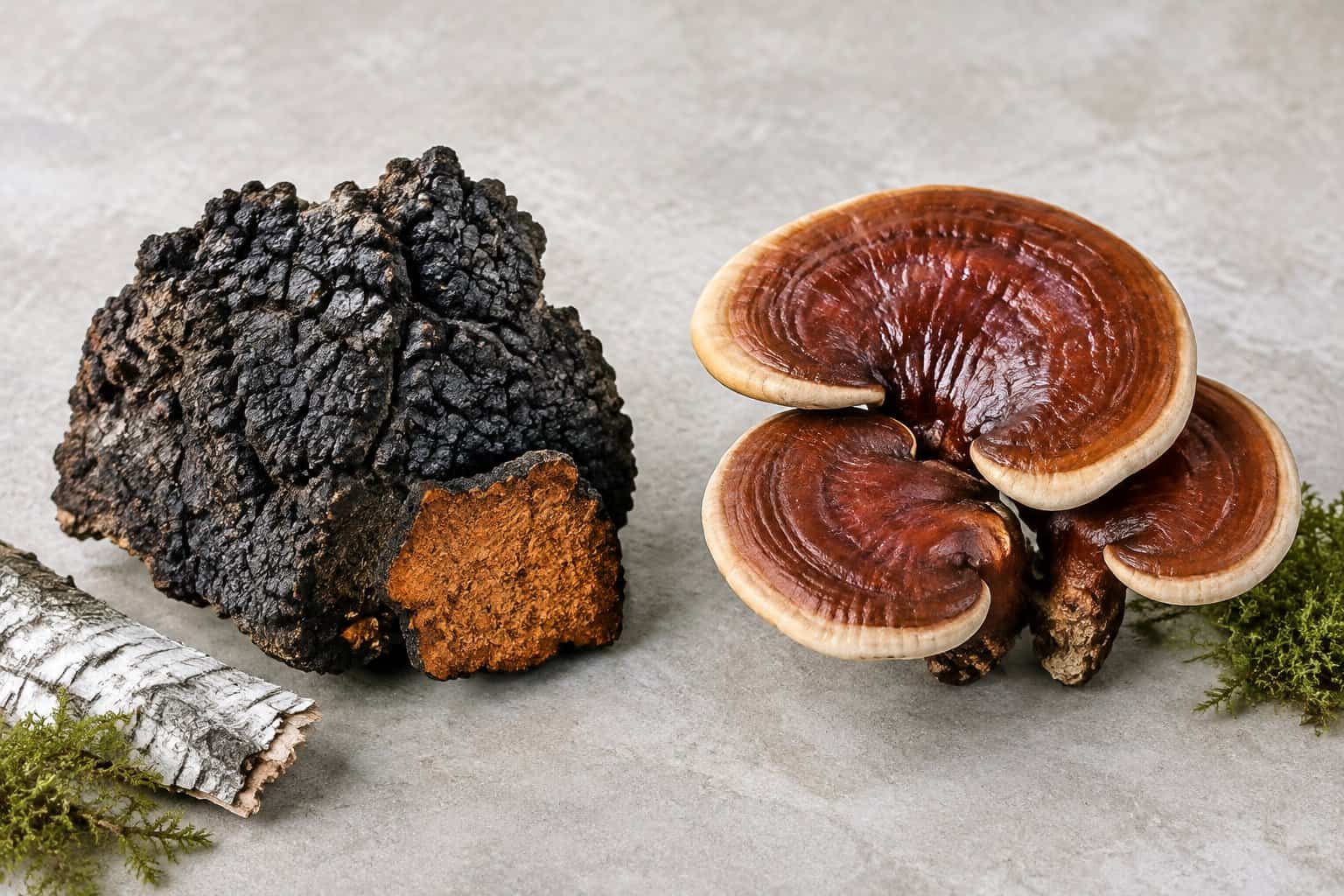
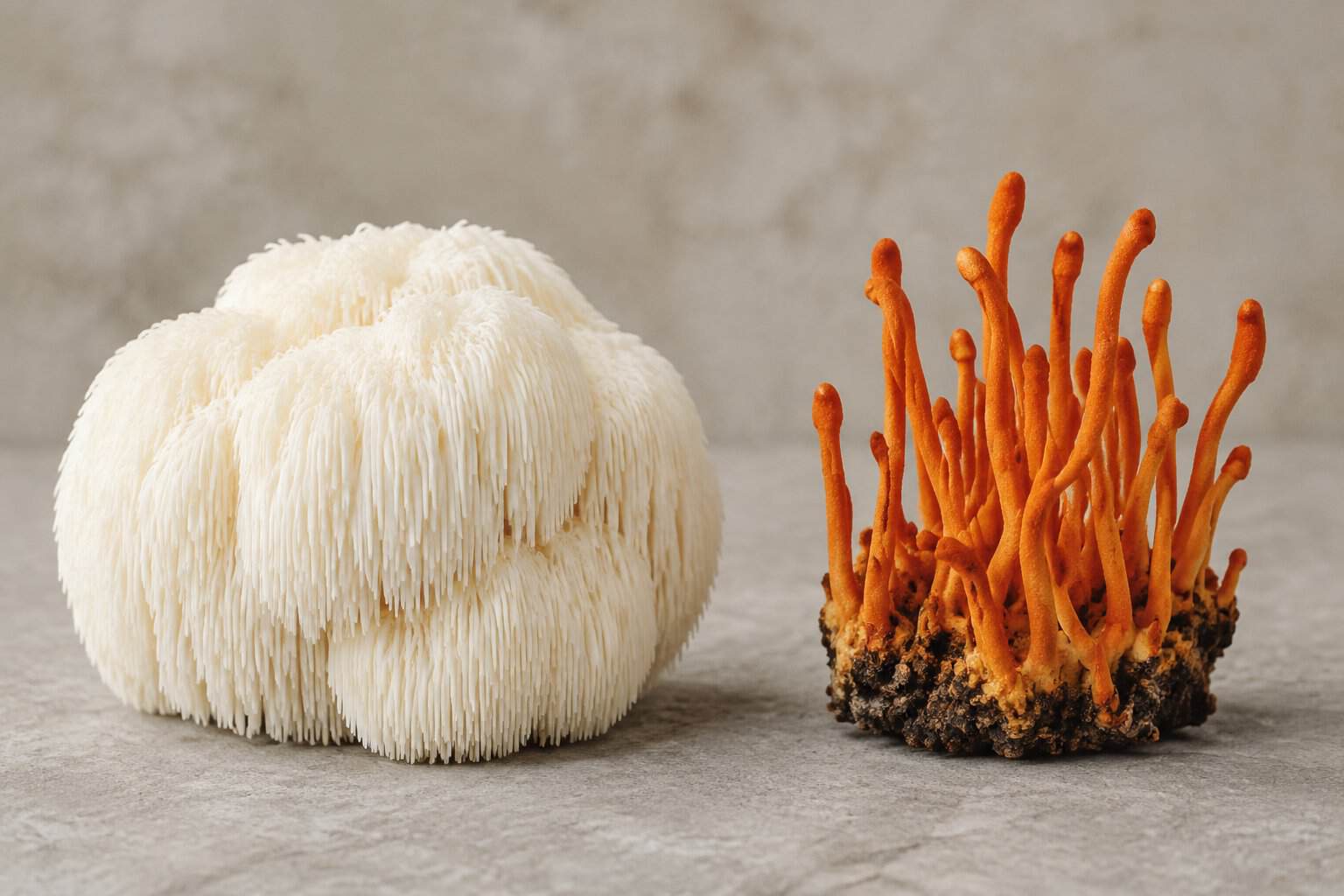
Zen Nootropics combines five functional mushrooms: Lion’s Mane, Cordyceps, Reishi, Chaga, and Turkey Tail. Their inclusion establishes ingredient variety, while individual research findings remain specific to the preparations tested.
A longer ingredient list does not demonstrate stronger effects or synergy. Claims about the combination require evidence on that combination.
Shiitake and maitake are edible mushrooms that also appear in functional mushroom formulations. Both contain polysaccharides of research interest and have a culinary history separate from beverage marketing.
Their inclusion broadens a formula’s ingredient profile. It also makes individual amounts and preparation details more useful when comparing products.
A serving of coffee containing their extracts has a different nutritional composition from a meal containing cooked mushrooms. Whole-food fiber or nutrient benefits should not be assumed for a small extract serving.
People with mushroom allergies, relevant medical conditions, or ongoing treatment should obtain individualized advice before trying turkey tail mushroom coffee. The coffee’s caffeine and the complete mushroom formula both belong in that assessment.
A known allergy to turkey tail or another listed ingredient warrants avoidance. A history of mushroom or mold reactions also deserves discussion with a clinician before use.
Turkey tail products have been associated with digestive symptoms, including gas and bloating. Symptoms that begin after adding a product warrant stopping it and seeking advice if they persist.
Severe reactions require urgent attention. Breathing difficulty or swelling of the mouth and throat warrants immediate medical help.
Medication review is appropriate because turkey tail preparations have biological activity and interaction information remains incomplete. This is especially relevant for people taking immunosuppressants or managing immune-related conditions.
A clinician or pharmacist should review the full label alongside prescription medicines and other supplements. People using anticoagulants or antiplatelet medicines should include the complete blend in that discussion because other mushroom ingredients introduce separate considerations.
Cancer treatment requires coordination with the oncology team. Potential interactions with immunosuppressants are another reason to discuss turkey tail mushroom extract before use.
Safety information for turkey tail during pregnancy and breastfeeding is insufficient to establish suitability. Adding concentrated mushroom ingredients during these periods calls for advice from the treating clinician.
The coffee component requires a separate caffeine assessment. A decaffeinated base addresses caffeine exposure but leaves the mushroom-safety question unchanged.
People with kidney or liver conditions should also discuss the complete formula with their healthcare professional. Bringing the package or a clear label photograph supports a more specific assessment.
Package directions specify the manufacturer’s intended consumer serving. They do not establish a therapeutic dose or justify increasing intake to match a clinical protocol.
Clinical preparations differ in concentration and chemical composition. Converting a research amount into extra scoops of coffee produces an unreliable comparison.
Taking several mushroom products also combines their ingredients across servings. A clinician should know about coffee blends, capsules, gummies, and tinctures used together.
A transparent functional mushroom coffee provides clear ingredient identity and practical preparation directions, with claims proportionate to the evidence. Turkey tail’s research history gives context for its inclusion, while finished-beverage benefits require their own support.
For a daily wellness routine, the practical checks are the mushroom form, disclosed serving, supporting testing information, and coffee compatibility. A suitable product should also fit the drinker’s caffeine tolerance and medical circumstances.
Turkey tail coffee questions center on expected benefits, daily use, caffeine, and purchasing details. The product label provides the starting point for each decision.
Potential benefits relate to turkey tail compounds investigated for immune activity and gut-microbiome effects. Evidence from particular extracts does not establish the same outcomes from a finished coffee blend.
Daily use should follow the product’s serving directions and suit the individual’s health circumstances. Long-term evidence for finished blends remains limited, so persistent digestive symptoms or other reactions warrant stopping the product and seeking advice.
Turkey tail mushroom coffee contains caffeine when it includes regular coffee. Mushroom-only ingredients contain no caffeine, while decaffeinated coffee blends retain small residual amounts.
Useful reviews describe the exact product, brewing method, flavor, and texture. Reports of energy or fewer jitters reflect individual experiences; ingredient documentation and testing reports provide separate evidence about composition.
Zen Nootropics sells a pre-ground blend containing turkey tail as one of its five functional mushrooms. Shoppers can explore Zen Nootropics Mushroom Coffee to review the blend and brewing compatibility before choosing it for their morning routine.