
Mushroom Coffee for Beginners: Choose and Brew Your First Cup
For beginners who already use a coffee maker, pre-ground mushroom coffee offers a fam...
Read Article →
Choose brewed green tea if you want a lighter, usually lower-caffeine energy boost; choose mushroom coffee if you want roasted coffee flavor with functional mushroom ingredients. For focus, both give you caffeine, while green tea also supplies L-theanine. Your mushroom coffee’s caffeine level depends on its coffee content and how you prepare it. When you […]
Choose brewed green tea if you want a lighter, usually lower-caffeine energy boost; choose mushroom coffee if you want roasted coffee flavor with functional mushroom ingredients. For focus, both give you caffeine, while green tea also supplies L-theanine. Your mushroom coffee’s caffeine level depends on its coffee content and how you prepare it.

When you compare mushroom coffee vs green tea, your serving size deserves close attention. A large, strong cup changes your caffeine intake, even when the package presents the drink as gentle or balanced.
You can fit mushroom coffee and green tea into a useful morning routine without expecting every wellness claim to translate into a noticeable benefit. Your best starting points are the ingredient label, your preferred flavor, and your response to caffeine.
Before comparing the two drinks, use the mushroom coffee ingredients and brewing guide to see how mushroom coffee blends differ. For a comparison with powdered green tea, read mushroom coffee vs. matcha.

You get coffee plus mushroom ingredients with mushroom coffee, while brewed green tea gives you an infusion of tea leaves. Your clearest differences involve flavor, caffeine, and the strength of evidence behind added wellness claims.
| What you compare | Mushroom coffee | Brewed green tea |
|---|---|---|
| Main ingredients | Coffee and mushroom extracts or powders | Tea leaves and water |
| Caffeine per serving | Formula- and brew-dependent | Lower than brewed coffee in typical servings |
| Flavor | Roasted, sometimes earthy | Grassy, vegetal, or lightly sweet |
| Preparation | Brew grounds or dissolve instant mix | Steep leaves or a tea bag |
| Focus-related ingredients | Caffeine; mushroom compounds vary | Caffeine and L-theanine |
| Evidence for added benefits | Limited finished-drink human evidence | Broader human evidence |
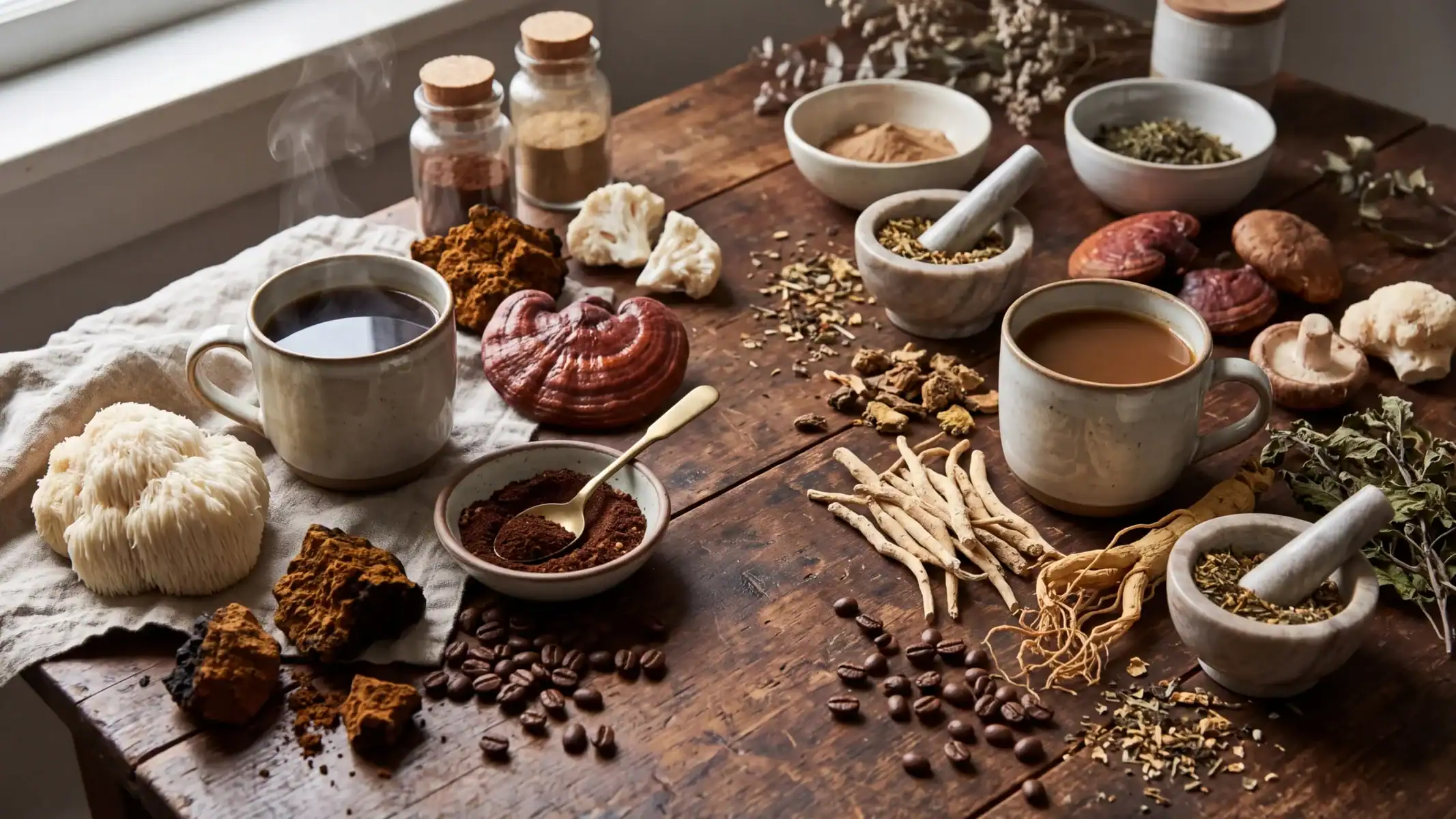
If you ask “what is mushroom coffee?”, you’re looking at a functional coffee made with coffee and functional mushrooms. Products use extracts or powders from species such as lion’s mane and cordyceps. You’ll also see the term medicinal mushrooms, which reflects traditional use and research interest.
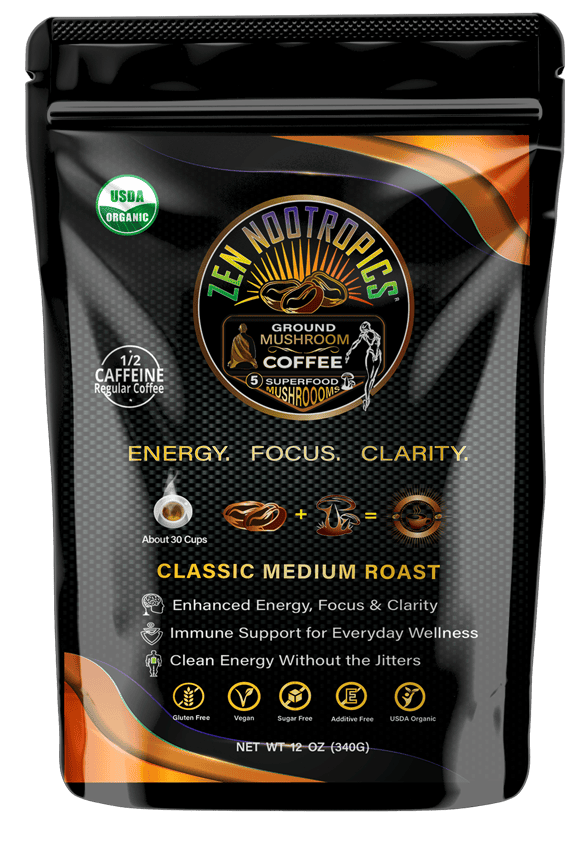
For a concrete example, you get USDA organic Colombian coffee blended with Lion’s Mane, Cordyceps, Reishi, Chaga, and Turkey Tail in Zen Nootropics Mushroom Coffee. You still need to inspect the product label to assess the complete formula. A species list alone gives you no measure of the amount delivered in your cup.
With brewed green tea, you steep leaves from Camellia sinensis and remove them before drinking. Processing limits oxidation, helping preserve the tea’s green character and catechins. Your cup contains caffeine and naturally occurring L-theanine.
You’ll notice differences across tea styles, from toasted notes to fresh, grassy flavors. This comparison centers on steeped green tea. With matcha, you consume powdered tea leaves, so its serving size and caffeine deserve a separate check.

You’ll usually get more caffeine from a coffee-based mushroom blend than from brewed green tea, but individual servings overlap. Compare caffeine per serving alongside the amount of water and dry product you use.
Your drink’s name gives you only a rough starting point. For context, you’ll encounter figures of 90 to 200 mg per 8-ounce cup of brewed coffee and up to 45 mg per 220 ml cup of green tea. These reference servings differ in size and don’t establish the caffeine content of a mushroom coffee blend.
You increase caffeine exposure when you use more coffee grounds or tea leaves. Hotter water and longer extraction also affect how much caffeine reaches your cup. Adding water to an already brewed drink changes its strength, while leaving the total caffeine in that drink unchanged.
You should treat a low-caffeine claim as a product-specific claim. Mushrooms supply no caffeine themselves, but adding mushroom extract to coffee doesn’t remove the coffee’s caffeine. A blend delivers less only when its formula and serving provide less caffeinated coffee.
Look for a stated caffeine amount tied to clear preparation instructions. If the label leaves that question open, ask the manufacturer before treating the drink as a low-caffeine option. You also need to account for additional stimulants if the formula includes them.
For a predictable short-term lift, you have the strongest evidence for caffeine in either drink. Green tea adds L-theanine, while the cognitive and performance claims for mushroom ingredients require closer attention to the preparation and dose.
You feel caffeine’s effects partly because it blocks signals involved in sleepiness. That supports alertness, but a stronger dose also raises your risk of feeling restless. Your usual intake and caffeine sensitivity shape the experience.
With green tea, you also consume L-theanine, an amino acid linked to the idea of calm focus. Caffeine and L-theanine together support aspects of attention and task accuracy. Your brewed cup’s amounts vary, so you shouldn’t expect it to match a controlled supplement dose.
You’ll find lion’s mane in products marketed for brain health and cognitive function. Early human findings include improvements on selected tasks, alongside results showing little change. You should keep expectations modest, especially when judging broad claims about memory.
Cordyceps attracts interest for exercise performance and fatigue. You shouldn’t assume an immediate stimulant effect from the mushroom itself. If you feel more alert soon after drinking a caffeinated blend, caffeine provides the clearest explanation.
You need a close match between a studied preparation and your drink before transferring a benefit claim. Species, extraction method, and daily amount affect that match. Your brewing method adds another variable when mushroom ingredients are mixed into grounds.
Treat adaptogens and adaptogenic mushrooms as terms that need supporting details. They don’t establish that your coffee improves stress resilience or focus. Human evidence for finished mushroom coffee remains limited, so assess each formula without assuming that all blends perform alike.
You have a broader human evidence base for green tea than for commercial mushroom coffee blends. For either drink, antioxidant content alone gives you limited information about a measurable health outcome.
You get polyphenols from green tea, including catechins such as EGCG, short for epigallocatechin gallate. These compounds contribute to its antioxidant activity. Tea consumption has also produced changes in measures of antioxidant status in human trials.
For cardiovascular health, you can view unsweetened green tea as a reasonable part of a heart-conscious eating pattern. Human research links tea intake with favorable cardiovascular markers, though effects vary across outcomes. Keep your expectations focused on a dietary habit, without treating tea as treatment for high blood pressure or cholesterol.
You’ll see beta-glucans discussed in connection with immune support from reishi and turkey tail. These mushroom compounds interact with immune pathways, but their presence doesn’t establish that your beverage prevents infections. Chaga also contains compounds studied for antioxidant and anti-inflammatory properties.
Your finished drink’s composition deserves attention. In one experimental coffee preparation, beta-glucan content was 2.03%, compared with 3.79% in the raw cordyceps material. Those figures describe that specific preparation and give you no dose estimate for another brand.
For gut health, you’ll encounter interest in mushroom polysaccharides and their effects on gut microbes. Much of this work involves laboratory or animal models, with limited direct evidence for everyday mushroom coffee. You still need fiber-rich foods in your diet; a cup of coffee supplies no equivalent to a varied eating pattern.
You shouldn’t expect reliable, meaningful weight loss from either drink alone. Caffeine and green tea catechins have been studied for effects on metabolism, but changes in energy use don’t guarantee lasting weight change. Claims that mushroom coffee burns fat also exceed the evidence for finished beverages.
You have a clearer practical benefit when an unsweetened cup replaces a calorie-heavy drink. Sweetened creamers and syrups change that comparison. Choose additions that fit your eating plan and judge progress through your broader habits.
You’ll get the closest fit by matching the drink to your taste and existing brewing setup. For cost, calculate what you spend per prepared serving and check what each serving contains.
You’ll recognize a roasted coffee base in many mushroom coffees, with earthiness varying by blend. The beans and roast influence the taste alongside the mushroom ingredients. You don’t need to expect a strong culinary-mushroom flavor.
If you prefer a lighter cup, green tea offers grassy or vegetal notes, sometimes with a toasted edge. Oversteeping increases bitterness. For a coffee-style reference, Zen Nootropics describes its blend with tasting notes of dark chocolate and cinnamon.
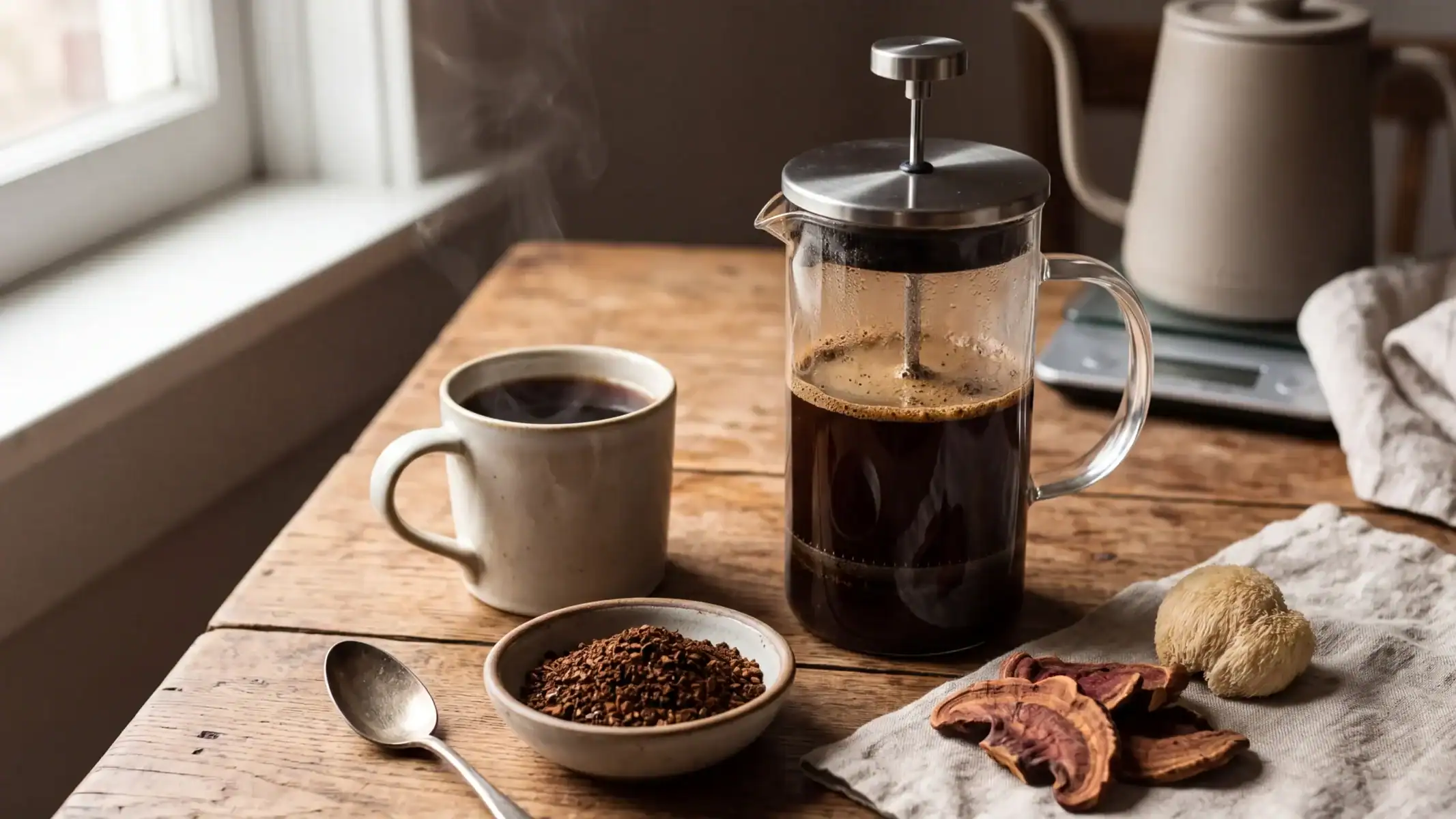
You prepare ground mushroom coffee with equipment suited to its grind. Zen Nootropics offers pre-ground coffee for most coffee machines, pour overs, French presses, and some espresso machines. Check your machine’s requirements, especially if you brew espresso.
You need only hot water and a cup for a green tea bag, with an infuser added for loose leaves. Follow the tea’s package directions for temperature and steep time. For instant mushroom coffee, follow its mixing instructions; ground coffee and instant powder require different preparation.
You get a useful price comparison by dividing the purchase price by the number of servings you’ll prepare. Include shipping and account for how much product you use in each cup. A large bag offers limited savings if your preferred strength uses more than the stated serving.
For mushroom coffee, check the species names and any disclosed extract amounts. Ask about beta-glucan testing and independent contaminant testing when those details affect your purchase. An extract ratio alone gives you an incomplete picture of the compounds in a serving.
For green tea, compare serving weight and the number of bags or loose-leaf portions. If you buy a recurring order, include its terms in your calculation. Zen Nootropics lists Subscribe & Save $10+ with free shipping and Cancel subscription anytime, which you can weigh against a one-time order.
Your main shared concern is caffeine, with mushroom blends adding species-specific safety questions. Use your sleep response and health history to guide whether either drink belongs in your daily routine.
You may experience restlessness or poorer sleep after either drink, especially when you consume it late in the day. Start with morning use if you’re sensitive to caffeine. Move your last caffeinated drink earlier if you notice trouble falling asleep.
You shouldn’t expect reishi to cancel caffeine’s effects on sleep quality. Relaxation and stress relief claims don’t establish that a caffeinated blend suits bedtime. For an evening ritual, a caffeine-free option offers a clearer way to reduce stimulant exposure.
You may develop nausea or digestive discomfort from either drink, especially on an empty stomach. Mushroom ingredients also introduce allergy risks. Stop using the product and seek urgent care if you develop breathing trouble or swelling.
Your medication list deserves a check before regular mushroom use. Reishi has potential interactions with blood thinners, while chaga’s oxalates raise kidney safety concerns with excessive intake. These concerns depend on the ingredient and exposure; you shouldn’t assume every coffee blend carries the same risk.
Green tea also warrants a medication check. Your pharmacist can assess interactions with your specific prescriptions. Keep brewed tea separate from concentrated green tea supplements when discussing safety, because their exposures differ.
You should get individualized advice before daily mushroom coffee use if you’re pregnant, breastfeeding, or managing kidney or liver disease. The same applies if you take immune-suppressing medicines or have a history of serious mushroom allergy. Safety evidence for concentrated mushroom ingredients in these situations is limited.
Bring the full ingredient label and explain how much you plan to drink. Include your other caffeine sources and supplements so your clinician can assess combined exposure. If the manufacturer provides no clear amount for an ingredient, ask for that information before your appointment.
Choose brewed green tea for a lighter-tasting cup with a commonly lower caffeine load, or mushroom coffee to keep a roasted coffee ritual while adding functional mushrooms. For focus, begin with your caffeine tolerance and keep expectations for mushroom-specific benefits modest.
As you compare mushroom coffee and green tea, record your serving size and watch for changes in sleep or digestion. You can read the Zen Nootropics mushroom coffee guide for more context on the category. Before purchasing, inspect the product ingredient label and check the caffeine content for the serving you plan to prepare.
You can use these answers to clarify common purchase and preparation questions. For safety decisions, keep your actual serving and full ingredient list in view.
You have a stronger evidence base for brewed green tea’s health effects than for finished mushroom coffee blends. Your choice still needs to fit your caffeine tolerance and any ingredient-specific safety concerns.
You face possible caffeine effects, digestive discomfort, and mushroom-specific interactions when drinking mushroom coffee. You also need to weigh its cost against the limited human evidence for benefits from the finished beverage.
You can drink both on the same day if the combined caffeine and ingredients fit your health needs. Count other caffeinated drinks too, and reduce intake if you notice jitters or disrupted sleep.
You’ll usually notice coffee flavor first, with an earthy note that varies by formula. Check the product’s tasting notes to find a blend suited to your preferences.
You shouldn’t rely on either mushroom coffee or green tea for weight loss. Choosing an unsweetened version helps keep the drink compatible with your eating plan, especially when it replaces a higher-calorie beverage.
You shouldn’t assume matcha and brewed green tea have equal caffeine content. Matcha supplies about 18.9 to 44.4 mg per 1-gram serving, and your drink’s total rises with the amount of powder you use.
For general caffeine safety information, review the FDA guidance on caffeine. Neither drink should be treated as a substitute for medical advice or treatment.