Does Mushroom Coffee Break a Fast? Rules by Fast Type
A morning coffee ritual fits more easily into fasting when the drink matches the plan...
Read Article →
Chaga is most closely associated with antioxidant support, while reishi is more closely associated with relaxation and sleep support; reishi has more human research, but neither has strong clinical evidence for broad everyday wellness benefits. For people comparing chaga vs reishi benefits, those differences help align a functional mushroom product with a specific wellness goal. […]
Chaga is most closely associated with antioxidant support, while reishi is more closely associated with relaxation and sleep support; reishi has more human research, but neither has strong clinical evidence for broad everyday wellness benefits. For people comparing chaga vs reishi benefits, those differences help align a functional mushroom product with a specific wellness goal.
Both functional mushrooms contain biologically active compounds, and both have long histories of traditional use. The practical decision also involves the preparation: a brewed tea, concentrated extract, and mushroom-coffee blend deliver different ingredients and amounts.
A useful comparison separates traditional uses from demonstrated human outcomes. It also accounts for kidney health, medication use, and the information disclosed on the product label.

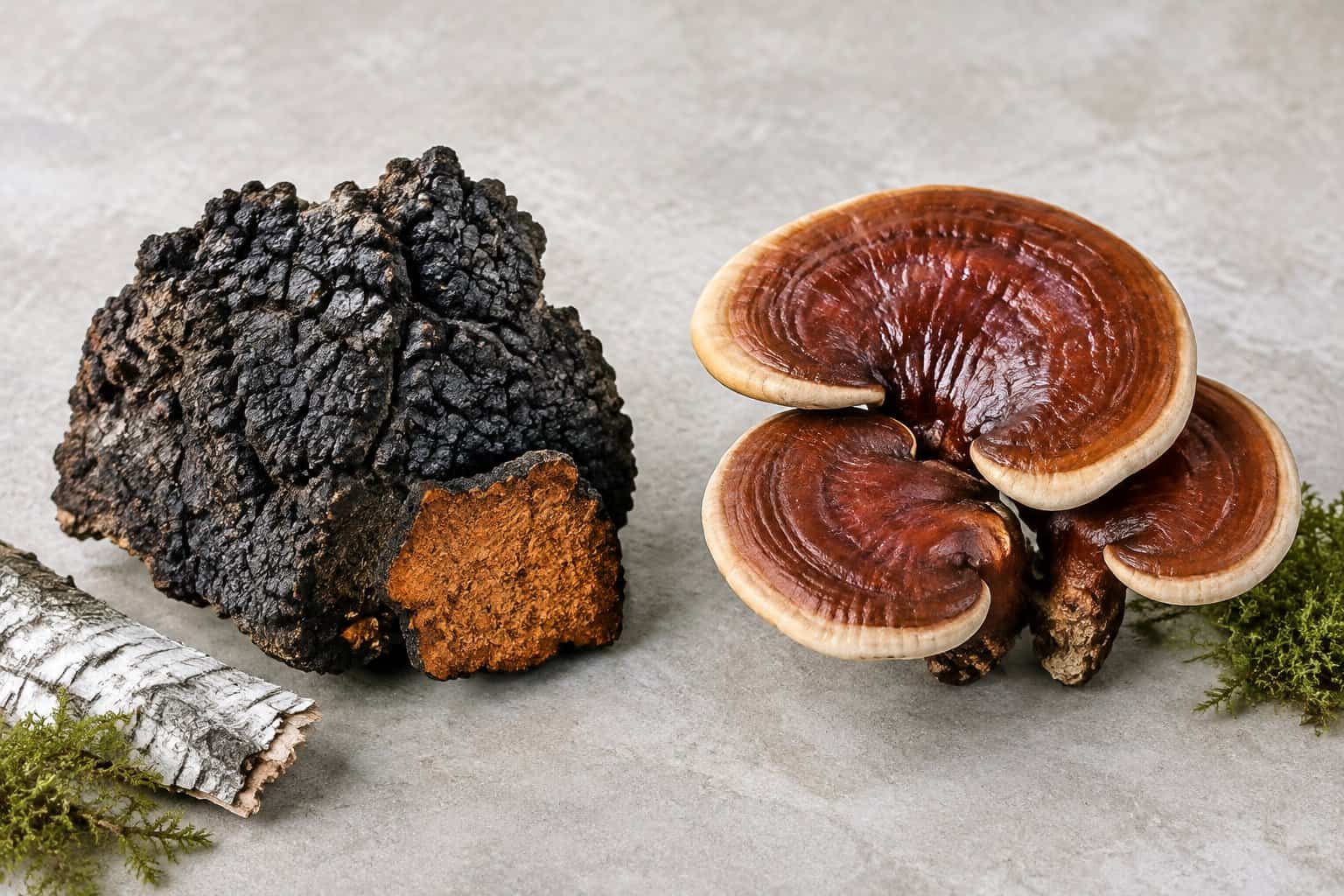
Chaga stands out for its dark, tree-associated growth and antioxidant compounds; reishi is a woody shelf mushroom associated with relaxation-oriented products. Their chemistry overlaps, but their traditional uses and safety concerns differ.
The main differences concern their usual wellness positioning and the evidence behind it. Neither mushroom has established superiority for everyday health.
| Comparison point | Chaga | Reishi |
|---|---|---|
| Scientific identification | Inonotus obliquus | Ganoderma species |
| Common wellness positioning | Antioxidant support | Relaxation and sleep support |
| Notable compounds | Polyphenols, melanin, beta-glucans | Ganoderic acids, beta-glucans |
| Human evidence | Very limited | Limited; preparation-specific |
| Common forms | Tea, powder, extracts | Capsules, tea, extracts |
| Distinct safety concern | Oxalates and kidney injury | Reported liver injury |
The evidence gap affects how confidently benefits should be described. Human findings for medicinal mushrooms remain limited by small samples, variable preparations, and inconsistent study quality.
The chaga mushroom is Inonotus obliquus, a fungus associated primarily with birch trees in cold regions. The harvested black growth is a sterile conk containing fungal material and host-tree tissue; it differs from the familiar cap-and-stem structure of culinary mushrooms.
The reishi mushroom belongs to the genus Ganoderma. Labels frequently use Ganoderma lucidum, although East Asian lingzhi also includes Ganoderma lingzhi, and commercial naming has been inconsistent.
Both are called medicinal mushrooms because of their traditional uses and research interest. References to vitamins and nutrients offer little guidance for comparing extracts: a small supplement serving has a different nutritional role from a serving of edible mushrooms.
When comparing chaga vs reishi, it helps to distinguish promising laboratory findings from clinical outcomes. Neither mushroom has strong human evidence establishing general wellness benefits.
The strongest conclusions concern chemical composition and laboratory activity, while dependable evidence for everyday human benefits remains limited. Results from isolated compounds require separate evaluation from claims about commercial products.
Chaga contains compounds that demonstrate antioxidant activity in laboratory settings. These include polyphenols and a dark melanin complex, alongside polysaccharides and triterpenoids.
Its chemical constituents also include betulin-related compounds, including betulinic acid. Chaga preparations have demonstrated antioxidant and anti-inflammatory activity in preclinical research.
Those findings do not establish that drinking chaga tea reduces oxidative stress enough to improve health. Laboratory antioxidant measurements also cannot establish benefits for skin health or support claims that chaga prevents cancer or treats inflammatory disease.
Reishi has a longstanding association with calming routines and fatigue support. Its triterpenes include ganoderic acids, which contribute to scientific interest in its biological effects.
Some human investigations have examined fatigue and well-being using particular reishi preparations. Their results provide limited grounds for predicting benefits in healthy adults, especially when product composition differs.
Reishi is also marketed among adaptogens for stress relief and stress reduction. Evidence remains insufficient to promise improved sleep quality, reliable cortisol reduction, or treatment of insomnia; persistent sleep difficulties warrant clinical assessment.
Both mushrooms contain polysaccharides, including beta-glucans, that interact with immune pathways in experimental settings. Immune modulation describes changes in immune activity, which require interpretation in the context of the preparation and population studied.
Terms such as immune support and immune system support are broader than a measurable clinical outcome. Evidence of immune-cell activity does not establish fewer infections, faster recovery, or improved health in otherwise healthy adults.
The same distinction applies to anti-inflammatory properties. An effect in cultured cells establishes a research lead, while a health claim requires relevant human outcomes at a defined dose.
The chaga vs reishi safety comparison is especially important for people with kidney or liver conditions or those taking prescription medications. The risks depend on the specific preparation, amount, and individual circumstances.
Kidney health deserves particular attention with chaga, while reishi requires attention to adverse reactions and reported liver concerns. Medication use adds another reason for a clinician or pharmacist to review the exact product.
Chaga contains oxalates, which bind calcium and contribute to certain kidney stones. Published case reports have linked substantial, prolonged chaga consumption with oxalate-related kidney injury.
People with kidney disease, previous calcium oxalate stones, or disorders affecting oxalate handling should avoid self-directed use of a chaga supplement. A tea preparation also requires caution because brewing does not establish a safe oxalate exposure.
Extract strength and serving size complicate comparisons between products. A smaller serving of concentrated material does not automatically mean a lower kidney risk, and a universal safe threshold has not been established.
Reishi products have been associated with digestive discomfort, dry mouth, and allergic reactions. Tolerability differs across preparations and individuals.
Rare liver-injury reports have also involved reishi products, although a case report alone cannot establish the cause or frequency of harm. Reishi’s clinical literature includes toxicity and safety concerns that require preparation-specific evaluation.
Anyone developing jaundice, dark urine, or persistent nausea after starting a reishi extract should stop taking it and seek medical assessment. Preexisting liver disease warrants a discussion with the treating clinician before use.
Potential interactions deserve review before either mushroom enters a supplement routine. Relevant concerns include effects on blood clotting, blood glucose, and immune activity; the clinical evidence varies by preparation.
A pharmacist or prescriber should assess use alongside:
An upcoming operation also warrants disclosure to the surgical team, which should determine whether and when supplements need to stop. Pregnancy, breastfeeding, and use in children require additional caution because safety information is insufficient.
For a closer look at each mushroom in a coffee context, read our chaga mushroom coffee ingredient and safety guide and reishi mushroom coffee evidence and caffeine guide. Both explore how research on individual mushrooms differs from evidence for a finished beverage.
Another common chaga vs reishi question is whether combining both ingredients provides additional benefits. Human studies have not established that taking them together improves health outcomes.
Combining chaga and reishi has no established clinical advantage over taking either alone. Shared use also brings together their individual cautions, so a combination deserves its own safety assessment.
Chaga and reishi together appear in commercial blends, but commercial availability does not demonstrate a beneficial interaction. Robust human evidence has not established a particular combination, dose, or duration for everyday wellness.
The question “can you take chaga and reishi together” therefore requires a product-specific answer from a qualified clinician when health conditions or medicines are involved. Relevant details include the amount of each extract and any additional active ingredients.
Starting multiple supplements simultaneously also complicates the identification of adverse reactions. Recording the product name, serving, and start date gives a clinician useful information if symptoms develop.
A finished coffee blend contains a different formulation from a single-species extract used in a clinical investigation. Brewing adds further variation in the amount delivered per cup.
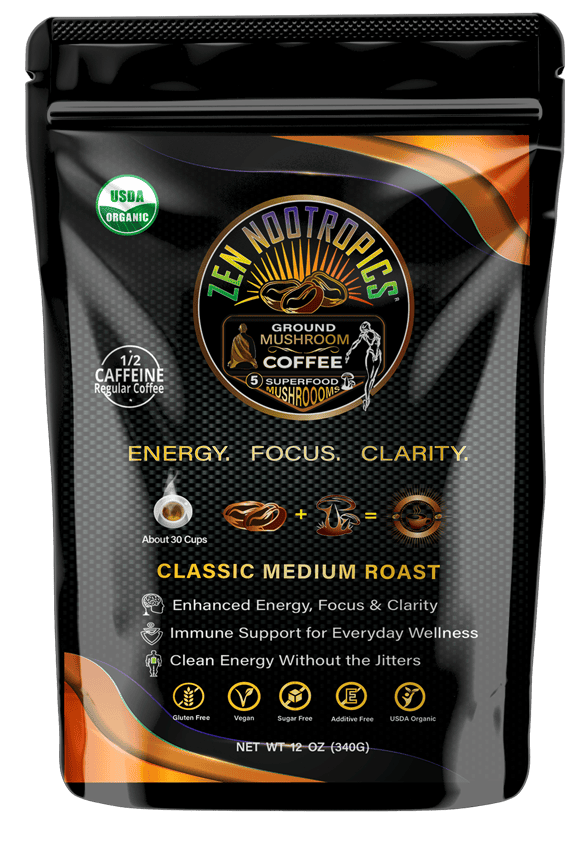
Zen Nootropics Mushroom Coffee combines USDA organic Colombian coffee with Lion’s Mane, Cordyceps, Reishi, Chaga, and Turkey Tail. That ingredient list describes the blend; it does not establish equivalence to a researched chaga extract or reishi extract.
The presence of lion’s mane or another functional mushroom also changes the formulation being evaluated. Findings about individual ingredients should remain separate from claims about the finished beverage unless that beverage has undergone relevant human testing.
In a chaga vs reishi product comparison, the format matters as much as the mushroom species. Tea, coffee, capsules, and extracts vary in concentration, serving size, and other ingredients.
The most practical form is one with clear serving information that fits the intended routine. Tea and coffee suit beverage rituals, while capsules and measured extracts offer convenient portioning.
Chaga tea and reishi tea involve steeping or simmering woody material, with preparation affecting the resulting beverage. Reishi has a pronounced bitter taste, while chaga has an earthy flavor.
Chaga capsules remove the brewing step, but their contents still require scrutiny. A capsule filled with ground material differs from one containing an extract, even when both carry the same mushroom name.
Mushroom powder requires the same distinction between whole material and extracted powder. Tinctures add further considerations, including the solvent, serving volume, and alcohol content when applicable.
Mushroom coffee made with coffee beans contains caffeine unless the formulation specifies otherwise. Reishi does not cancel caffeine’s stimulating effects or guarantee a calming response.
For an evening routine, a caffeine-free mushroom tea avoids adding coffee-derived caffeine near bedtime. The full ingredient list remains important because tea blends also contain other botanicals.
Zen Nootropics offers pre-ground coffee for most coffee machines, pour overs, French presses, and some espresso machines. People considering that format can explore its mushroom coffee ingredients and brewing guide and compare the product information with their preferred brewing routine.
A meaningful serving comparison requires the exact preparation and its composition. Whole chaga, brewed tea, and concentrated extract deliver different amounts of the compounds under discussion.
A universal chaga dosage would ignore those differences, along with variability in oxalate content. Reishi doses likewise require context about the extract and the population in which it was evaluated.
The label’s directions provide product-specific instructions, but they do not prove a clinically effective dose. A healthcare professional should assess the serving alongside other supplements, health conditions, and medicines.
If you are weighing chaga vs reishi for your routine, start with product labels and safety considerations rather than assuming either ingredient has proven health benefits. Compare functional mushroom ingredients and check the Zen Mushroom Coffee product details for the specific blend.
For a fair chaga vs reishi comparison, look for clearly identified species, extract types, serving amounts, and third-party testing rather than relying on broad benefit claims.
A useful label identifies the species, source material, and amount per serving, supported by accessible quality testing. Those details allow a more meaningful comparison than a prominent mushroom count or extract ratio.
Species identification should extend beyond “mushroom complex.” Reishi labels should disclose the Ganoderma species, while chaga labels should identify Inonotus obliquus.
The material also deserves attention. Reishi fruiting body, mycelium, and mycelium grown on grain are different ingredients; grain-grown products should clearly disclose whether the substrate remains in the finished material.
Chaga needs a separate assessment because its harvested conk differs biologically from a reishi fruiting body. For wild-harvested chaga, useful sourcing information includes harvest region, traceability, and harvesting practices that address pressure on slow-growing wild resources.
Extraction changes which compounds enter a preparation. Hot water extracts water-soluble constituents, while alcohol extraction targets other constituents, including certain triterpenoids.
A dual-extraction claim describes processing, without proving clinical effectiveness. An extract ratio alone also provides insufficient information about the final concentrations of relevant compounds.
A disclosed beta-glucan percentage is more informative than an unspecified “polysaccharide” claim because broad carbohydrate measurements also include starch. Even a verified percentage establishes composition, without guaranteeing a health outcome.
Useful third-party testing documentation should identify the batch and laboratory. Relevant results include identity testing, measured constituents, heavy metals, and microbial contamination; an accessible certificate of analysis allows those claims to be checked.
Chaga fits antioxidant-oriented interest, while reishi aligns more closely with relaxation-oriented routines. Both choices require modest expectations because human evidence remains limited and preparation-specific.
Kidney concerns weigh heavily against self-directed chaga use. Reishi requires attention to tolerability and liver-related cautions, while either mushroom warrants medication review when relevant.
For people choosing functional mushrooms, the next practical step is to compare the exact labels and testing documentation. A clinician or pharmacist should assess any unresolved health risks before the product becomes part of a daily routine.
The practical questions about reishi vs chaga concern expected benefits, safety, and how each fits into a finished product.
Neither has demonstrated superiority for everyday wellness in healthy adults. Chaga is associated with antioxidant support and reishi with relaxation, but product quality and individual safety needs provide more actionable distinctions.
People with kidney disease, calcium oxalate stones, or oxalate-handling disorders should avoid self-directed chaga use. Pregnancy, breastfeeding, childhood use, and treatment with interacting medicines also warrant clinical advice because safety information is limited.
Reliable human evidence does not establish that reishi raises estrogen. People with hormone-sensitive conditions or those receiving hormone therapy should discuss the exact product with their treating clinician.
Cordyceps is chiefly associated with energy and exercise-performance research, while Lion’s Mane is associated with cognitive research. Chaga emphasizes antioxidant-related chemistry and reishi relaxation-oriented uses, with evidence varying across species and preparations.
Reishi-containing mushroom coffee is not an established sleep aid, and its caffeine contributes stimulating effects. A person seeking sleep support should check the caffeine content and choose a routine compatible with their usual bedtime.